
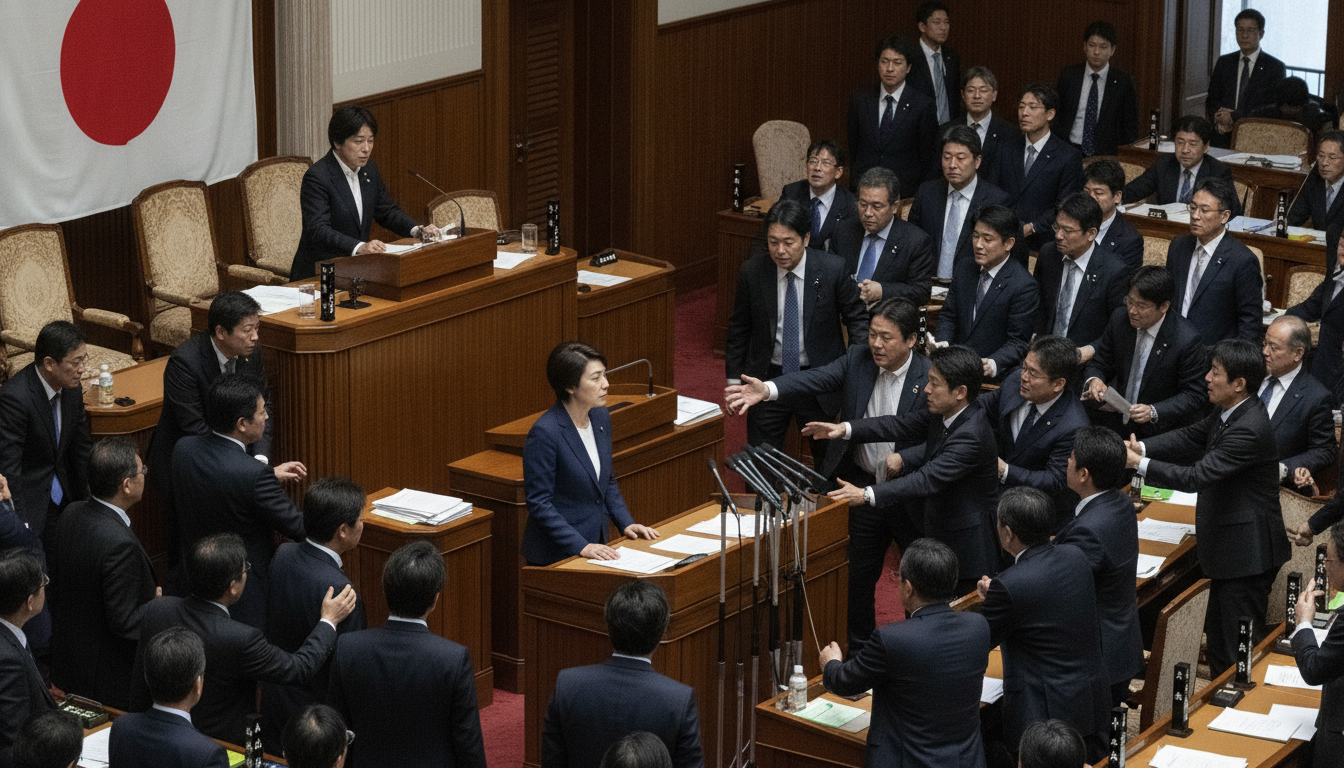
Takaichi’s alliance with Nippon Ishin sparks parliamentary turmoil and political cost
Prime Minister Sanae Takaichi’s alliance with Nippon Ishin has precipitated weeks of parliamentary turmoil, with disputed bills and closed-door compromises dominating the Diet’s agenda through July 24, 2026.
July 7 party leaders’ meeting and the agreement reached
On July 7, 2026, Prime Minister Sanae Takaichi met with leaders of Nippon Ishin inside the Diet to discuss the handling of remaining member-submitted bills.
After the meeting the prime minister told reporters that the two sides had exchanged views on how to manage the outstanding proposals, but she offered few public details about concrete concessions.
Sources close to the prime minister later described a tacit agreement in which Takaichi would forgo pressing for a divisive proposal while agreeing to advance a separate initiative favored by Ishin.
That private trade-off set the stage for heightened confrontation between the ruling coalition and opposition parties in subsequent weeks.
Contents of the contested bills and why they mattered
The bills at the center of the dispute were two measures championed by Nippon Ishin: a 10 percent reduction in the number of House of Representatives seats and legislation to implement a “vice-capital” concept that would devolve some national government functions outside Tokyo.
Both are member-submitted bills that require inter-party negotiation to secure passage and were widely seen as test cases of the governing coalition’s willingness to absorb reforms proposed by a junior partner.
Within the Liberal Democratic Party, sentiment toward both measures was lukewarm to cold, officials said, because the seat-cut proposal echoed Ishin’s electoral success in Osaka and the vice-capital idea reflected that party’s regional priorities.
For opposition parties, the bills represented major structural changes and were resisted with strong rhetoric and blocking tactics in committee and on the floor.
The trade-off with Ishin and the Imperial Household Law priority
According to people familiar with the discussions, the prime minister’s camp opted to drop the more politically explosive seat reduction while agreeing to accommodate Ishin’s vice-capital proposal.
That compromise was packaged with a stated promise to prioritize revision of the Imperial Household Law, a long-standing government objective that Takaichi wants to press ahead with as a headline legislative achievement.
The arrangement was framed internally as a way to limit backlash: concede on an Ishin initiative that was less likely to provoke public opposition, while protecting the broader cabinet agenda.
But the private nature of the deal and selective disclosure to coalition partners and the public intensified suspicions among opposition parties and some within the LDP.
Opposition response and parliamentary disruption through July 24
Opposition parties escalated scrutiny and protests after reports of the deal circulated, arguing that backroom bargains had subverted open parliamentary debate.
Over the weeks leading to the de facto session end on July 24, 2026, debates grew sharper and procedural skirmishes created irregularities in committee schedules and plenary operations.
Lawmakers opposed to the vice-capital bill portrayed it as an attempt to reshape governance without adequate public discussion, while Ishin and its allies pushed for quick adoption as a necessary decentralizing reform.
The clash culminated in a narrow vote in late July, reflecting both the razor-thin arithmetic in the Diet and the political risks taken by parties supporting the measure.
Passage of the vice-capital law and narrow margin
In late July, the bill to implement the vice-capital concept was approved by a tight margin, underscoring the high-stakes nature of the compromise between the prime minister and Nippon Ishin.
Observers noted that the two-vote difference in the decisive chamber illustrated how fragile cross-party support had become and how much the measure depended on disciplined backing from coalition ranks.
Proponents argued passage would enable pilot decentralization measures and relieve congestion in Tokyo, while critics warned the law had been rushed and insufficiently debated.
The narrow result has left both supporters and opponents preparing for legal and political follow-up, including potential administrative guidelines and local-government negotiations.
Political fallout: approval ratings and party relations
The episode has exacted a political cost for Prime Minister Takaichi, with public approval reportedly slipping as media coverage emphasized the perception of preferential treatment toward a smaller party.
Within the LDP there has been unease about the prime minister’s willingness to make concessions to secure short-term legislative gains, prompting private discussions about coalition management and messaging.
For Nippon Ishin, the victory reinforces its influence but also exposes the party to criticism that it leveraged its bargaining position at the expense of broader consensus.
Analysts say the episode may reshape future interactions in the Diet, with opposition parties likely to tighten tactical coordination and coalition partners re-evaluating how and when to make cross-party deals.
Looking ahead, Takaichi faces the task of steadying the legislative calendar by moving on to the revision of the Imperial Household Law and other cabinet priorities while repairing intra-coalition trust.
The narrow passage of the vice-capital law and the high-profile tensions with opposition ranks underscore the delicate balance Takaichi must manage between pursuing policy aims and maintaining parliamentary stability.

