
Next-generation fighter jet project draws wider international interest as partners push for exports
Next-generation fighter jet project by Japan, the U.K. and Italy attracts more interest at Farnborough; leaders say exports are vital to recoup program costs.
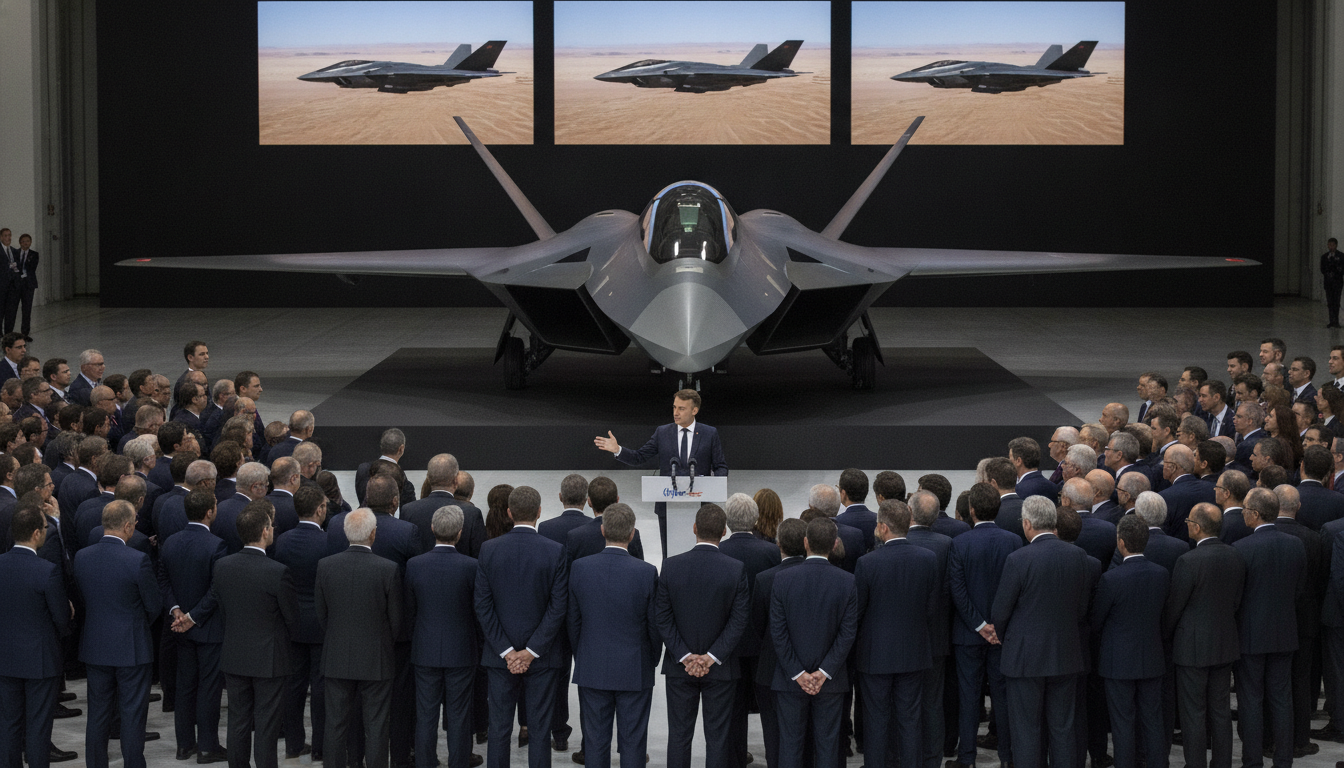
FARNBOROUGH, U.K. — The next-generation fighter jet program led by Japan, the U.K. and Italy drew fresh attention at the Farnborough airshow as the head of the project’s coordinating body said several countries have signaled interest in purchasing the aircraft. Program officials at the show emphasized that prospective exports will be central to offsetting the high costs of development and sustainment. The unveiling of a full-scale mockup at Farnborough underscored both the technological ambition of the program and the urgency of securing international buyers.
Farnborough display highlights export potential
The mockup displayed at Farnborough served as a focal point for international delegations and industry partners, generating inquiries from defense officials and procurement teams. Officials said the exhibit was intended to demonstrate both the aircraft’s conceptual design and the industrial contributions of the three lead nations. Conversations on the show floor reflected growing attention from countries seeking to modernize their air forces with advanced stealth and sensor fusion capabilities.
Partners stress exports to recoup development costs
Leaders overseeing the program reiterated that export sales are not an optional add-on but a financial necessity for the project to reach full production. They warned that without meaningful foreign orders the participating governments would face larger-than-expected program bills and pressure to scale back procurement plans. Officials framed export activity as a way to spread development costs, strengthen supply chains and sustain long-term industrial involvement across the partner nations.
Interest from additional nations remains non-specific
Program officials said multiple countries have expressed interest in learning more about the aircraft, but declined to disclose names or firm commitments at this stage. Sources at the airshow characterized the inquiries as preliminary, ranging from technical briefings to requests for possible industrial participation. Analysts cautioned that expressions of interest at an airshow often precede prolonged diplomatic and export-control negotiations before any contract is signed.
Industrial benefits and challenges for Japan
For Japan, the program offers an opportunity to deepen domestic technological capabilities and secure workshare for Japanese companies across high-value subsystems. Officials argue that participation will help sustain advanced aerospace employment and nurture next-generation engineering skills. At the same time, domestic firms face the challenge of scaling up production capacity and meeting stringent certification and interoperability requirements demanded by export customers.
Technology, certification and export-control hurdles
Beyond marketing the aircraft, partners must navigate complex regulatory and technical hurdles that accompany high-end fighter exports. Certification standards, interoperability with allied systems, and export-control regimes governing sensitive technologies will shape which countries can become customers. Program managers acknowledged these constraints and said they are pursuing structured dialogues to address transfer limits, joint training, and long-term maintenance commitments.
Timeline pressure and global competition
The program operates in a crowded global market where other advanced combat aircraft and unmanned systems are also vying for future procurement budgets. Partners are balancing an aggressive development timeline with the need to demonstrate capabilities to potential buyers within the next several years. Cost pressures, evolving threat environments and competitors’ offerings increase the urgency for early export agreements to guarantee production rates and supply-chain stability.
Defense diplomacy and strategic implications
Export conversations are also diplomatic, reflecting deeper security relationships between potential buyers and the partner nations. Sales of advanced combat aircraft carry political as well as economic weight, often intertwining with basing, training and broader defense cooperation. Officials at Farnborough framed the program not just as a weapons sale but as a vehicle for sustained operational partnerships and interoperability among allies.
The partners said they will continue outreach to potential customer nations through formal delegations, technical demonstrations and intergovernmental talks aimed at clarifying requirements and legal pathways for export. Program leaders emphasized the need for transparent procurement frameworks and predictable industrial commitments to reassure both buyers and domestic stakeholders.
While the mockup at Farnborough signaled tangible progress, program officials stressed that the path to full-rate production and broad export success will require persistent diplomacy, careful management of sensitive technologies, and alignment among the partner nations on pricing, schedules and industrial return.

