
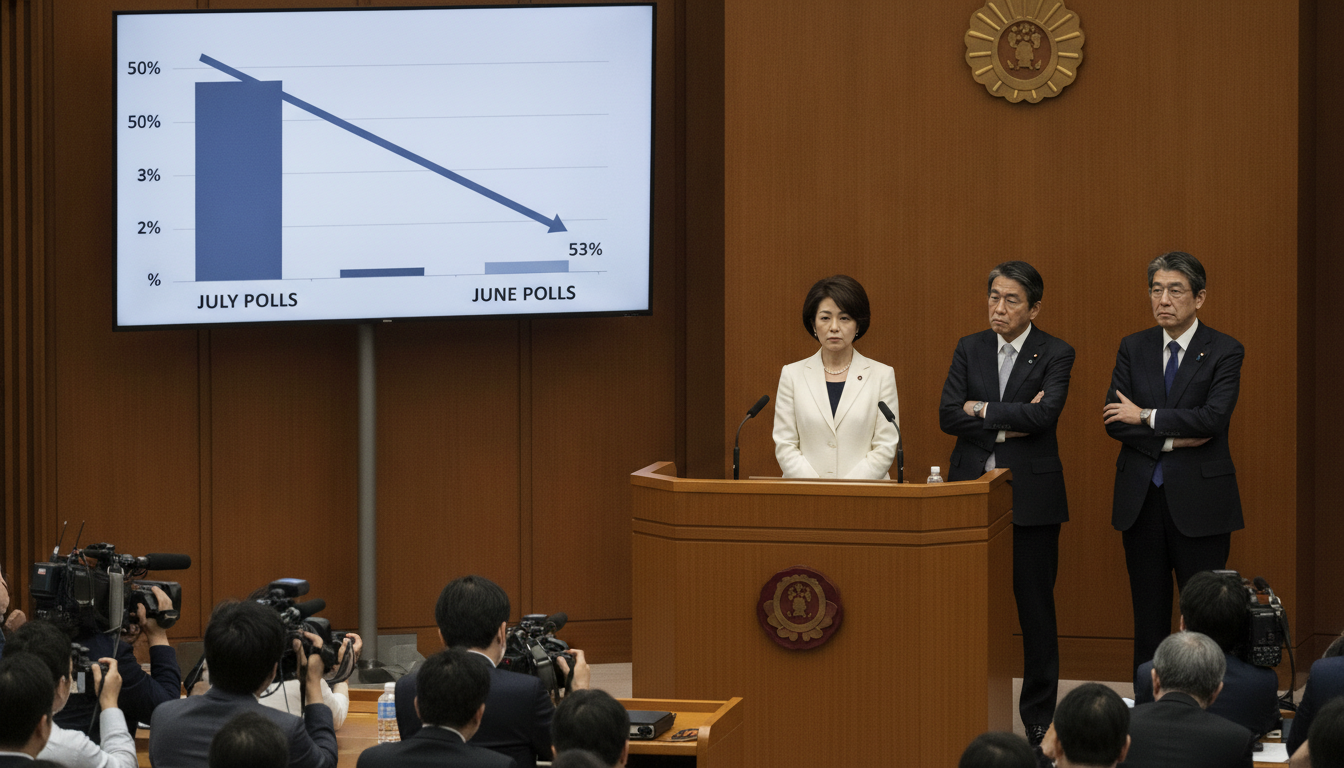
Takaichi cabinet approval rating falls to the 50s after July polls
Takaichi cabinet approval rating slips to roughly 50–53% in July polls, reflecting voter unease over parliamentary tactics and delayed inflation measures ahead of the July 27 press briefing.
The Takaichi cabinet approval rating weakened in multiple July surveys, with a key nationwide telephone poll recording a drop into the low 50s. The decline interrupted a run of 60%-range support that the administration had maintained since its formation in October 2025, and it has raised questions about the government’s handling of recent Diet sessions and economic policy.
July poll numbers and month-to-month change
A nationwide phone survey conducted on July 18–19 found cabinet support at 53%, down from 60% in the June iteration of the same series. The same poll showed disapproval rising to 35% from 27% the previous month, marking a clear shift in public sentiment.
The survey’s result represents the first time since the cabinet’s October 2025 inauguration that support dipped out of the 60% band. Pollsters note that even modest percentage changes at this stage can signal growing public restiveness, particularly when corroborated by other outlets.
Parliamentary tactics cited as a factor
Analysts and respondents cited the ruling coalition’s aggressive handling of Diet procedures during the final weeks of the special session as a contributing cause of the drop. Critics argue that forceful management of committee schedules and contentious rulings eroded public trust in how the government engages with parliamentary norms.
Opposition parties seized on those perceptions, framing the issue as symptomatic of a broader disregard for deliberative process. Though the government maintains that firm leadership is necessary to advance its agenda, the optics of governing by majority power appear to have dented approval among undecided voters.
Economic measures and inflation response under scrutiny
Another recurring theme in the surveys was dissatisfaction with the pace and perceived effectiveness of the administration’s inflation-countermeasures. Voters reported concerns that policy responses to rising living costs had been slow or uneven, contributing to declining support for the cabinet.
Economic commentators say that when households feel direct pressure from price rises, political costs can accumulate swiftly. The combination of procedural controversy and worries about day-to-day affordability appears to have amplified the impact of each issue on public opinion.
Converging readings across multiple outlets
The downward trend in the Takaichi cabinet approval rating was not isolated to a single poll; several major surveys published this month recorded similar declines. One national agency survey placed approval at about 49.0%, underscoring variations across methodologies but a consistent directional move.
Pollsters emphasize that variations in sampling and question wording can produce different headline figures, yet the overall pattern this month points to diminished public enthusiasm. Political strategists take particular note when multiple instruments show concordant movement, seeing it as a more reliable signal of shifting voter attitudes.
Potential political consequences for the administration
A sustained slide in approval could complicate the government’s ability to press through high-priority legislation and may increase pressure on the coalition to recalibrate messaging or policy detail. Party insiders are watching whether the trend persists into August and whether targeted economic measures can stabilize popular support.
At the same time, opposition leaders are likely to exploit the drop in approval to rally voters and sharpen critiques ahead of any future electoral tests. For the administration, the immediate task will be to articulate clear, tangible measures that address cost-of-living concerns while repairing perceptions of heavy-handedness in parliamentary affairs.
Prime Minister Takaichi is scheduled to hold a press conference at the Prime Minister’s Office at 6:00 p.m. on July 27, 2026, and observers will be looking for specific responses to the polls. How the prime minister frames the causes of the decline, and whether she offers concrete steps to address economic strains, will be watched closely by both allies and critics.
The coming days will test whether the cabinet can arrest the fall in public support through policy action and communication, or whether the July surveys mark the start of a longer-term erosion in approval.

