
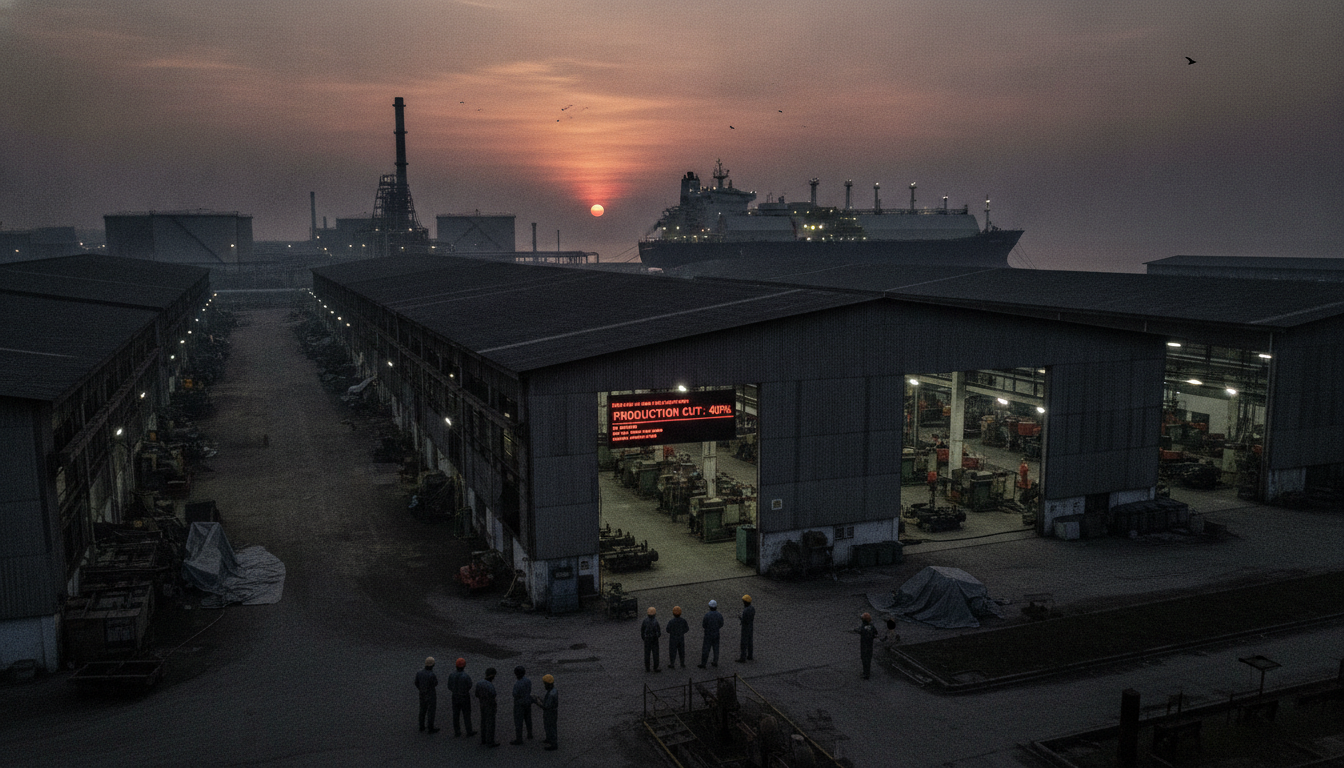
Moheshkhali LNG outage forces Bangladesh factories to cut output by up to 40%
Outage at Moheshkhali LNG terminal cuts about 17 million m³/day from the national grid, forcing widespread factory slowdowns and raising immediate energy-security concerns.
The Moheshkhali LNG outage has deprived Bangladesh’s national grid of roughly 17 million cubic meters of gas a day, Petrobangla said, prompting manufacturers to reduce production and disrupting factory operations nationwide. The shutdown affects one of the country’s two floating liquefied natural gas import terminals and has already led some firms to cut output by as much as 40 percent. Petrobangla attributed the failure to a spark in a control panel at the terminal, intensifying pressure on an electricity system that relies heavily on imported LNG.
Outage at Moheshkhali LNG terminal
Petrobangla reported that a spark in a control panel triggered the shutdown of the Moheshkhali floating LNG terminal, interrupting the facility’s ability to deliver regasified natural gas to the grid. The terminal supplies an estimated 17 million cubic meters per day, a significant fraction of the gas used for power generation and industry. The incident left the grid short of a substantial volume of fuel at a time when industrial demand remains strong.
Immediate effect on industrial output
Manufacturers across multiple regions scaled back operations after gas deliveries fell, with some reporting production declines up to 40 percent. Energy-dependent factories, which use gas for both steam generation and process heat, faced partial or full suspension of shifts. The resulting slowdown has disrupted supply chains and created immediate logistical challenges for companies handling export orders and domestic deliveries.
Pressure on power generation and deliveries
With a large volume of gas removed from the system, power plants that depend on pipeline gas and regasified LNG saw their fuel margins tighten. Grid operators and utilities were forced to rebalance supplies while prioritizing essential services. The loss of the terminal’s output increased reliance on remaining gas feedstocks and other fuel sources, complicating short-term dispatch decisions and reserve margins.
Cause identified; operator response limited
Authorities named a spark in a control panel as the proximate cause of the outage, but a detailed technical assessment has not been publicly released. Petrobangla provided the initial attribution, while the terminal operator has not disclosed a full repair schedule. At this stage, officials have not announced a definitive timetable for bringing the terminal back online, leaving businesses and grid managers to operate with limited visibility.
Economic risks for exporters and manufacturers
The shutdown heightens near-term economic risks for sectors that depend on steady, predictable energy supplies. Production slowdowns can translate into missed shipment deadlines and increased costs for firms that must arrange alternative energy sources or pay overtime to meet backlogs. Smaller suppliers and subcontractors are particularly vulnerable to cascading disruptions when primary factories scale back output.
Implications for energy policy and supply resilience
The incident underscores Bangladesh’s reliance on a small number of import and regasification facilities to meet domestic gas demand. Concentration of critical infrastructure increases vulnerability to single-point failures, whether technical or weather-related. Energy analysts say the outage highlights the importance of redundancy, maintenance protocols, and contingency fuel arrangements to reduce the socioeconomic impact of similar events.
As of July 28, 2026, the outage at the Moheshkhali floating LNG terminal remains a central concern for policymakers, grid operators and industry leaders, who are monitoring developments and assessing short-term mitigation steps while awaiting a clearer timeline for repairs and restoration.

