
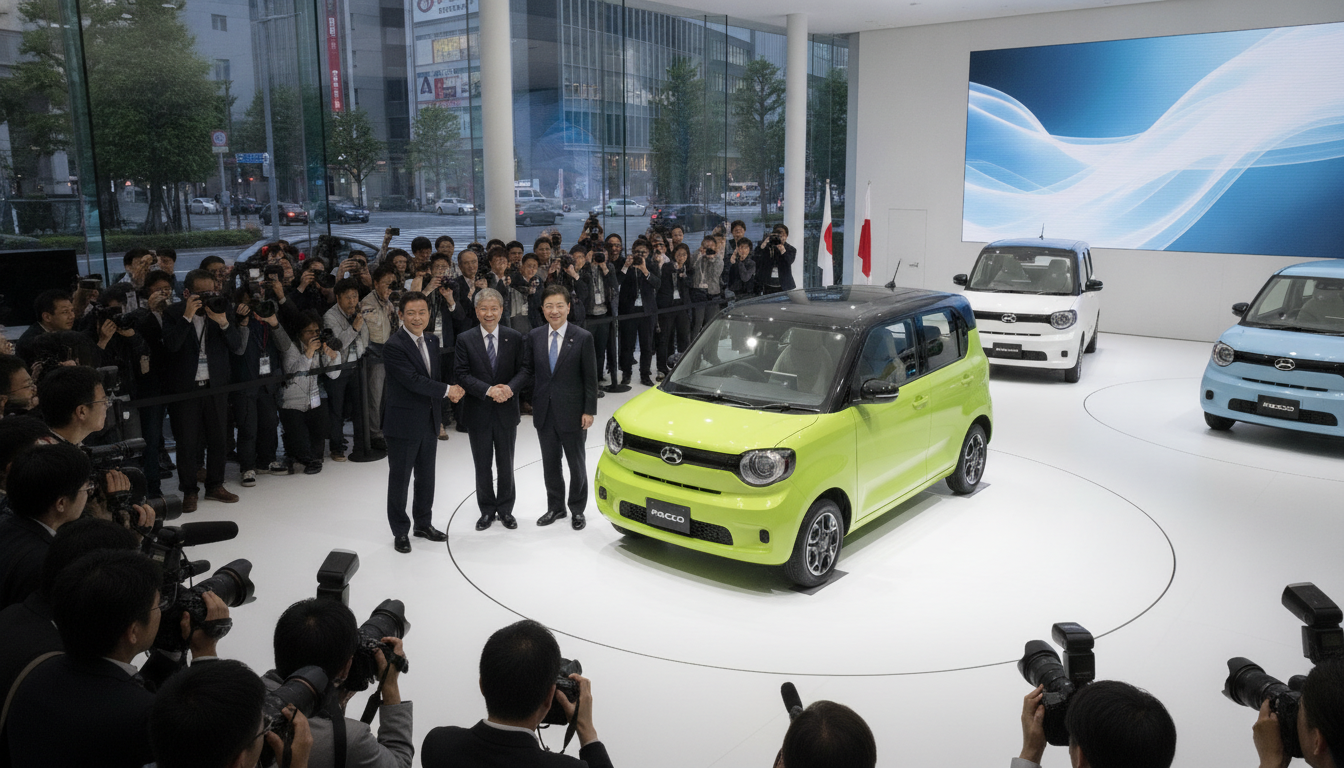
BYD kei minicar Racco launches in Japan, challenging domestic kei-car dominance
BYD kei minicar Racco goes on sale in Japan on July 28, marking the Chinese automaker’s push into the kei segment with a competitively priced electric model.
BYD began selling its electric kei minicar, the Racco, in Japan on July 28, signaling a direct challenge to a vehicle category long dominated by domestic manufacturers. Company executives, including Liu Xueliang, vice president and president of BYD Japan, and Atsuki Tofukuji, president of BYD Auto Japan, unveiled the model at a Tokyo launch event. The arrival of the BYD kei minicar adds a high-profile foreign contender to a tightly regulated market prized for affordability and urban practicality.
Launch event in Tokyo
The Racco was presented to media and dealers in central Tokyo on July 28, where BYD highlighted the car’s compact footprint and entry pricing aimed at city drivers. The company framed the vehicle as an all-electric alternative built to fit within Japan’s kei classification and tax incentives. BYD officials emphasized dealer support and a localized sales strategy to accelerate adoption across urban and suburban areas.
Product positioning and pricing
BYD is positioning the Racco as a competitively priced electric option for consumers seeking a low-cost, low-emission city car. The automaker stressed value features and a focus on running costs, which are central to kei buyers’ decision-making. BYD’s approach appears designed to undercut some established offerings on price while offering the perceived benefits of EV ownership, such as reduced fuel and maintenance expenses.
Regulatory fit and design choices
The Racco has been developed to meet the dimensional and regulatory constraints of Japan’s kei segment, allowing owners to benefit from tax and insurance incentives associated with these vehicles. BYD highlighted compact exterior proportions and an interior optimized for two to four occupants, typical of kei configurations. The firm also referred to safety and compliance testing aligned with Japanese standards, underscoring its intent to operate as a long-term market participant.
Distribution, aftersales and local strategy
BYD’s rollout includes a dealer network and aftersales arrangements tailored to Japanese consumers, according to company representatives at the launch. Executives said the automaker plans to leverage existing partnerships and local staffing to manage sales, charging support and warranty service. The strategy aims to reassure buyers accustomed to extensive dealer coverage from domestic manufacturers.
Market reaction and dealer feedback
Industry observers and some local dealers noted the significance of a Chinese automaker entering the kei segment, which has traditionally been dominated by Toyota, Suzuki and Daihatsu. Dealers said they are watching consumer responses to an imported brand offering the same regulatory benefits as domestic kei models. Analysts suggested that the Racco’s competitive pricing and BYD’s scale could push incumbents to sharpen their own EV strategies.
Potential impact on incumbents and EV adoption
The entry of the Racco into the kei category could accelerate the transition to electric power for a segment that remains important for first-time buyers and urban commuters. BYD’s presence may force faster product updates, pricing adjustments and expanded incentives from established Japanese makers. For consumers, increased competition is likely to broaden options and could hasten improvements in charging infrastructure and used-vehicle resale dynamics.
BYD’s launch of the kei minicar in Japan follows the company’s broader international expansion and reflects a strategic focus on compact electric vehicles tailored to local market rules. The Racco’s arrival will be monitored closely by policymakers, manufacturers and buyers as a test case for how foreign EV makers can compete within Japan’s uniquely structured kei ecosystem.
The degree to which BYD’s kei minicar will shift market share remains uncertain, but the model’s launch marks a clear new chapter in competition for Japan’s small-car buyers and could reshape expectations for price and electrification in the years ahead.

