
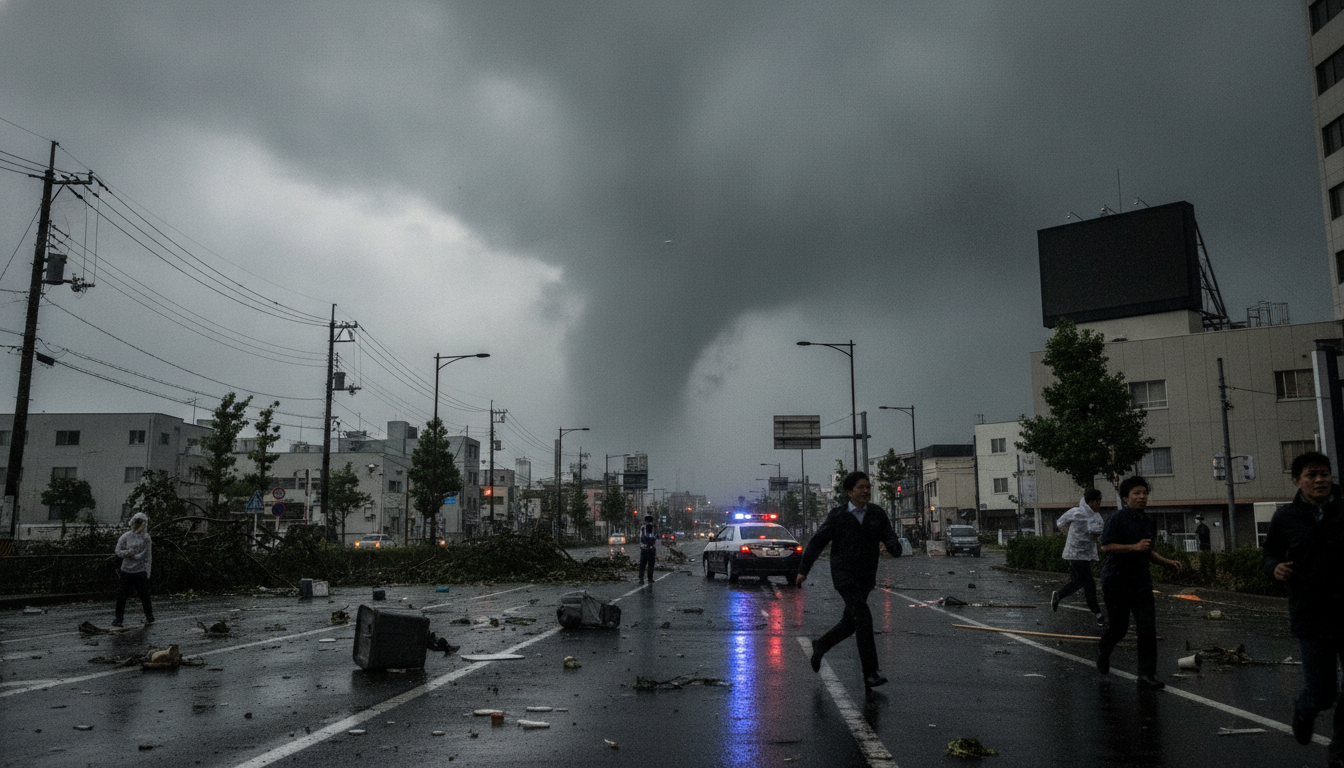
Tornado sighting alert issued for Aichi after suspected twister in western prefecture
Japan Meteorological Agency warns of tornadoes in Aichi after suspected twister; alert at 3:30 p.m., residents urged to seek shelter in sturdy buildings.
A tornado sighting alert was issued by the Meteorological Agency at 3:30 p.m. after a suspected twister and related sudden gusts were reported in western Aichi Prefecture. The alert warns that additional tornadoes or damaging straight-line winds may form across both western and eastern parts of the prefecture. Residents are being advised to treat signs such as lightning, abrupt wind shifts and hail as indicators of approaching severe storm activity and to seek shelter immediately.
Meteorological Agency Issues Tornado Sighting Alert
The Japan Meteorological Agency sent a tornado sighting emergency bulletin after observing the conditions consistent with a tornado or intense localized gusts over western Aichi. The alert was issued as an immediate warning to residents and local governments in the affected zones. Officials emphasized that the initial sighting does not rule out further tornado formation as storm cells continue to move through the region.
The bulletin specifically noted that developed cumulonimbus clouds are the likely source of the tornado or gust event and that similar convective activity may produce additional hazards. The agency highlighted the need for heightened vigilance until the severe storm threat subsides across both western and eastern Aichi.
Locations Reported and Immediate Hazards
Reports indicate the suspected tornado and associated gusts occurred in the western part of Aichi Prefecture, with meteorologists warning of possible extension eastward. The primary immediate hazards identified by the agency are destructive wind gusts, flying debris and localized hail that can accompany mature thunderclouds. Lightning strikes and sudden changes in wind direction are expected alongside heavy precipitation in affected neighborhoods.
Emergency services and municipal offices covering both western and eastern Aichi were advised to monitor conditions and to stand ready to respond to calls for assistance. The agency cautioned that even if a tornado does not reappear, strong straight-line winds from the same storm system can still cause significant damage to buildings, infrastructure and transport networks.
How Cumulonimbus Clouds Spawn Tornadoes
Meteorologists describe tornadoes and violent gusts as most likely when powerful cumulonimbus clouds—also known as thunderheads—undergo rapid development and rotation. These clouds can produce intense updrafts and downdrafts that, under certain wind shear and instability conditions, concentrate into a rotating column of air. When that rotating column reaches the ground, it is classified as a tornado; if the rotation remains aloft but generates severe winds at the surface, the result can be damaging straight-line gusts.
The agency explained that telltale signs of such clouds approaching include increasing lightning frequency, abrupt shifts in wind direction or speed, and sudden hail. Because these indicators can develop quickly, forecasters urged residents to treat any of them as a trigger to move to a safe location without delay.
Safety Recommendations from the Agency
The Meteorological Agency advised individuals to secure safety in robust, well-constructed buildings and to avoid mobile structures, vehicles and outdoor shelters during the alert. People were told to move away from windows and glass, go to the lowest and most interior room available, and protect themselves from flying debris. Those in exposed or flood-prone areas were urged to relocate to higher ground and to follow instructions from local authorities.
For those driving, the agency recommended stopping in a safe location away from trees and power lines and avoiding overpasses. If evacuation or shelter advice is given by municipal officials, residents should comply immediately and maintain communication with emergency services where possible.
Local Response and Preparedness Measures
Municipal governments and emergency responders in Aichi have been put on alert to assess damage and coordinate relief if necessary. Local disaster management centers typically monitor municipal bulletins and deploy teams for reconnaissance, road clearing and assistance with temporary shelters. Schools and public facilities in affected districts may alter operations or provide designated shelter spaces until the immediate threat passes.
Residents were reminded to check battery-powered radios or official municipal channels for updated instructions, and to prepare basic emergency supplies including water, food, flashlights and medical kits. Business operators and community leaders were urged to account for vulnerable populations, including the elderly and people with mobility challenges, in any sheltering plans.
Emergency contact procedures and evacuation routes vary by municipality, so households were advised to confirm local guidance and to follow official notices rather than unverified social media reports. The Meteorological Agency will continue issuing updates as storm cells evolve and will lift the tornado sighting alert once the risk subsides.
Authorities emphasize that swift action and adherence to safety guidance can substantially reduce risk during tornado and severe thunderstorm events.

