
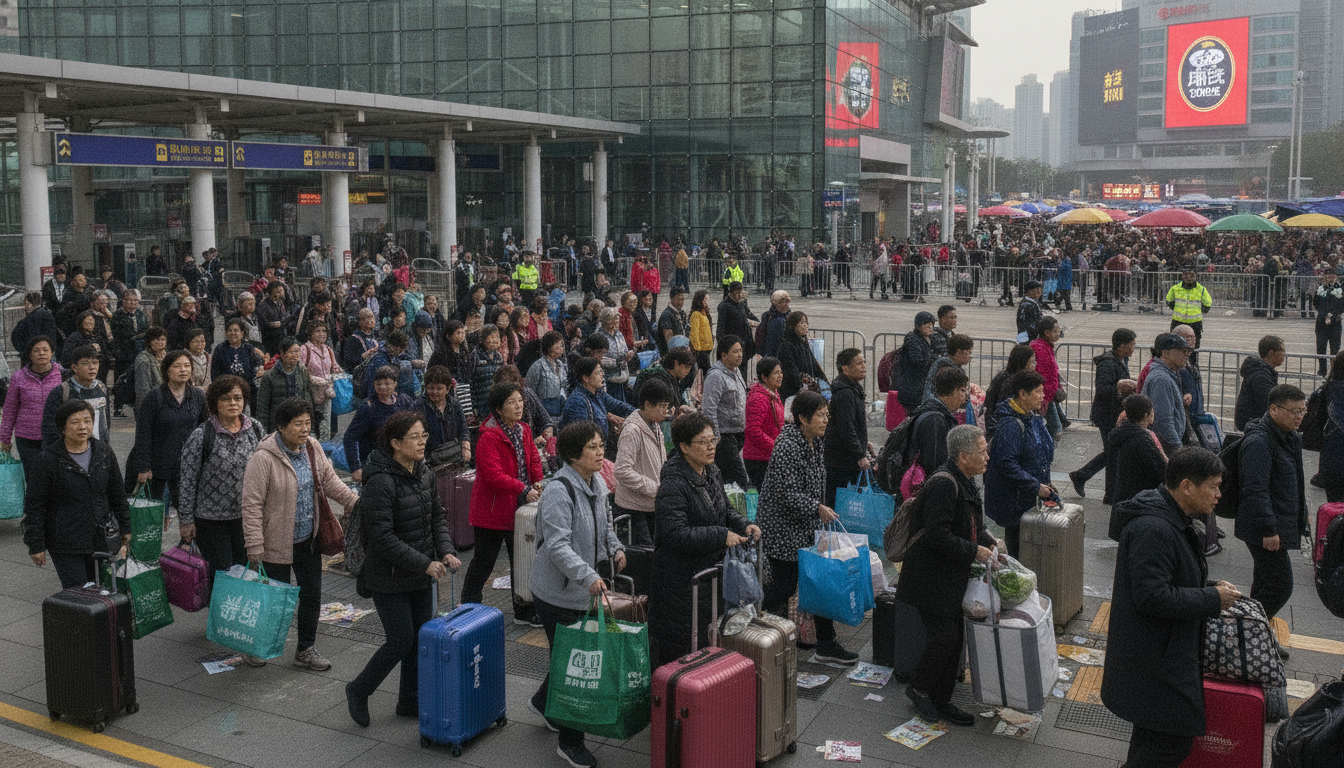
Hong Kong border crossings surge as residents flock to Shenzhen for bargains and services
Hong Kong border crossings to Shenzhen surge as residents seek lower prices and quicker services; retailers and officials move to ease congestion and expand capacity.
Hong Kong residents are increasingly crossing the mainland border to Shenzhen in search of cheaper goods and what many describe as superior service, fueling a marked rise in daily passenger flows at major land checkpoints. The spike in Hong Kong border crossings has been most notable at Lo Wu and five other key control points, where travelers report shorter waits for some services and better value on everyday purchases. Retailers, healthcare providers and transport operators on both sides say the movement is reshaping local demand patterns and prompting operational changes.
Checkpoint volumes climb at Lo Wu and other crossings
Passenger counts at Lo Wu and the territory’s other principal land checkpoints have risen steadily in recent years, according to officials and business sources. The increase reflects a combination of restored cross-border travel after pandemic restrictions and a renewed appetite among Hong Kong residents for mainland shopping and services.
Commuters and day-trippers now contend with longer queues at peak times, while off-peak periods have seen a sharper recovery as families and senior residents plan daytime trips. Transport operators have added services on busy routes, and customs staff report higher throughput as infrastructure is tested by sustained demand.
Shoppers cite price gaps and product availability
Many residents cited price differentials as a primary reason for travel, saying everyday items, fashion and electronics are often cheaper across the border. Shoppers also point to a wider selection of brands and frequent promotions in Shenzhen that make short trips economically attractive.
Beyond bargains, service quality plays a role: salon, dental and outpatient services in some Shenzhen districts are perceived as faster or more accessible than in Hong Kong. That mix of cost savings and perceived convenience is proving persuasive enough to turn day trips into routine decisions for some households.
Retailers and service providers adapt to cross-border demand
Retailers in Shenzhen report tailoring inventory and marketing to capture Hong Kong customers, including bilingual signage and payment options popular with visitors. Department stores and specialist shops have expanded duty-free-style offers and time-limited discounts aimed at day visitors.
Healthcare and personal services are also adjusting, with clinics extending appointment slots and hospitals streamlining paperwork for non-resident patients. These operational shifts are intended to convert occasional visitors into repeat customers while managing service quality under heavier caseloads.
Traffic congestion and transport pressures increase costs
The uptick in crossings has placed new pressures on road links, commuter rail services and border plaza facilities, leading to congestion at peak hours. Taxi and coach operators face longer turnaround times, and some commuters report that travel-to-shopping timeframes have lengthened despite faster in-store service.
Local governments and transport firms are examining capacity enhancements, from more frequent train services to temporary bus lanes, but such measures require coordination and funding. Meanwhile, businesses on both sides must factor in transport delays when planning staff shifts and delivery windows.
Authorities and businesses respond with operational changes
Authorities are piloting measures to smooth flows, including extended processing hours at busy checkpoints and clearer signage to distribute passengers across crossings. Officials have also encouraged digital pre-clearance and ticketing options to reduce dwell time in control points.
Private-sector responses include staggered store openings, dedicated customer queues and targeted shuttle services for high-demand districts. Retail chains are experimenting with appointment shopping and click-and-collect models that limit time spent at busy retail locations.
Economic and social implications for border communities
The surge in Hong Kong border crossings is boosting revenue for Shenzhen retailers and service providers, while also bringing increased footfall to peripheral districts. That economic lift is balanced by concerns about local congestion, housing demand and the strain on public services near major checkpoints.
Community groups in border areas are calling for careful planning to ensure infrastructure upgrades keep pace with demand, and for policies that mitigate disruption to everyday life. Both sides of the border face the task of converting short-term recovery gains into sustainable, well-managed cross-border exchange.
The current trend in Hong Kong border crossings underscores a broader shift in consumer behavior and cross-border ties, as residents weigh cost, convenience and quality when deciding where to shop and receive services. Continued coordination between transport operators, local governments and businesses will be key to meeting rising demand while preserving travel and living conditions for border communities.

