
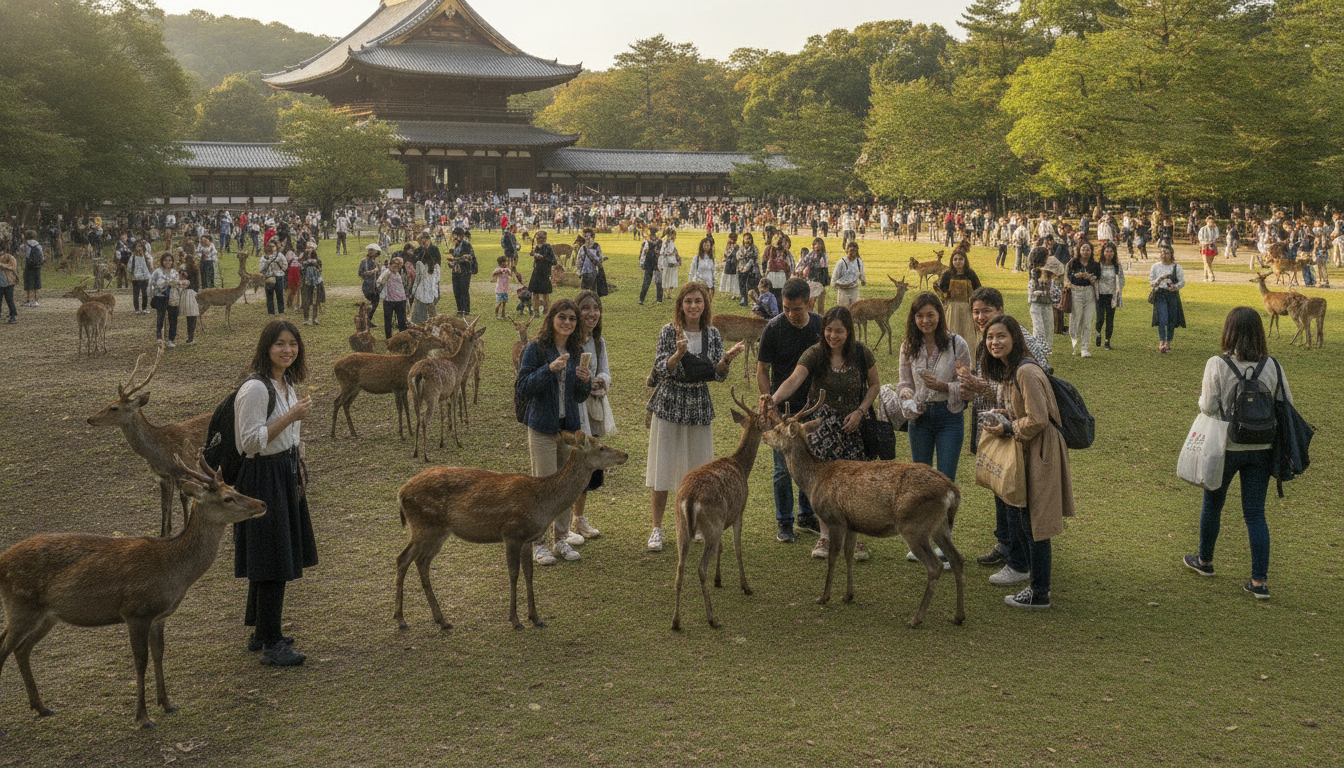
Nara Park Deer Population Rebounds to Record High as Foreign Tourists Return
Nara Park deer have rebounded to a record high as foreign tourism resumes, officials say, renewing attention on wildlife management and the local economy. The increase in fawn and adult sightings has been particularly marked in the central park area frequented by visitors. Park authorities and city officials are monitoring interactions between tourists and the deer to balance cultural attraction with animal welfare.
Population Reaches Record Level
Nara City officials reported the recent uptick in deer numbers follows months of steadily rising visitor arrivals. The surge has produced what authorities describe as the highest count in recent records for the park’s free-roaming Sika deer.
Natural fluctuations and a return of international travel are both credited for the rebound, according to park management. Officials say monitoring teams have increased patrols to track the population and document births and seasonal movements.
Tourist Feeding and Visitor Behavior
Foreign tourists buying senbei crackers and feeding the deer have returned to scenes familiar to longtime visitors, reinvigorating a popular pastime. Vendors selling deer crackers have reappeared at park entrances, and many visitors seek out interactions with the animals as part of their itinerary.
Park authorities continue to emphasize safe feeding practices and appropriate behavior around wild animals. Signage in multiple languages advises visitors on how to approach deer and what not to feed them, while staff issue warnings when animals become overly aggressive or dependent on handouts.
Economic Boost for Local Businesses
The rebound in deer-related activity has translated into a measurable lift for retailers, restaurants and accommodation providers near Nara Park. Souvenir shops, kimono rental services and street-food stalls report higher foot traffic and stronger sales tied to returning overseas visitors.
Local tourism operators say the restored demand is helping recovery after years of travel restrictions, but they also note that sustained benefit depends on managing crowds and protecting the park’s environment. Business groups have called for coordinated planning with municipal authorities to ensure long-term viability.
Management and Conservation Measures
City and park managers outline a mix of proactive measures aimed at preserving both the deer population and the visitor experience. Those measures include stepped-up monitoring, controlled feeding guidance, and periodic reviews of visitor flows through the park’s busiest zones.
Authorities are also consulting wildlife specialists on best practices for population health, habitat maintenance and reducing potential human-deer conflict. The goal, officials say, is to maintain the park’s cultural value while limiting stress on the animals and strain on park infrastructure.
Safety and Welfare Concerns
Officials warn that increased close contact carries risks for both humans and deer, including accidental injury and dependency on human-provided food. Park signage and staff reminders stress that the deer are wild animals and that hand-feeding should follow established guidelines to prevent risky behavior.
Veterinary and animal-welfare groups have urged continued attention to the animals’ diet and to measures that discourage aggressive begging. The city says it will expand educational outreach and consider additional resources for veterinary care if population pressures increase.
Multilingual Outreach and Visitor Education
To address the international audience, Nara Park management has expanded multilingual materials and on-site guidance for visitors. Pamphlets, electronic displays and staff assistance in key languages aim to reduce misunderstandings and encourage respectful interaction.
Education campaigns focus on simple, actionable steps—how to approach a deer safely, what to feed, when to back away and how to dispose of litter. Officials believe clearer communication will reduce incidents and help preserve the park’s reputation as a unique cultural destination.
For residents and visitors alike, the rebounding Nara Park deer population underscores a broader tension between tourism recovery and wildlife stewardship. City officials say they will continue to monitor numbers, adjust management strategies as needed and work with local businesses to sustain both economic benefit and the long-term health of the deer.

