
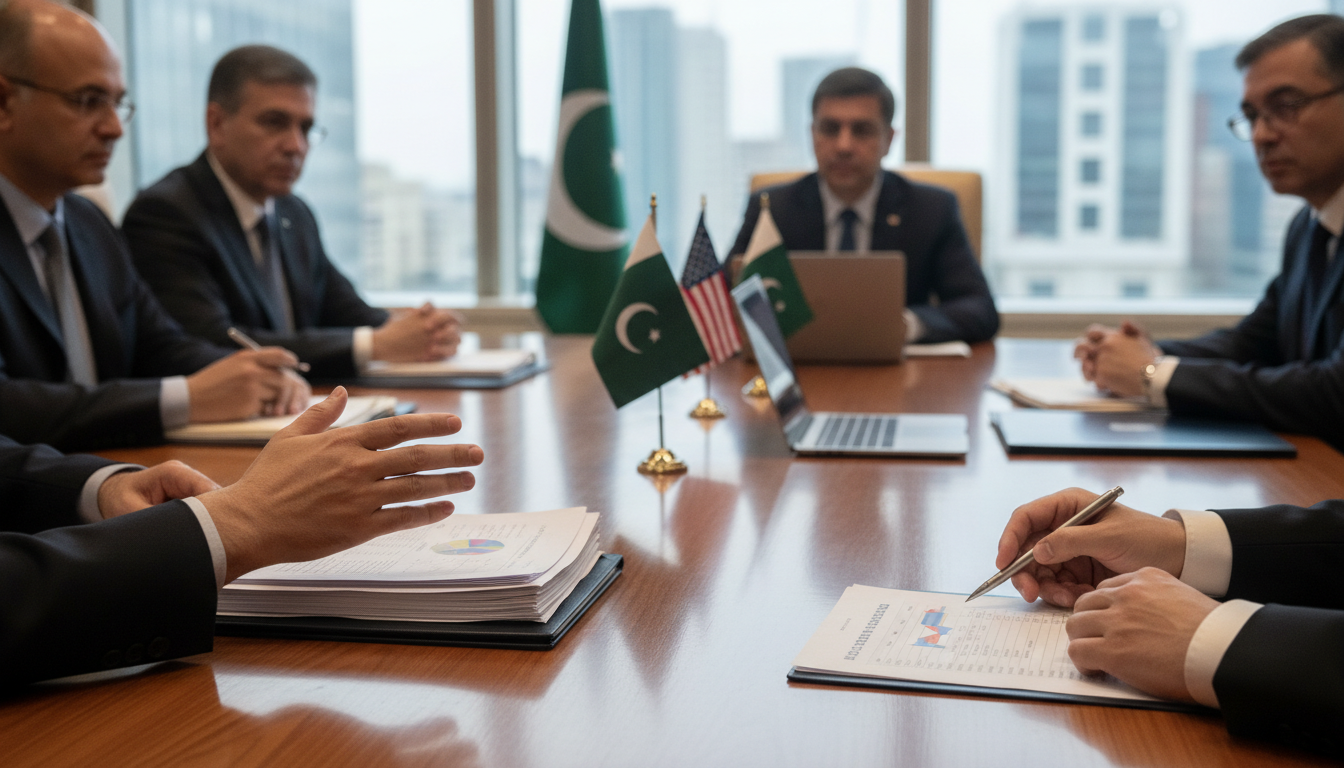
Pakistan Seeks U.S. $10 Billion Backstop to Bolster Foreign Reserves
Pakistan has formally applied for a U.S. $10 billion backstop facility to strengthen its defenses against foreign reserve shocks, Nikkei Asia reported.
Pakistan Seeks U.S. $10 Billion Backstop
Pakistan has submitted a request for a U.S. $10 billion foreign currency backstop facility intended to bolster its capacity to withstand sudden reserve pressures. The application was reported by Nikkei Asia and, according to media notes, follows recent diplomatic activity by senior Pakistani officials.
The proposed backstop would act as a contingent line of support, available to the central bank if external funding or remittance flows deteriorate. Officials in Islamabad have said the move is aimed at cushioning the economy from abrupt external shocks and restoring market confidence.
Application Linked to Recent Mediation Role
Nikkei Asia and other contemporaneous reports indicate the request followed Pakistan’s involvement in mediating between the United States and Iran. The mediation, led publicly by Pakistan’s military chief, Field Marshal Asim Munir, is cited in accounts describing the timing of Islamabad’s application.
Diplomats and analysts say the backstop request is likely to be viewed through a geopolitical lens given the mediation role. Islamabad appears to be seeking financial assurance while also leveraging its recent diplomatic engagements to secure international support.
Reserve Vulnerabilities Cited by Authorities
Pakistani officials have framed the request as a proactive measure against reserve volatility rather than an emergency appeal. Central bank and finance ministry sources have emphasized the need for contingency access to hard currency amid a fragile external environment.
Analysts note that countries with limited reserve buffers often pursue precautionary arrangements to avoid forced balance-of-payments adjustments. A standby facility of this scale would be intended to smooth import financing, support currency markets, and provide headroom for policy maneuvering.
Potential U.S. Conditions and International Coordination
If approved, a U.S.-backed instrument may come with policy stipulations or coordination with other international lenders. Past precautionary arrangements involving major currencies have typically included macroeconomic commitments and monitoring mechanisms to ensure sustainability.
Observers expect discussions to consider Pakistan’s existing engagement with multilateral creditors and any ongoing or prospective IMF programs. Washington’s calculus may weigh both economic criteria and diplomatic considerations linked to recent regional mediation efforts.
Market and Regional Reactions to the Request
Financial markets in the region tend to react to news of large contingency facilities through a mix of cautious optimism and scrutiny. Local currency traders and foreign investors will watch for formal agreement terms and conditionality that could affect fiscal and monetary policy in Islamabad.
Regional partners and capital market participants are likely to monitor whether the backstop reduces the immediate need for more intrusive adjustments or simply buys time for deeper reforms. Creditors and rating agencies will also reassess risk profiles as negotiations progress.
Next Steps and Timeline Unclear
The process for negotiating a bilateral backstop can involve detailed technical talks, legal drafting, and alignment with other lenders — factors that typically extend timelines. Pakistani authorities will need to negotiate terms with U.S. counterparts while maintaining coordination with multilateral institutions.
Officials in Islamabad have signaled intent to protect reserves and avoid abrupt corrective measures, but they have not released a public timetable for concluding discussions. The outcome will depend on both technical economic assessments and broader diplomatic calculations.
Pakistan has applied for the U.S. $10 billion backstop to build resilience against external shocks, and the coming weeks are likely to determine whether the request translates into a formal, conditional arrangement.

