
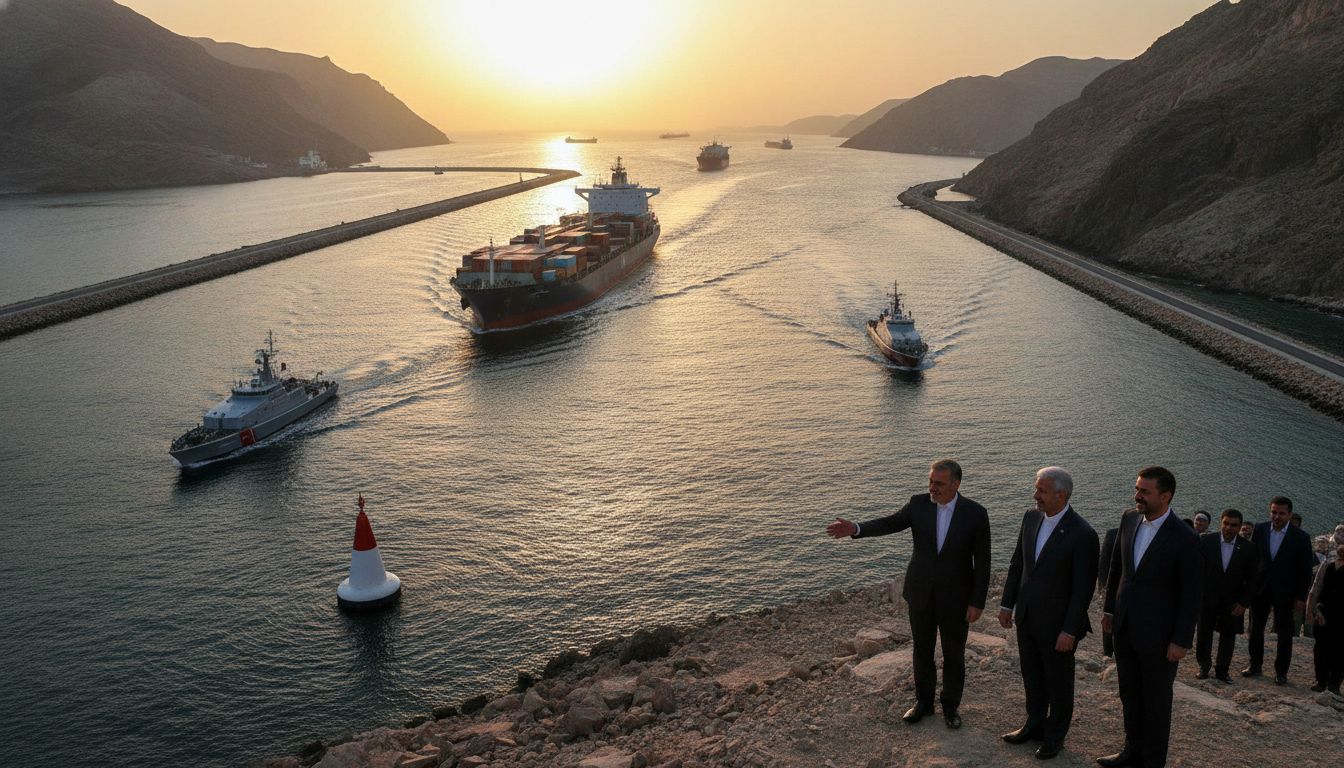
Strait of Hormuz: Iran and Oman Near Deal on New Shipping Lane as U.S. Signals Imminence
Iran and Oman are reportedly close to agreeing on a new shipping lane in the Strait of Hormuz, with U.S. officials saying a deal could be reached within days to restore safer passage. Reports on August 4–5, 2026 indicate talks have advanced toward establishing an alternative route inside the strait, and Washington has been briefed on the negotiations.
Negotiations Between Iran and Oman Near Agreement
According to U.S. and Iranian media reports on August 4, 2026, Iran and Oman have held intensive consultations aimed at creating a new navigational corridor within the Strait of Hormuz. The discussions are described as entering a final phase, with technical and security arrangements reportedly under active negotiation. Observers say the proposed route would be designed to allow commercial traffic to pass without coming under exclusive Iranian control.
U.S. Officials Signal a Deal Could Be Imminent
U.S. officials have publicly signaled the possibility of a rapid breakthrough. On August 4, 2026, President Trump, speaking in California, said significant progress had been made and that an agreement could be reached “tomorrow or the day after,” comments that were reported by the Associated Press.
A U.S. Treasury official identified in reports as Secretary Bessent also told CNBC on August 4 that there was a realistic prospect of concluding an arrangement “today (Aug. 4) or tomorrow (Aug. 5)” to reopen the strait. Both statements suggest Washington has been kept informed of the substance of the Iran–Oman talks.
How the Strait of Hormuz Became a Flashpoint
Tensions around the Strait of Hormuz intensified after a pre-emptive strike at the end of February that involved U.S. and Israeli forces, prompting Iran to impose effectively a de facto blockade. In the months since, Tehran established its own preferred navigational track on the northern side of the strait and signaled it would not recognize other shipping routes. That posture has been a central cause of the standoff between the United States and Iran.
Maritime traffic through the Strait of Hormuz, one of the world’s busiest chokepoints for oil and liquefied natural gas shipments, has operated under heightened uncertainty since those moves. The reported negotiations reflect a rare diplomatic channel aimed at restoring agreed procedures for transit.
Implications for Shipping, Energy and Security
If Iran and Oman finalize a new lane and Washington accepts its terms, the immediate effect would likely be to reduce navigational ambiguity that has driven higher insurance premiums and rerouting by commercial shippers. Restoring a widely recognized corridor through the Strait of Hormuz could ease disruptions to global energy markets that have been sensitive to any threat of closure.
However, technical agreement on a route is unlikely to remove all security concerns. Merchant mariners and shipping companies will need clear guidance on signaling, monitoring, and the presence of naval forces in adjacent waters. The establishment of verification or escort mechanisms may be required to reassure carriers that passage will be safe and uninterrupted.
Oman’s Mediating Role and Regional Responses
Oman has long positioned itself as a diplomatic intermediary in Gulf disputes, and its involvement in the talks underscores Muscat’s role as a bridge between Tehran and other capitals. Reports indicate that Oman has hosted discussions with Iranian officials and relayed details to the United States, helping to shape a proposal that could be acceptable to all parties.
Regional governments and industry stakeholders are likely to watch the final stages of negotiation closely, weighing the proposed maritime geometry and any security guarantees. Major shipping companies and insurers will also demand clarity before they adjust routing or policy terms, meaning an announcement of agreement will need to be followed by practical operational guidance.
The statements by U.S. officials on August 4, 2026 set expectations of a swift resolution, but diplomatic caveats remain. Even if a political accord is signed, implementing navigational changes across the busy Strait of Hormuz will require coordination among coastal states, naval forces, and commercial operators, and could take days or weeks to normalize fully.
An emerging agreement on a new shipping lane in the Strait of Hormuz would represent a significant de-escalation of a key regional flashpoint and could remove a major source of uncertainty for international maritime trade. Monitoring will continue as the three capitals work to translate reported diplomatic progress into secure and reliable passage for vessels.

