
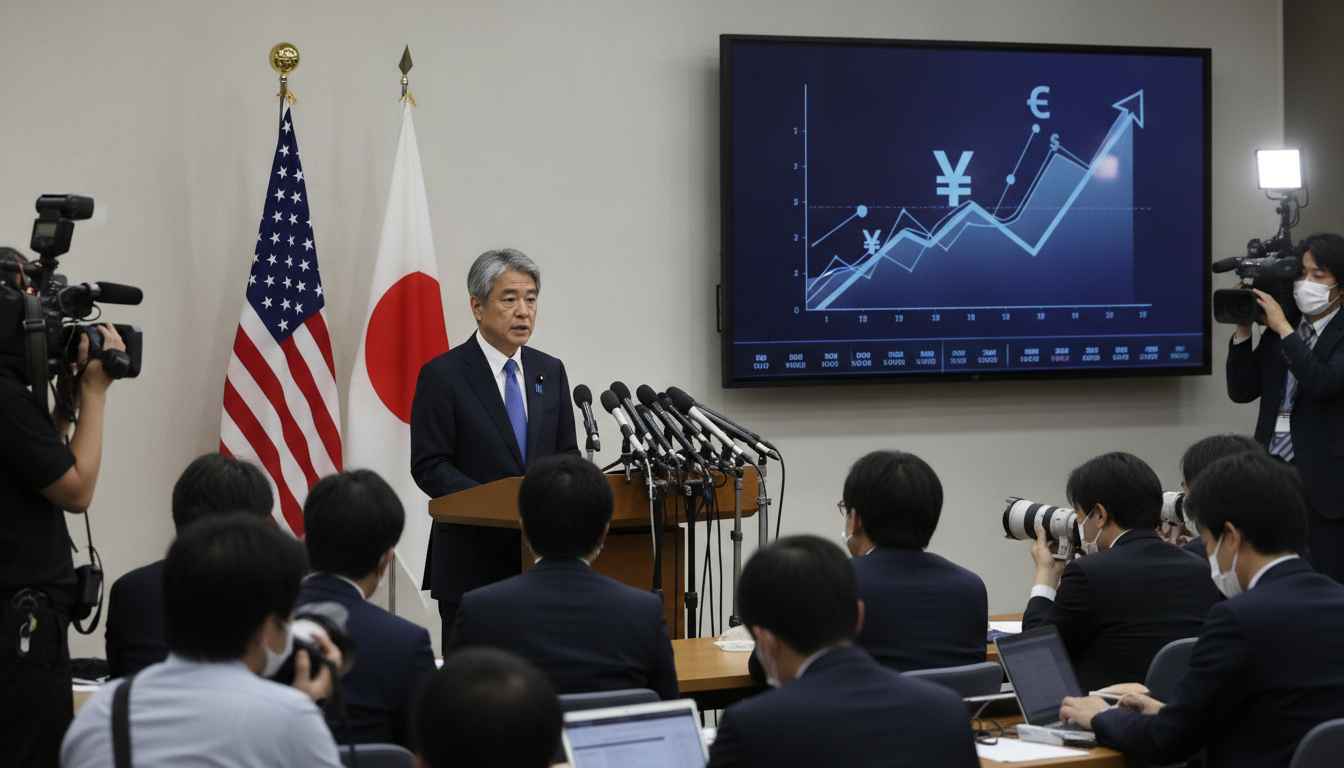
Yen Strengthens to Lower ¥155 After Japan and U.S. Coordinate Currency Purchase
Yen jumps to the lower ¥155 after Japan and the U.S. coordinated a July 31 currency purchase; Finance Minister Katayama says further intervention is possible.
Yen rally follows coordinated action
The yen strengthened sharply into the lower 155 range against the U.S. dollar on Monday, reflecting renewed market attention to government intervention. The move came after Tokyo disclosed it had purchased yen on July 31 “in coordination with the U.S. Department of the Treasury,” according to a statement by Finance Minister Satsuki Katayama on August 3, 2026.
Traders priced in the prospect of additional interventions after the disclosure, trimming positions that had bet on further yen weakness. The coordinated purchase reversed some of the recent depreciation, though dealers cautioned the currency remained sensitive to further announcements.
Finance Minister flags possibility of more measures
Katayama’s statement explicitly left open the option of further action, signaling Tokyo’s willingness to step into currency markets if large moves persisted. By stating the purchase had been coordinated with Washington, Tokyo aimed to underline international backing for stabilizing the yen.
Market participants interpreted the language as a warning shot as much as a policy action, noting that signaling can have immediate effects on speculative flows. Analysts said the combination of an actual buy and an official statement can be effective in reshaping short-term positioning.
Market reaction and heightened volatility
The initial reaction in FX markets was a swift tightening of bid-ask spreads and a reduction in one-sided short bets against the yen. Volatility spiked as algorithmic and discretionary desks adjusted risk parameters to the new information, compressing the intraday range around the lower 155 level.
Fixed-income and equity markets also registered the move, with traders watching for shifts in yield differentials that often drive currency flows. The yen’s advance was modest relative to the size of the interventions typically required to arrest persistent trends, which left some investors expecting continued choppy trading.
Previous episodes and policy context
Japan has a history of intervening when the yen depreciates sharply, and authorities have increasingly emphasized coordinated approaches in recent years. Coordination with the U.S. Treasury is intended to lend credibility to interventions and to reduce the risk of fracturing international relations over currency moves.
Monetary policy divergence between Japan and other major economies has been a structural factor behind persistent yen weakness, but officials have shown that they remain ready to act outside of standard policy tools. Markets will be watching for any follow-up language from both Tokyo and Washington that could signal a more sustained campaign.
Impact on companies and the broader economy
A stronger yen can ease import costs and temper inflationary pressures, but it can also squeeze exporters’ profit margins and weigh on equity valuations for multinational firms. Corporate treasurers and exporters were reported to be reassessing hedge programs in light of the sudden appreciation and the prospect of further swings.
For households, the immediate effects are muted, but movements in the yen feed through to prices for energy and imported goods over time. Policymakers face a balancing act between supporting domestic price stability and avoiding abrupt market distortions that could harm growth.
What investors and policymakers are watching next
Market attention will remain on any further statements from Japan’s finance ministry and the U.S. Treasury, with the potential for additional coordinated action to limit speculative positions. Traders will also follow economic data and central bank commentary that could affect interest rate expectations and, by extension, the yen’s trajectory.
Liquidity conditions around major Asian and European sessions will be monitored closely, as will order flow that indicates whether the market sees the July 31 purchase as a one-off or the start of a broader intervention strategy. Analysts stress that sustained currency moves typically require a combination of signaling, market action, and underlying macroeconomic adjustments.
The yen’s move into the lower ¥155 range on August 3 underscored how quickly currency dynamics can shift when governments act and when investors reassess risk. Markets now await clarity on whether Tokyo and Washington will take further steps to stabilize the currency and how those actions might influence global capital flows.

