
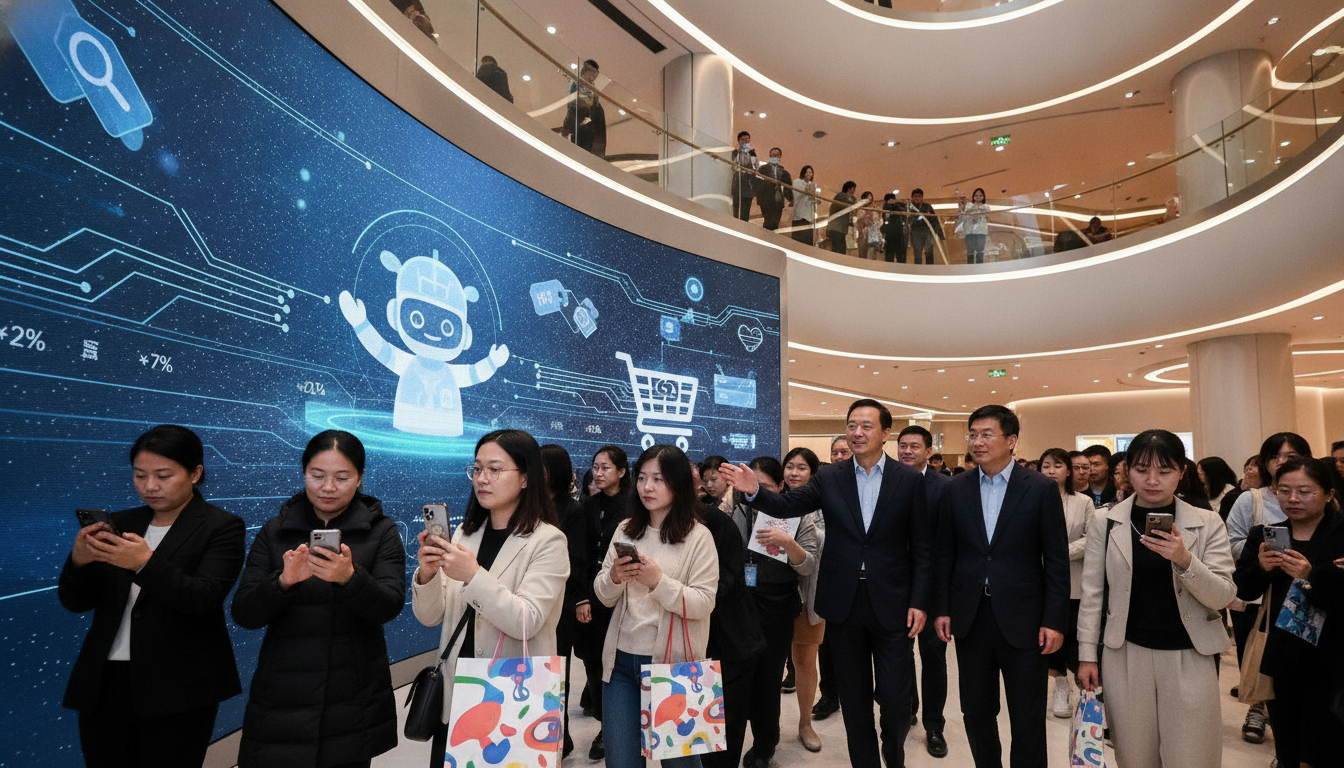
Alibaba Deploys AI at 618 Shopping Festival to Boost Sales
Alibaba deploys AI features like automated bargain-hunting and personalized prompts at the 618 shopping festival to counter weak consumer spending and lift engagement.
China’s annual 618 shopping festival opened under muted consumer demand, and Alibaba Group is turning to artificial intelligence to push sales and entice cautious shoppers. Alibaba’s AI tools at the 618 shopping festival are being used to surface deals, automate bargain discovery and prompt users with personalized offers designed to shorten the path to purchase. Company messaging and platform updates emphasize convenience and savings as the business contends with softer domestic consumption.
AI Features Aim to Nudge Shoppers
Alibaba has rolled out a suite of AI capabilities that target both discovery and checkout behavior across its ecosystems. These features include automated bargain-hunting that scans available coupons and price histories, personalized recommendation prompts and conversational interfaces that help users find products faster. The company positions these tools as a way to reduce search friction and make discounts easier to claim during a period of heightened price sensitivity.
The push is deliberate: by integrating AI into routine browsing, Alibaba seeks to transform passive window-shopping into active buying. Notifications and in-app nudges appear during product browsing and livestreams, often pairing time-limited incentives with tailored product suggestions. For merchants, the technology serves as a real-time amplifier for promotional events and clearance inventory.
Economic Backdrop Dampens Demand
China’s broader consumer environment entering this 618 cycle has been marked by uneven recovery and restrained discretionary spending. Households are reportedly prioritizing essentials and value, prompting retailers to intensify promotions to maintain year-on-year growth. The 618 festival, historically a mid-year sales peak, has become a testing ground for new tactics to sustain momentum despite a slower macro backdrop.
Analysts say the festival’s outcomes this year will be read as a bellwether for domestic consumption trends through the second half of the year. Retailers and platform operators face pressure to convert engagement into sales while avoiding margin erosion from blanket discounting. Against that context, targeted AI-driven incentives are presented as a lower-cost way to increase conversion compared with heavy universal markdowns.
How Automated Bargain-Hunting Works
The automated bargain-hunting tools are designed to simplify the discovery and application of savings without manual searching. Behind the user-facing prompts are algorithms that scan available coupons, seller discounts and limited-time offers, then surface the best aggregate savings for the shopper. Some features reportedly simulate price-tracking to alert consumers when a product hits a pre-set threshold.
By removing the need for consumers to clip multiple coupons or cross-check sellers, the tools aim to lower the cognitive cost of buying. The user experience typically culminates in a single streamlined checkout where savings are pre-applied, increasing the likelihood that a browsing session ends in a sale. For shoppers focused on value, this convenience can be the difference between waiting and buying.
Merchants Adjust Campaigns Around AI Signals
Small and large merchants on Alibaba’s platforms are adapting promotional strategies to leverage AI-driven traffic and prompts. Sellers are increasingly structuring discounts and inventory feeds to be compatible with automated discovery systems, ensuring their offers surface to the right cohort of buyers. Brand stores and third-party merchants are also experimenting with tailored bundles and urgency-based pricing to benefit from in-session nudges.
At the same time, platform operators are introducing performance-based tools that let merchants bid for visibility within AI recommendation flows. This shifts part of the promotional calculus from broad advertising to more surgical placement tied to consumer intent signals. Merchants say the approach can yield higher-quality traffic, though it requires tighter integration between inventory management and promotional strategy.
Privacy, Trust and Regulatory Questions
The expanded use of AI in retail raises questions about data use, transparency and consumer protection. Critics caution that aggressive personalization and automated prompts could cross lines if users are unaware of how price comparisons or nudges are generated. Regulators and consumer advocates have increasingly scrutinized algorithmic marketing practices in recent years, emphasizing the need for clarity and opt-out options.
Industry participants note that maintaining user trust is critical, and that transparency about how recommendations are ranked or how savings are calculated will be necessary for broader acceptance. Platforms that can demonstrate clear benefits to consumers while offering straightforward privacy controls are likely to gain an advantage in a cautious market.
Early Engagement Signals and Industry Response
Early engagement metrics reported anecdotally suggest increased time-on-site and higher interaction with promotional tools, even as overall basket sizes remain variable. Retail and marketing consultants say that AI-driven discovery can lift conversion rates in targeted cohorts, though the impact on aggregate sales depends on the balance between increased purchases and discounted margins. Observers will be watching post-festival data to judge whether the tools produce sustainable uplift.
Competitors and smaller platforms are monitoring Alibaba’s approach, weighing similar deployments or tailored alternatives that emphasize privacy or curated discovery. The broader retail industry sees this phase as part of a wider shift toward automation and personalization in commerce, accelerated by tighter consumer budgets and the need to extract more value from each engagement.
Looking ahead, Alibaba’s AI initiatives at the 618 shopping festival will be measured not only by headline sales figures but by whether the tools generate repeatable customer behaviors and improved merchant economics. If the technology can consistently turn cautious browsers into satisfied buyers without eroding margins, it may become a permanent fixture in China’s retail playbook.

