
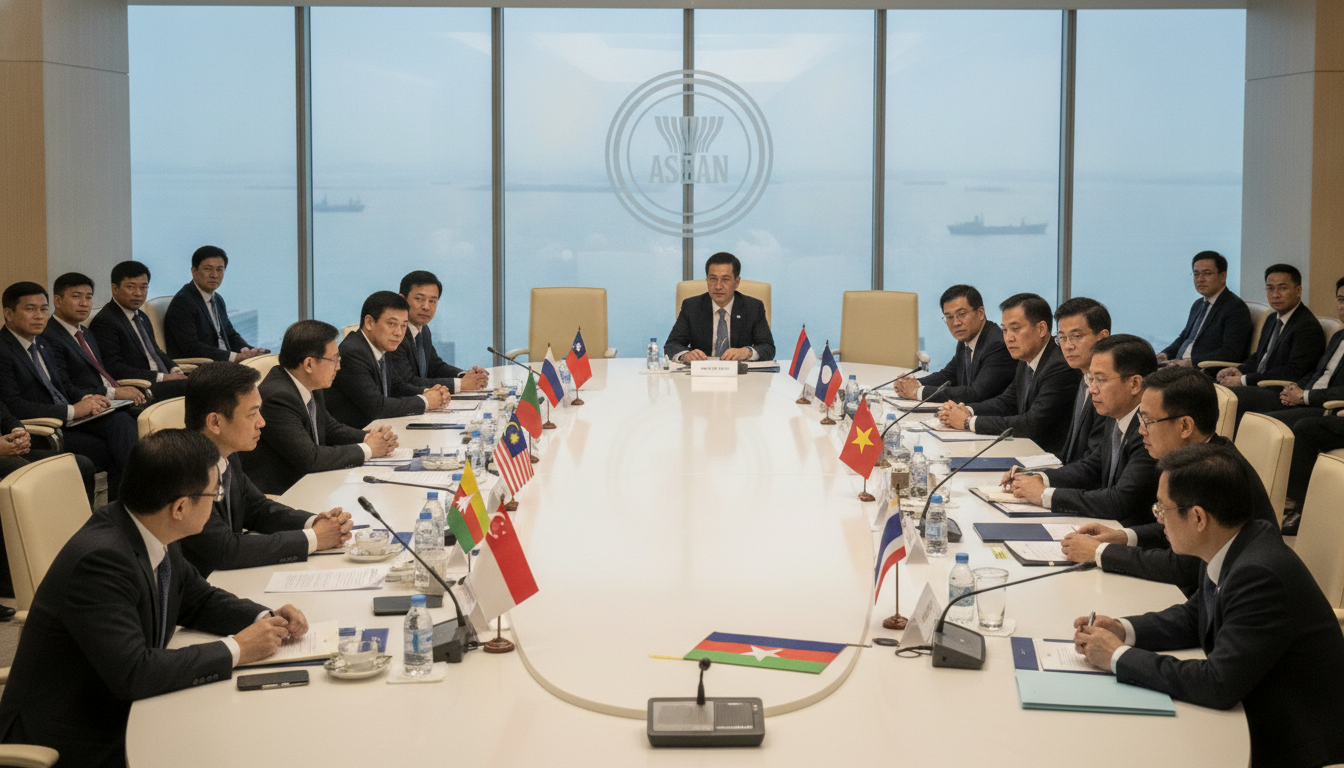
ASEAN Divided Over Myanmar Engagement as South China Sea Tensions Shadow Manila Talks
ASEAN foreign ministers failed to reach consensus on Myanmar engagement during a meeting in Metro Manila on July 21, 2026, highlighting deep divisions over how to respond to the country’s ongoing crisis. The lack of agreement on Myanmar engagement came as disputes in the South China Sea intensified, complicating efforts to present a unified regional position.
Ministers split over Myanmar engagement
Foreign ministers at the meeting voiced sharply different views on whether to engage Myanmar’s ruling authorities, suspend dialogue or press for tougher measures. Delegates described a clear fault line between members advocating closer contact to influence the junta and those warning that engagement without concrete changes would amount to legitimizing violence.
The disagreement reflected long-standing tensions inside ASEAN about non-interference and collective responsibility, with several diplomats saying the bloc had struggled to reconcile principle with pragmatism. The meeting produced no joint communiqué on Myanmar, underscoring how the crisis remains a persistent obstacle to deeper regional cooperation.
ASEAN chair’s opening and Philippine role
The Philippines, as ASEAN chair, opened the session and sought to steer discussions toward consensus, emphasizing the importance of dialogue and regional stability. Philippine Foreign Secretary Theresa Lazaro delivered the chair’s remarks in Metro Manila, calling for coordinated action but acknowledging the complexity of agreeing a single course.
Manila’s dual role as host and chair placed particular pressure on the Philippine government to bridge differences, even as it balances relations with major external powers. Officials said the chair’s office attempted procedural compromises to keep talks on track, but substantive divergences persisted.
South China Sea tensions intrude on talks
Talks were further strained by renewed frictions in the South China Sea, where competing maritime claims and recent naval incidents raised security concerns among member states. Delegations warned that rising tensions at sea were diverting attention from humanitarian and political issues, and potentially undermining collective responses to crises like Myanmar.
Several ministers linked the maritime disputes to broader strategic competition in the region, saying that external state actions were complicating ASEAN’s ability to act cohesively. Observers noted that discussions on maritime security became interwoven with debates on Myanmar, reducing time available for constructive, issue-specific proposals.
Diplomatic fault lines and member positions
The meeting exposed divergent strategic calculations: some ASEAN members argued that sustained engagement could preserve diplomatic channels and protect civilians, while others contended that continued outreach would reward unlawful behavior. These contrasting approaches reflected differing national priorities, domestic politics and relations with outside powers.
Smaller states within the bloc expressed caution about measures that might escalate conflict or draw them into larger power rivalries, whereas others pressed for firmer mechanisms to ensure compliance with ASEAN commitments. The inability to reconcile these positions highlighted limits to consensus-driven diplomacy when member interests diverge.
Implications for ASEAN unity and regional security
Analysts said the failure to agree on Myanmar engagement risks weakening ASEAN’s credibility as a regional problem-solver and could embolden external actors to fill diplomatic and humanitarian gaps. A fragmented approach may complicate coordinated aid delivery and reduce pressure on Myanmar’s leaders to address civilian suffering and restore basic governance.
Moreover, the confluence of the Myanmar stalemate and maritime tensions could strain institutional routines that have long underpinned regional stability. If divisions persist, experts warn, ASEAN’s capacity to mediate future crises and uphold its centrality in regional fora may be diminished.
Possible next steps and international response
Officials indicated that work will continue at lower diplomatic levels, with special envoys and working groups likely to meet in the coming weeks to explore pragmatic steps forward. ASEAN may consider targeted confidence-building measures, humanitarian coordination, or renewed calls for access on specific issues while avoiding a formal collective stance that would split the bloc.
Outside actors, including the United Nations and several major powers, are expected to monitor outcomes closely and sustain their separate engagement with Myanmar. International players may increase bilateral assistance or pressure, but diplomats cautioned that unilateral actions could further complicate ASEAN’s internal dynamics.
The meeting in Manila underscored how intra-regional disagreements and external security pressures together shape Southeast Asia’s diplomatic landscape, leaving hard choices for leaders who seek both unity and influence.

