
ASEAN Regional Forum Ministers Convene in Manila to Tackle Maritime, Cyber and Energy Threats
At the ASEAN Regional Forum in Manila on July 23, 2026, foreign ministers from major powers and Southeast Asian governments met to address maritime security, cybercrime and fallout from the Middle East energy crisis. The gathering focused on practical steps to de-escalate regional tensions and curb the rise in online scams affecting citizens and businesses across the region. Delegations emphasized dialogue and co-operation as the preferred path amid competing strategic interests.
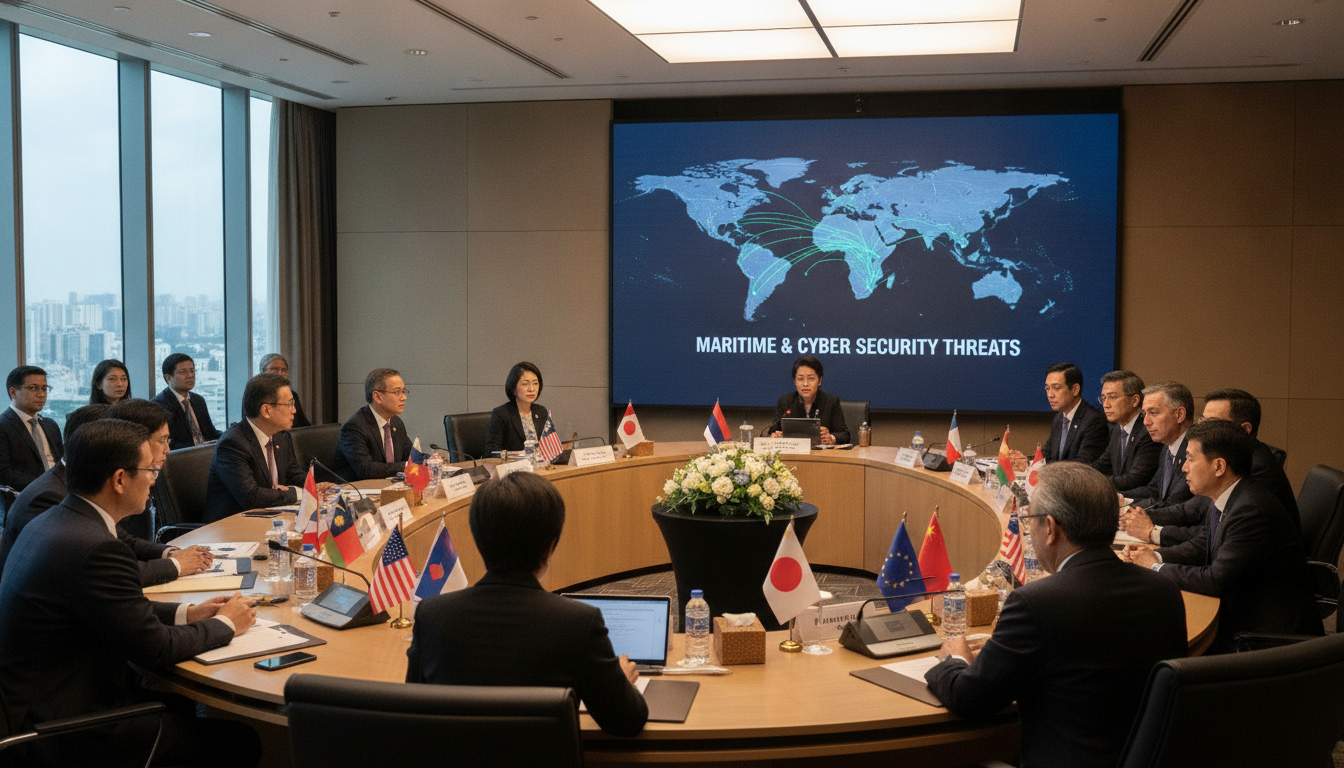
Ministers meet in Manila
Foreign ministers and senior diplomats from ASEAN members and key external partners gathered at the convention center in Manila for the forum’s plenary sessions. The meeting brought together delegations from Asia, Europe and North America to discuss a mix of traditional and non-traditional security challenges pressing the region.
Organizers framed the agenda to reflect immediate risks and long-term stability, with roundtable talks, bilateral side meetings and joint statements planned through the day. Officials said the format was designed to allow candid exchanges on contentious issues while preserving multilateral channels for diplomacy.
Maritime security and contested waters
Maritime security dominated much of the discussion as ministers reviewed incidents and strategic postures in busy sea lanes. ASEAN officials stressed the need to prevent miscalculation in disputed areas and to maintain freedom of navigation for commercial shipping and fisheries.
Delegations called for stronger incident-prevention mechanisms and more robust communication protocols between naval and coastguard forces. Several ministers urged renewed commitment to existing ASEAN-led frameworks and confidence-building measures to lower the risk of escalation.
Cyber threats and surge in scams
Cybersecurity emerged as a central thread, with ministers expressing concern about the proliferation of online scams and organized digital fraud targeting households and small businesses. Representatives highlighted how cross-border criminal networks exploit gaps in law enforcement co-ordination and technical capacity.
Participants discussed enhancing information-sharing, boosting regional cyber incident response capabilities and expanding capacity-building assistance for vulnerable states. Proposals included a regional platform for rapid exchange of indicators of compromise and joint training on digital forensics and victim support.
Energy shock from the Middle East and regional impacts
The forum also examined how the Middle East energy disruptions are reverberating across Southeast Asia’s economies, raising costs for import-dependent countries. Finance and trade ministers in separate meetings warned that sustained price volatility could slow recovery and deepen inflationary pressures.
Foreign ministers discussed diplomatic measures to stabilise energy supplies, including diversifying sources, ramping up strategic reserves and co-ordinating with external partners to safeguard critical maritime routes. Several delegations signalled support for intensified dialogue with energy-producing states and multilateral institutions.
Positions of major powers and diplomatic signals
Ministers from major powers used the forum to calibrate public stances and private diplomacy, balancing strategic competition with the need for co-operative problem-solving. While firm on national interests, several delegations reiterated support for ASEAN centrality in regional architecture and expressed willingness to engage in practical co-operation.
Bilateral sideline meetings provided space for candid exchanges on military transparency, trade friction and cyber norms, diplomats said. Observers noted that the presence of major powers at the ASEAN Regional Forum underscored their recognition of Southeast Asia’s geopolitical importance and the limits of unilateral approaches.
Agreements reached and next steps
At the close of plenary sessions ministers issued a concise communique outlining commitments to strengthen maritime incident prevention, expand cyber co-operation and monitor energy market developments. The document called for technical working groups to follow up on practical measures within specified timeframes.
Officials agreed to convene sectoral meetings to advance the proposals, and several countries offered training and technical assistance to implement joint initiatives. Ministers set a timetable for further diplomatic engagement ahead of the next ASEAN summit to track progress and seek measurable results.
In the final hours, delegates expressed cautious optimism that the ASEAN Regional Forum had reinforced lines of communication and produced concrete steps to address shared risks, while acknowledging the hard work ahead to translate words into durable action.

