
Audi deepens partnership with SAIC in China as Shanghai R&D hub and China-only EVs multiply
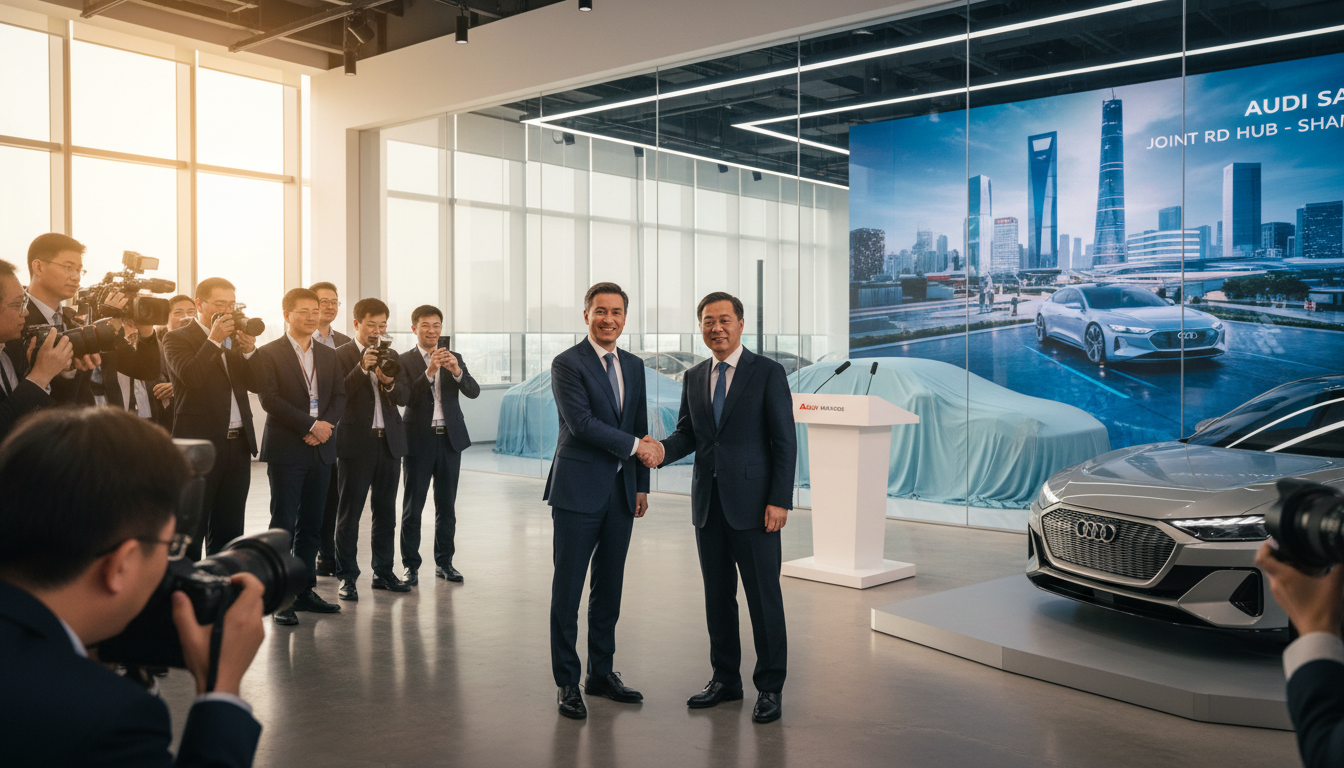
Audi-SAIC partnership ramps up Shanghai R&D and China-only models to stem a sales slump and introduce a joint electric SUV at the Beijing Auto Show on April 24, 2026.
Audi is intensifying its collaboration with Chinese partner SAIC Motor as the German marque seeks to arrest a sales decline in the world’s largest auto market. The Audi-SAIC partnership will center on a new Shanghai research and development hub and a slate of China-only electric models designed to meet local consumer preferences. The first jointly developed electric SUV from the collaboration is slated to debut at the Beijing Auto Show on April 24, 2026, highlighting the urgency of Audi’s push into tailored, locally engineered vehicles.
Details of the Shanghai R&D expansion
The Shanghai facility will serve as a focal point for engineering, software and design work aimed at accelerating Audi’s local product cadence. The hub is expected to bring together SAIC’s knowledge of domestic supply chains and Audi’s global engineering standards to speed development cycles.
A primary objective is to integrate vehicle software, connectivity and user interfaces that reflect Chinese consumer expectations. Executives say closer collaboration on hardware and software in Shanghai should shorten time-to-market for models conceived specifically for China.
China-only models and local market strategy
Audi is preparing a line of China-only models to be produced and sold within the country, reflecting a broader industry trend among foreign marques. These vehicles will be tuned for local tastes, with features and price points that differ from Audi’s global portfolio.
The strategy signals a shift from exporting adapted global models toward purpose-built cars aimed at regaining competitiveness. Analysts expect China-only electric vehicles to be central to Audi’s recovery plan as customers increasingly favor locally optimized products.
Joint electric SUV to launch at Beijing Auto Show
The first vehicle from the Audi-SAIC collaboration is a battery-electric SUV scheduled to be unveiled at the Beijing Auto Show starting April 24, 2026. The model is positioned as a mainstream EV offering in Audi’s China line-up and is intended to showcase the technical outcomes of the partnership.
The SUV launch will be closely watched for pricing, range figures and the extent to which it includes China-specific technology, such as localized connectivity services or in-car ecosystem integrations. Market reaction at the auto show will be an early indicator of the partnership’s commercial prospects.
Commercial and supply-chain implications
By deepening ties with SAIC, Audi aims to tap competitive local sourcing and faster procurement channels for batteries, chips and electronic components. Closer integration with SAIC’s manufacturing footprint could reduce costs and improve margins on China-focused models.
The move also reflects pressure from domestic EV makers that have refined rapid development cycles and integrated software-heavy offerings. Strengthened local production and joint engineering are intended to defend Audi’s market share amid fierce competition.
Competitive backdrop in China’s EV market
Foreign brands are increasingly adapting strategies to match the fast-evolving Chinese EV sector, where domestic firms have pushed innovations in software, battery chemistry and direct-to-consumer sales models. Audi’s alliance with SAIC follows a pattern of international carmakers creating deeper local partnerships to remain relevant.
Success will depend on Audi’s ability to combine its brand strengths with the agility and market knowledge of a Chinese joint-venture partner. Consumer adoption will hinge on perceived value, technological relevance and the after-sales experience.
Audi-SAIC partnership initiatives will also test dealer networks and service operations, as locally developed cars often require different maintenance pathways and digital services. How Audi navigates these operational shifts will shape consumer confidence in the new models.
Looking ahead, the partnership’s immediate measure of success will be sales response to the SUV unveiled at the Beijing Auto Show and subsequent launch results across major Chinese cities. If the Audi-SAIC partnership can deliver competitively priced, software-rich and locally tailored EVs, it may help stabilize Audi’s position in China and set a template for other luxury marques adapting to the market.
The coming months will be critical as Audi and SAIC move from joint development announcements to production and customer delivery, testing whether a deeper local focus can translate into tangible sales recovery.

