
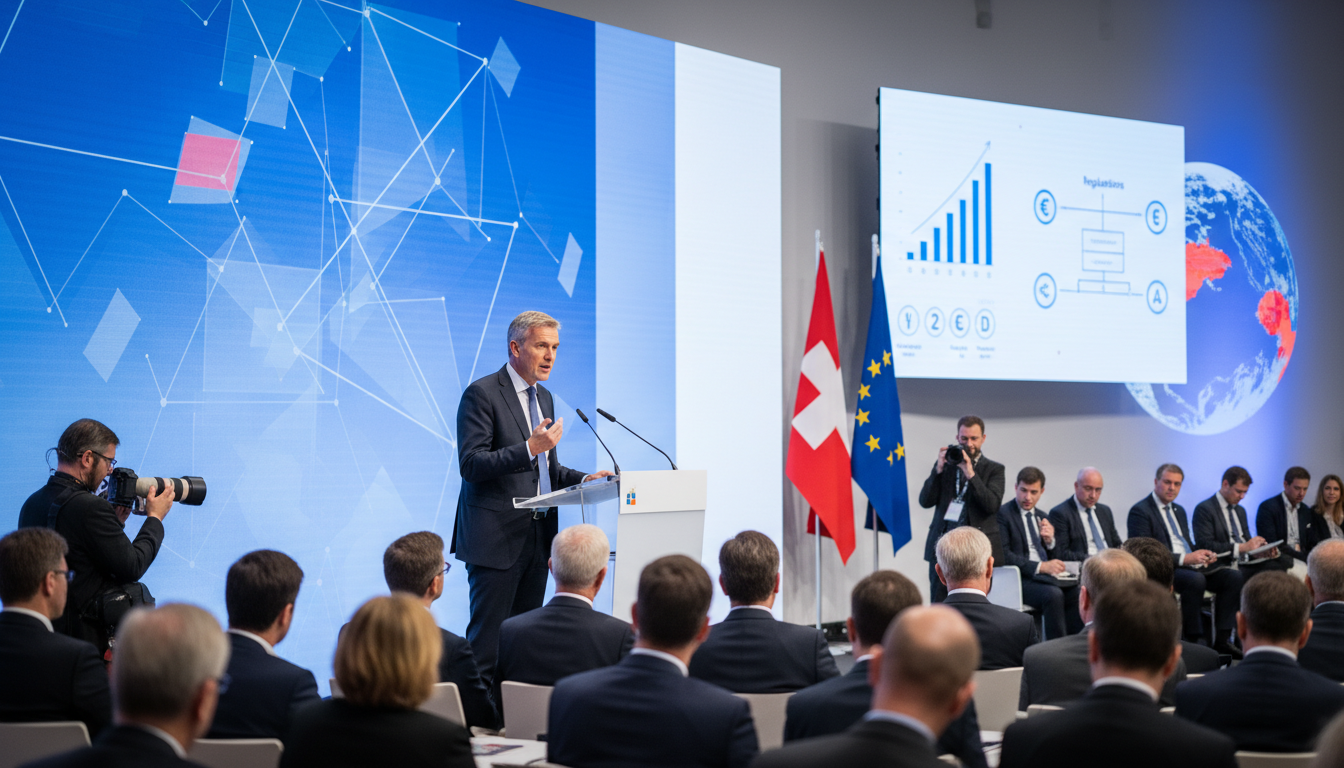
Axpo CEO Says Nuclear Renaissance Unlikely Amid Cost and Regulatory Hurdles
Axpo CEO Christoph Brand warns a nuclear renaissance is unlikely as high costs, regulatory barriers and geopolitical shocks reshape global energy security.
The chief executive of Swiss energy company Axpo Group, Christoph Brand, has expressed skepticism about a broad nuclear renaissance despite renewed interest following the Iran War and rising concerns over fossil fuel dependence. Brand pointed to prohibitive construction costs, lengthy permitting processes and complex regulatory frameworks as principal obstacles that will limit the speed and scale of any return to nuclear power. His remarks underscore a widening debate about how nations can secure energy supplies while meeting climate goals and managing investment risk.
Axpo chief’s assessment
Brand’s comments came as governments from Europe to Asia revisit nuclear energy as a tool to reduce reliance on fossil fuel imports amid geopolitical instability. He argued that while nuclear offers baseload electricity, the economics and timelines of building new reactors make rapid deployment improbable. The CEO highlighted that utility companies and investors face tough choices between long-term nuclear projects and faster, lower-capital alternatives.
Brand stressed that regulatory uncertainty increases project risk and discourages private capital. He warned that without clear, stable policy frameworks and streamlined approval processes, many planned nuclear projects will encounter delays or cost overruns. Those dynamics, he said, undermine the case for a sweeping nuclear revival in the near term.
Geopolitical pressure and energy security
The Iran War has intensified concerns over energy supply chains, prompting some countries to reconsider their energy mixes and import strategies. Policymakers in affected regions are assessing whether domestic or diversified sources of power, including nuclear, can reduce exposure to volatile fossil fuel markets. This geopolitical pressure has elevated nuclear energy in national security discussions, particularly where access to reliable electricity is deemed strategic.
However, Brand and others caution that security-driven policy shifts do not automatically translate into practical or financial feasibility. Building new reactors requires not only capital but also a stable regulatory environment, skilled labor and long-term political commitment. The mismatch between strategic intent and on-the-ground realities helps explain why enthusiasm for nuclear can be high even as actual project starts remain limited.
Economic and regulatory hurdles
Construction costs for contemporary reactor designs have risen sharply in many jurisdictions, driven by tighter safety standards, supply-chain constraints and inflation. Project timelines often run into a decade or more from planning to commissioning, increasing exposure to changes in market conditions and political leadership. Brand emphasized that these factors make nuclear a high-stakes bet for utilities balancing shareholder expectations and short-term market pressures.
Regulatory complexity further compounds financial risk. Licensing regimes differ widely across countries, and public opposition or legal challenges can add years to delivery schedules. For investors, the combination of capital intensity, long payback periods and regulatory uncertainty requires risk premiums that are frequently hard to justify when cheaper, faster alternatives exist.
Renewables and gas as immediate alternatives
While nuclear is being reconsidered, many governments continue to accelerate deployment of renewables and flexibilities such as natural-gas peaker plants and storage. Wind, solar and battery systems can be scaled more rapidly and attract significant private investment, offering a quicker path to emissions reductions and supply diversification. Brand noted that in many markets, a mix of renewables plus flexible gas and grid enhancements provides a more cost-effective route to energy security than new nuclear builds.
Grid integration and storage remain technical challenges, but public and private funds have flowed into solutions that reduce intermittency concerns. As those technologies mature, they further lower the opportunity cost of committing scarce capital to nuclear projects that might only deliver benefits many years hence.
Investor and market reactions
Financial markets and utility boards are closely weighing Brand’s assessment against political signals that favor nuclear restarts. Some investors are cautious, preferring technologies with clearer short-term returns. At the same time, sovereign funds and state-backed entities in countries pursuing nuclear programs may accept lower commercial returns because of strategic considerations, complicating market comparisons.
Insurance, financing and supply-chain readiness are additional variables that influence whether planned projects proceed. In jurisdictions where governments offer guarantees, loan support or streamlined permitting, nuclear projects have a higher chance of moving forward. Elsewhere, companies face tougher calculus and are more likely to prioritize modular or renewable projects.
Policy implications and next steps
Brand’s comments are likely to prompt policymakers to reassess the conditions needed to make nuclear viable at scale. That includes rethinking permitting practices, exploring public-private financing models and investing in workforce development to reduce cost and schedule risk. Where nuclear is part of a strategic plan, governments may need to provide clearer long-term commitments to attract capital.
At the same time, the mix of near-term measures to shore up energy security—such as LNG contracts, strategic reserves and accelerated renewable deployment—will shape how much political and fiscal bandwidth remains for nuclear investments. The balance between strategic ambition and pragmatic delivery will determine whether nuclear re-emerges as a major global growth industry or remains a niche option in select markets.
Global energy planners now face a choice between rapid, deployable solutions and long-duration investments that carry higher upfront risk. As countries navigate the trade-offs accelerated by the Iran War and other geopolitical stresses, the trajectory for nuclear energy will depend less on intent and more on the ability to align finance, regulation and industrial capacity.

