
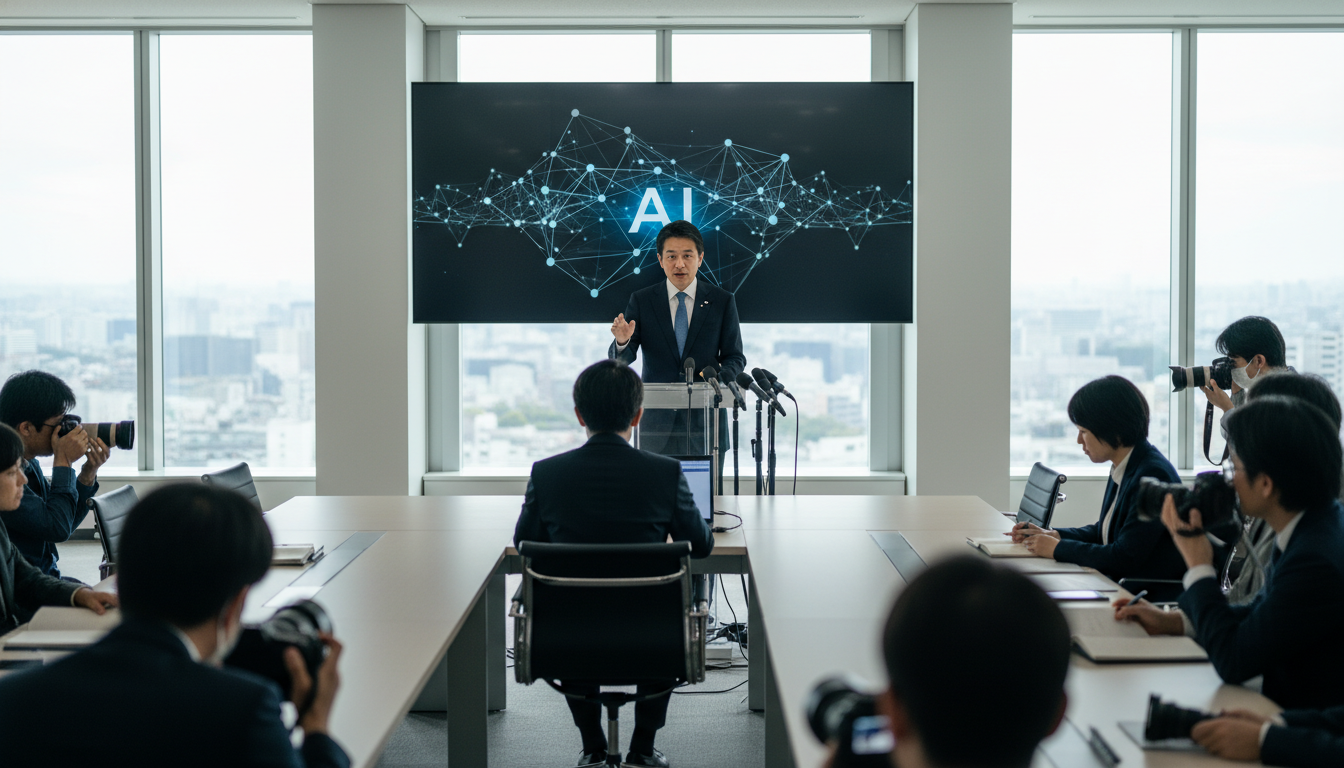
Kawabe Says AI Automakers Could Run With One Human as Human Role Becomes a "Bottleneck"
LY Corp’s outgoing chairman Kentaro Kawabe says AI automakers with one human operator are feasible, urging entrepreneurs to pair business analysis with AI.
TOKYO — Kentaro Kawabe, outgoing chairman of LY Corp., said in a recent interview that "AI automakers" — businesses driven primarily by artificial intelligence — could operate with a single human on staff. He argued that human involvement in AI-driven operations can create a bottleneck that reduces overall efficiency. Kawabe also advised that prospective AI solopreneurs need strong analytical skills about existing business models and solid knowledge of AI technologies.
Kawabe frames human presence as an operational bottleneck
Kawabe told reporters his view that when people are inserted into AI workflows simply to preserve traditional structures, they often slow decision-making and execution. He used the term "bottleneck" to describe the friction that can arise when human approval, coordination or manual intervention interrupts automated processes. The comment reflects a growing debate in corporate Japan about where human oversight adds value versus where it impedes scale and speed.
Vision for AI automakers with minimal staff
In the interview Kawabe suggested that companies built around AI systems could, in some cases, function with minimal human staffing — even a single operator supervising automated systems. He described a model in which algorithms manage routine operations, while a small team or solo operator focuses on strategy, exception handling and compliance. Kawabe portrayed this structure as a natural outcome of mature AI systems that can execute repetitive tasks and learn from data without continuous human direction.
Potential impact on Line and Yahoo Japan services
LY Corp., operator of the Line messaging app and the Yahoo Japan portal, is widely watched for how it applies AI across large-scale consumer services. Kawabe’s remarks were framed against that operational backdrop, as he pointed to the efficiency gains possible when AI handles personalization, content moderation and recommendation pipelines. He stopped short of announcing concrete changes to Line or Yahoo Japan staff levels, but said the broader industry should prepare for a shift in the balance between human roles and machine automation.
Guidance for aspiring AI solopreneurs
Kawabe advised entrepreneurs attracted to running AI-led enterprises to combine deep analysis of existing business models with hands-on AI expertise. He emphasized that identifying friction points in established services and mapping where AI can improve throughput are prerequisite skills. He also recommended that solo founders prioritize data governance and measurable performance metrics to ensure automated systems operate reliably and transparently.
Questions about employment, regulation and oversight
The prospect of AI automakers operating with minimal human personnel raises immediate questions about jobs, consumer protection and regulatory oversight. Kawabe’s comments underscored efficiency potential but did not resolve who will set ethical boundaries or manage automated decisions that affect users. Policymakers and industry groups increasingly face pressure to clarify accountability frameworks for automated services, especially where decisions touch on privacy, safety or fair market practices.
Leadership change at LY Corp. and corporate strategy
Kawabe spoke as he prepares to leave his role as chairman, a transition that places additional focus on how LY Corp. will shape its AI strategy under new leadership. The company’s dual role as a platform operator and media portal makes its approach to automation particularly consequential for advertisers, users and partner businesses. Kawabe said that while automation can reduce routine staffing needs, corporate stewardship and strategic oversight will remain essential during any implementation.
The remarks from LY Corp.’s outgoing chairman are likely to intensify discussions in Japan about how far companies should automate core functions and what safeguards are necessary when AI systems assume decision-making roles. Kawabe’s call for entrepreneurs to pair business analysis with AI skills signals a shift in expectations for founders and managers in an increasingly automated economy.

