
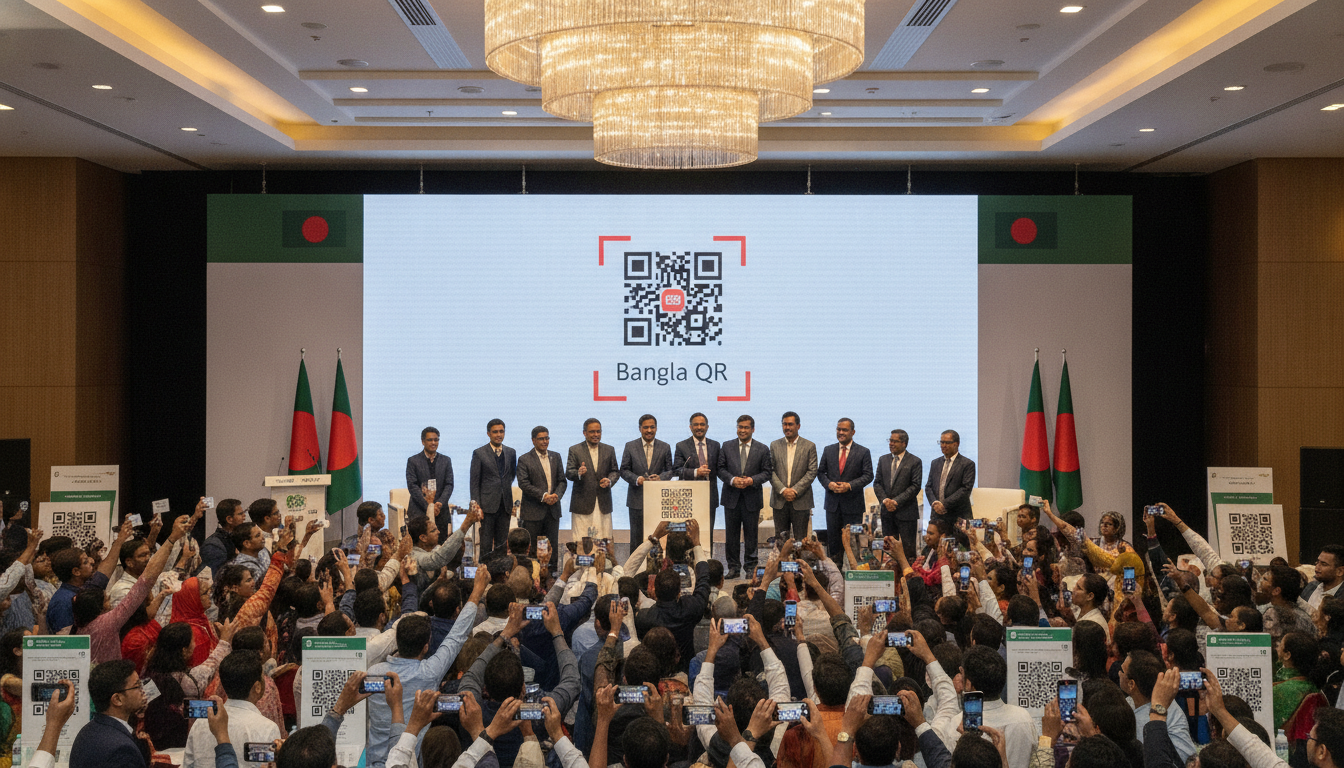
Bangladesh rolls out Bangla QR nationwide to unify digital payments
Bangladesh launches Bangla QR nationwide to unify QR payments, boost tax revenue and expand financial inclusion by making bank and mobile payments interoperable.
Bangladesh has rolled out Bangla QR, a nationwide interoperable QR payment system designed to reduce the economy’s reliance on cash and bring informal transactions into the formal financial system. The Bangla QR standard allows customers and merchants to transact across participating banks and mobile financial services using a single QR code. Government and central bank officials say the initiative is intended to accelerate financial inclusion while widening the tax base.
Bangladesh rolls out Bangla QR nationwide
Bangladesh Bank and payments industry participants unveiled the new standard as a consolidated approach to QR payments across the country. The system replaces a patchwork of proprietary QR formats and lets a customer of any participating bank or mobile financial service pay any merchant by scanning one code.
Bangladesh Bank publicized the rollout through its official channels, highlighting interoperability and convenience as core goals. Regulators framed the move as a structural step to modernize retail payments and integrate small merchants into the digital economy.
How the single-code system operates
Under Bangla QR, each merchant displays one universal QR code that can be read by apps from different banks and mobile financial service providers. The payment message is carried via a standardized data format so the payer’s app and the payee’s account can be reconciled without custom integrations.
The approach reduces friction for merchants who previously needed multiple codes or separate terminals to accept different services. It also simplifies the customer experience, lowering the technical barrier for people switching from cash to digital payments.
Expected impact on tax revenue and inclusion
Policymakers expect wider digital acceptance to create a clearer transaction record, which can help expand taxable economic activity and improve revenue collection. Formalizing a portion of the informal economy through traceable payments is presented as a long-term source of public finance gains.
At the same time, the initiative is pitched as inclusive: mobile-first customers, small shopkeepers and informal service providers should gain safer access to payments and digital financial services. Expanded digital transaction histories can also support broader access to credit and government benefits over time.
Merchant onboarding and small-business effects
For small merchants, Bangla QR aims to lower the cost and complexity of accepting digital payments by eliminating duplicate equipment and signage. The consolidated code model reduces the need for multiple point-of-sale devices and cuts onboarding time for shopkeepers joining digital payment networks.
Nevertheless, widespread merchant uptake will require active training, simplified registration procedures and, in some cases, subsidized hardware or reduced fees. Adoption among micro- and home-based businesses will be a key metric of the rollout’s success.
Technical safeguards and consumer protection
The rollout plan emphasizes interoperability standards, transaction reconciliation services and settlement rules to ensure funds flow correctly between banks and mobile financial services. Operators have also outlined measures to authenticate payers and merchants and to monitor suspicious transactions under anti-money-laundering rules.
Consumer protection measures, including clear dispute-resolution channels and limits on liability for unauthorized payments, will be important to build trust. Successful implementation will depend on resilient connectivity, robust back-end clearing and regularly updated fraud-prevention protocols.
Risks, limitations and next steps
Obstacles to a rapid shift from cash include uneven internet access in rural areas, limited smartphone penetration for some segments, and persistent cash preferences among both consumers and vendors. There are also operational risks such as intermittent connectivity, merchant reluctance and the need to align fee structures across providers to avoid perverse incentives.
Authorities and industry participants will need to monitor usage patterns, adjust technical rules and provide outreach to underserved communities. Regular reporting on adoption rates, transaction volumes and merchant complaints can guide incremental improvements.
As Bangla QR begins nationwide operation, the coming months will show whether the single-code approach can meaningfully reduce cash usage and bring more economic activity into formal channels. The system’s effectiveness will be judged by how quickly merchants adopt the standard, how widely consumers use interoperable payments, and whether regulators can sustain trust through secure, transparent operations.

