
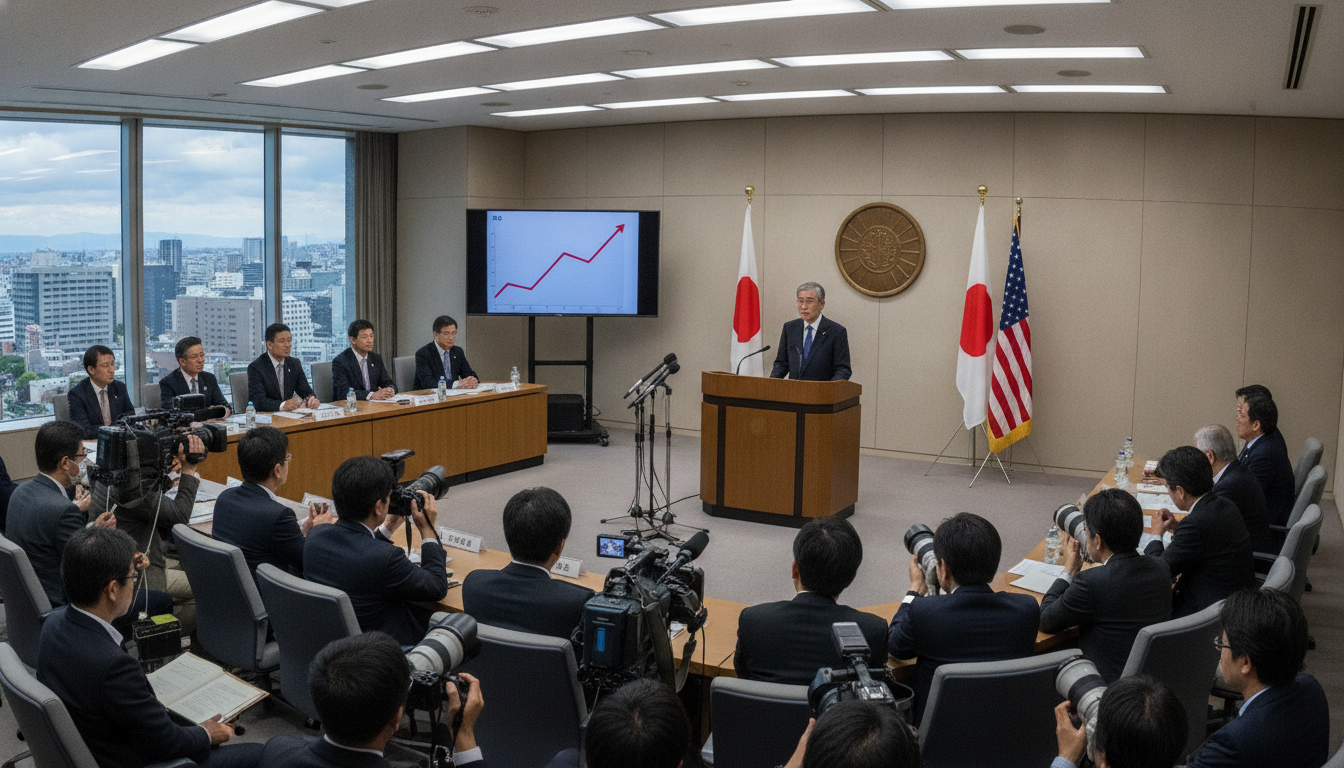
Bank of Japan rate hike lifts policy rate to 1% after U.S. Treasury and market pressure
Bank of Japan raises policy rate to 1% on June 16, 2026, the highest in 31 years, after market pressure and a U.S. Treasury push that influenced Prime Minister Takaichi.
The Bank of Japan rate hike took effect on Tuesday, June 16, 2026, when the central bank raised its policy interest rate to 1 percent, the highest level since the mid-1990s. The outcome marked a decisive break from decades of ultra-loose policy and came after intense market pressure and external diplomatic nudges. Prime Minister Sanae Takaichi had been publicly cautious about rapid tightening, but officials said the balance of economic and financial risks compelled acceptance of the move.
Bank of Japan raises policy rate to 1%
The Bank of Japan announced the increase to a 1 percent policy rate on June 16, 2026, citing persistent inflationary pressures and financial stability concerns. Officials framed the decision as a calibrated step toward normalizing monetary conditions while watching growth and wage trends. The 1 percent level is the highest since the early 1990s and signals a new phase in the central bank’s policy framework.
Policy committee members debated the timing and magnitude of the rise with an eye to both domestic inflation and international spillovers. The central bank emphasized it would retain flexibility on the path of future hikes depending on incoming data on prices, growth, and financial market functioning.
Prime Minister Takaichi’s initial resistance
Prime Minister Sanae Takaichi was reported to have been initially wary of aggressive rate rises, voicing concerns about the impact on households and small businesses. Those close to the government said Takaichi preferred a gradual approach that would avoid sudden shocks to mortgage rates and corporate borrowing costs. Her caution reflected political sensitivity to rising living costs even as inflation reached multi-year highs.
Despite early reluctance, government advisers and finance officials argued the risks of delay had grown as markets priced in faster global tightening. After reviewing updated economic projections and market developments, the cabinet signaled conditional support for the Bank of Japan’s decision, acknowledging that inaction posed its own set of risks to financial stability.
U.S. Treasury Secretary urged Japanese action
The decision was influenced in part by external diplomatic pressure, including public and private messages from the U.S. Treasury. U.S. Treasury Secretary Scott Bessent is reported to have urged Japanese officials to raise the policy rate to reduce the chance of disruptive capital flows and to align global policy stances. Treasury officials framed the appeal as aimed at preventing market disorder and ensuring a smooth adjustment of cross-border financial conditions.
Tokyo’s policymakers said the diplomatic exchanges reinforced domestic analysis that delaying action could invite greater volatility. While the Bank of Japan retains independence in setting monetary policy, the international context and coordination among major economies played a role in the timing of the move.
Market pressure and currency dynamics
Financial markets had been exerting growing pressure on Tokyo to tighten policy as long-term yields and the yen reacted to global rate shifts. Analysts point to a sustained period of capital outflows and a weaker currency that increased the risk of imported inflation and financial stress for debtors. Trading desks noted that market expectations for a faster normalization of policy abroad were creating imbalances that domestic policymakers could no longer ignore.
The Bank of Japan’s action aims to reduce sudden swings in bond yields and to signal to investors that Japan will not indefinitely trail global peers on monetary tightening. Market participants will now watch how quickly term premia and yield curves adjust and whether the currency stabilizes following the policy announcement.
Impacts on households, firms, and banks
Raising the policy rate to 1 percent is expected to increase borrowing costs across the economy, affecting mortgages, corporate loans, and government debt servicing. Banks are likely to see margins shift as short-term funding costs rise, and some lenders may pass these costs to consumers. The central bank has warned that increases will be managed to avoid abrupt disruptions, but households with variable-rate mortgages and small firms with tight liquidity could feel pressure.
Corporate finance teams are re-evaluating funding strategies and hedging plans in light of higher rates and a potentially more volatile yield environment. Policymakers have signaled that fiscal and regulatory tools remain available to cushion vulnerable sectors, while urging firms and households to prepare for a sustained normalization of interest rates.
Outlook for further tightening and risks ahead
The Bank of Japan signaled that further tightening is data-dependent and tied to the durability of inflation and wage growth. Officials have emphasized a careful, step-by-step approach, noting that future moves will weigh domestic demand, productivity improvements, and labor market conditions. Central bank communications will be critical to anchoring expectations and avoiding another episode of market turbulence.
Risks remain on both sides: too rapid a policy pivot could stall growth and amplify financial distress, while too slow an adjustment could allow inflation and asset imbalances to entrench. International developments, including actions by other major central banks and global growth trends, will shape Tokyo’s policy calculus in the months ahead.
The Bank of Japan’s decision on June 16 represents a significant turning point for monetary policy in Japan, and markets, businesses, and households will now assess how quickly and smoothly the economy adjusts to a regime of higher interest rates.

