
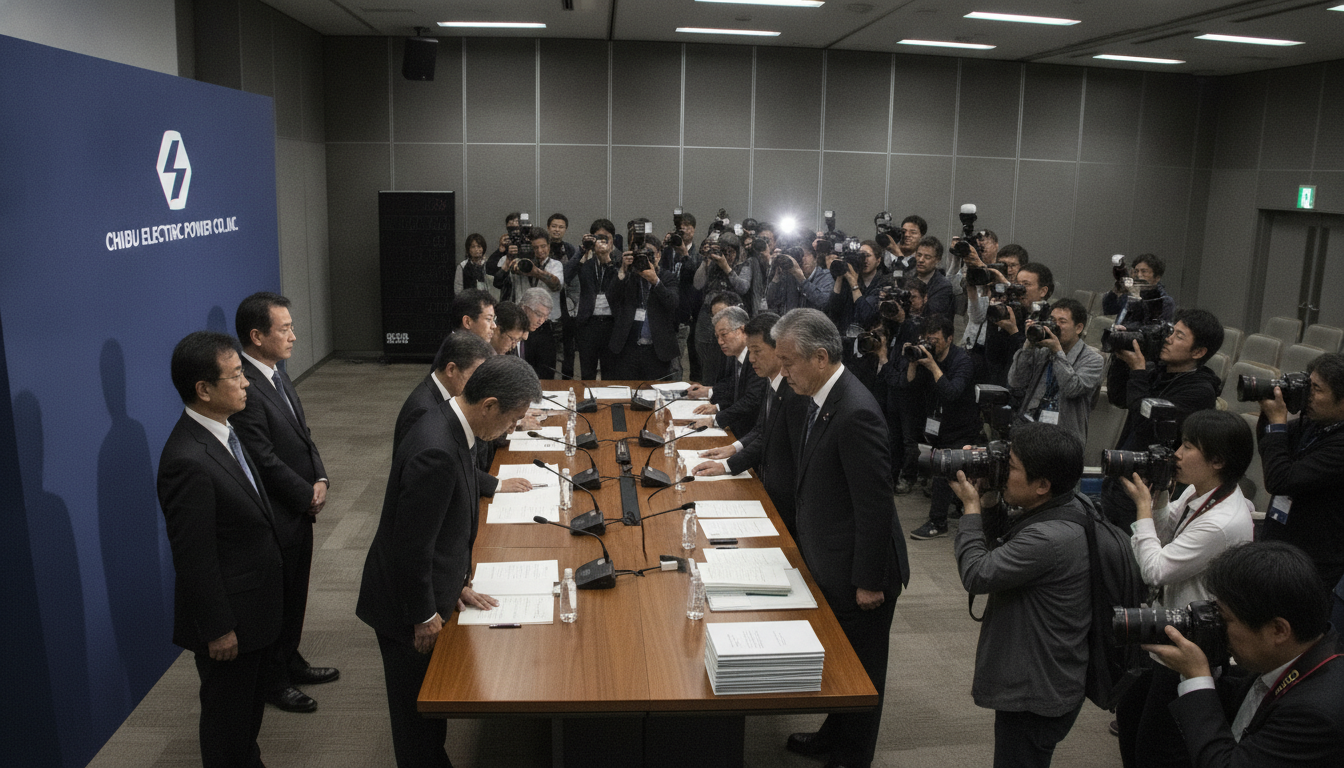
Hamaoka decommissioning: Chubu Electric admits incorrect claims to NuRO over ¥800M
Chubu Electric announced it had submitted inaccurate Hamaoka decommissioning records to NuRO, admitting 14 improper entries and triggering an investigation into roughly ¥800 million in payments.
Summary of admission and immediate response
Chubu Electric disclosed on August 27 that it had provided the Nuclear Fuel Reprocessing and Decommissioning Promotion Organization (NuRO) with decommissioning documents for the Hamaoka plant that contained data inconsistent with contractors’ reports. The company said 14 items in the April 2025 submission were altered from the figures reported by subcontractors, and the payments received against those items total about ¥800 million. Otsuka, head of Chubu Electric’s nuclear division, publicly apologized to local stakeholders and said the company will investigate the extent and cause of the discrepancies.
Chubu Electric characterized the errors as “inappropriate matters” and said the motive is under probe, while suggesting there is information indicating an attempt to align reported results with previously submitted plans. The utility pledged to work with NuRO and regulators and said it will carry out a detailed review to determine whether billed amounts were inflated by the data changes.
How NuRO funding and claims are meant to work
NuRO manages decommissioning funds that operators deposit for each reactor, and disbursements are made in line with verified progress on dismantling and related work. Operators and their contractors submit documentation to NuRO as evidence of completed tasks and eligible expenses, and NuRO releases funds based on that supporting material. The mechanism is intended to ensure transparency and that set-aside funds are spent on legitimate decommissioning activities rather than covering unrelated costs.
The irregularities identified by Chubu Electric therefore strike at the core of that verification process, raising questions about internal controls at the utility and the procedures used to reconcile contractor reports with claims submitted to NuRO. NuRO’s role as the custodian of decommissioning reserves means any weaknesses in documentation protocols can have broader implications for how public trust in the fund is maintained.
Scope of the Hamaoka Units 1 and 2 decommissioning work
Units 1 and 2 at the Hamaoka nuclear plant in Shizuoka Prefecture ended commercial operation in January 2009 and have been in decommissioning phases since. The records in question related to demolition equipment and volumes that contractors reported for work carried out in fiscal 2024, Chubu Electric said. When submitting evidence to NuRO in April 2025 for that fiscal year’s activities, the utility found 14 instances where figures had been rewritten from contractor reports.
Chubu Electric said it has already identified the specific documents and the total amount received for the 14 entries, but it has not yet concluded whether the rewrites resulted in net overbilling. The company indicated it will undertake a line-by-line reconciliation between contractor records, internal approvals, and payments received from NuRO.
Financial and regulatory implications
The disputed sum—about ¥800 million—represents the funds Chubu Electric accepted for the 14 altered entries, but whether that amount will be recovered or adjusted depends on the outcome of the company’s investigation and any ensuing review by NuRO or regulators. If investigations determine claims were intentionally inflated, Chubu Electric could face administrative sanctions, demands for restitution, or other corrective measures under applicable nuclear and financial oversight rules.
Regulatory scrutiny may focus not only on the specific entries but also on Chubu Electric’s internal governance, record-keeping practices, and contractor oversight. NuRO and the Ministry of Economy, Trade and Industry (METI) typically have roles in overseeing decommissioning fund use, and those agencies may request audits or enhanced reporting to ensure future submissions meet verification standards.
Local reaction and trust concerns
Local governments and residents around the Hamaoka plant have long been sensitive to nuclear safety and decommissioning transparency, given the plant’s history and its proximity to population centers. Chubu Electric’s public apology acknowledged the damage such incidents can cause to stakeholder trust, and the company said it will inform local municipalities and relevant stakeholders as the investigation proceeds. Restoring credibility will likely require prompt disclosure of findings, concrete remediation steps, and stronger controls to prevent recurrence.
Community groups and municipal officials are expected to seek clear timelines for investigation results and assurances that decommissioning funds are being managed with full accountability. For a process that depends on long-term planning and public confidence, even procedural lapses can amplify concern about oversight and cost management.
A coordinated probe by Chubu Electric, NuRO and relevant regulators will determine whether the discrepancies were clerical errors, process failures, or deliberate misstatements. The company has signaled cooperation with external reviews and said it will implement corrective measures based on the investigation’s conclusions.
Chubu Electric’s disclosure of inaccurate Hamaoka decommissioning records and the company’s pledge to investigate mark a critical test of oversight for Japan’s decommissioning funding system, and officials have emphasized the need for transparent, verifiable documentation as the Hamaoka dismantling continues.

