
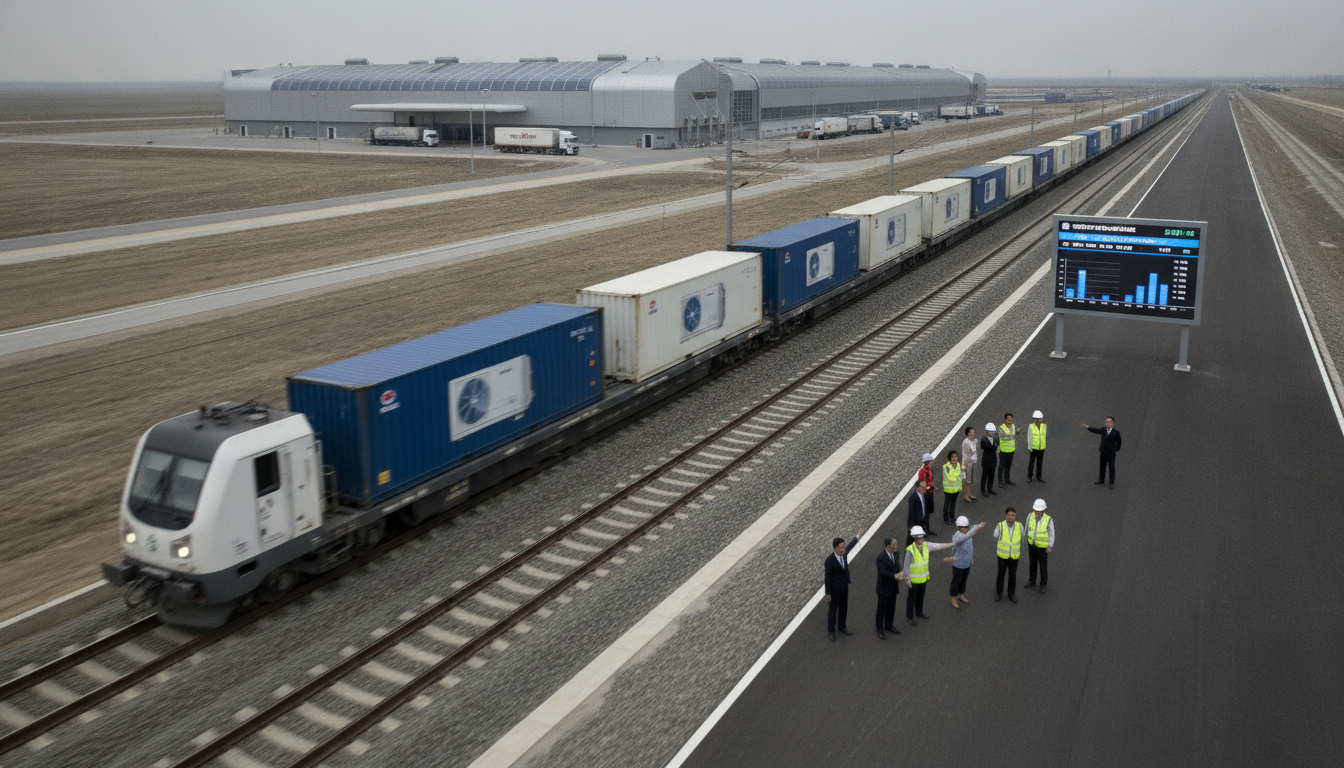
China-Europe freight rail speeds air-conditioner deliveries to Europe as heat waves bite
China-Europe freight rail shortens transit to about 15 days, enabling China State Railway Group to increase air-conditioner shipments to Europe amid intense summer heat.
DALIAN, China — China State Railway Group has stepped up shipments of air conditioners to Europe using the China-Europe freight rail, cutting transit times to roughly 15 days compared with about 40 days by sea. The move is aimed at meeting a surge in European demand brought on by persistent heat waves across the continent. Railway officials and logistics managers say the faster rail link is allowing manufacturers and retailers to react more quickly to spikes in consumer demand.
Rail transit shortens delivery by roughly 25 days
The China-Europe freight rail cuts journey times significantly by avoiding longer sea routes and some port congestion, shortening delivery cycles for bulky consumer goods. Operators estimate transit on the rail corridor takes about 15 days, shaving roughly 25 days off the typical maritime schedule.
Faster transit reduces inventory pressure for European importers and shortens the lead time from factory to store, helping retailers restock quickly during peak seasonal demand. The rail option therefore becomes economically attractive despite higher per-unit costs than the slowest sea freight alternatives.
Surge in air-conditioner shipments from industrial hubs
China State Railway Group has increased the number of refrigerated and containerized services carrying air conditioners from manufacturing centers to central and western European markets. Shipments originating from ports and inland hubs have been rerouted onto the rail corridor to speed deliveries to wholesalers and large retailers.
Logistics providers report that demand for space on rail services has accelerated in recent weeks as suppliers prioritize rapid replenishment ahead of continued hot weather across Europe. The shift illustrates how urgent consumer needs can change modal choices within international supply chains.
Operational benefits and logistical challenges
Rail transit offers predictable schedules that are less susceptible to some of the delays affecting maritime shipping, such as port backlogs and berth shortages. For time-sensitive goods like air conditioners sold into a short peak season, predictability can outweigh higher per-container charges.
However, rail services face capacity constraints, border handling and customs processing that require careful coordination among multiple national operators. Freight forwarders stress the need for synchronized scheduling and contingency planning to avoid bottlenecks at transshipment points along the route.
European heat waves drive short-term demand spike
A series of extreme heat events across several European countries has pushed consumer demand for cooling appliances above typical seasonal levels. Retailers in affected markets have been seeking faster delivery options to restock depleted inventories and meet urgent household and commercial needs.
The rail alternative allows suppliers to respond to temporary surges without committing to larger, longer-term ocean shipments that arrive too late for the current season. Such short-term responsiveness is especially valuable for products with sharp, weather-driven demand curves.
Role of the Belt and Road infrastructure in freight expansion
The China-Europe freight rail is part of a broader network of overland routes developed under long-running infrastructure initiatives connecting Chinese industrial centers with European markets. Those corridors have been expanded in recent years to handle a wider mix of containerized freight beyond traditional bulk and high-value items.
Infrastructure investments along the corridor — including upgraded terminals and streamlined cross-border procedures — have helped increase the attractiveness of rail for mid-range transit times. Policymakers and industry stakeholders view these links as complementary to maritime and air options rather than outright replacements.
Outlook for rail shipments and trade flows
Industry analysts predict that demand for China-Europe freight rail will remain elevated during periods of acute seasonal need, such as heat waves or other supply shocks that require rapid replenishment. Freight operators say they will monitor capacity and adjust sailings and train frequency in response to continuing demand patterns.
Over the medium term, the choice between rail, sea and air will hinge on cost, speed and predictability for specific product categories. For urgent consumer goods with narrow selling windows, the rail corridor is likely to retain a strategic role in cross-continental logistics.
As retailers and logistics firms weigh costs and operational complexity, the recent uptick in air-conditioner shipments underscores how climate-driven demand can reshape trade modalities and accelerate adoption of faster overland routes for time-sensitive cargo.

