
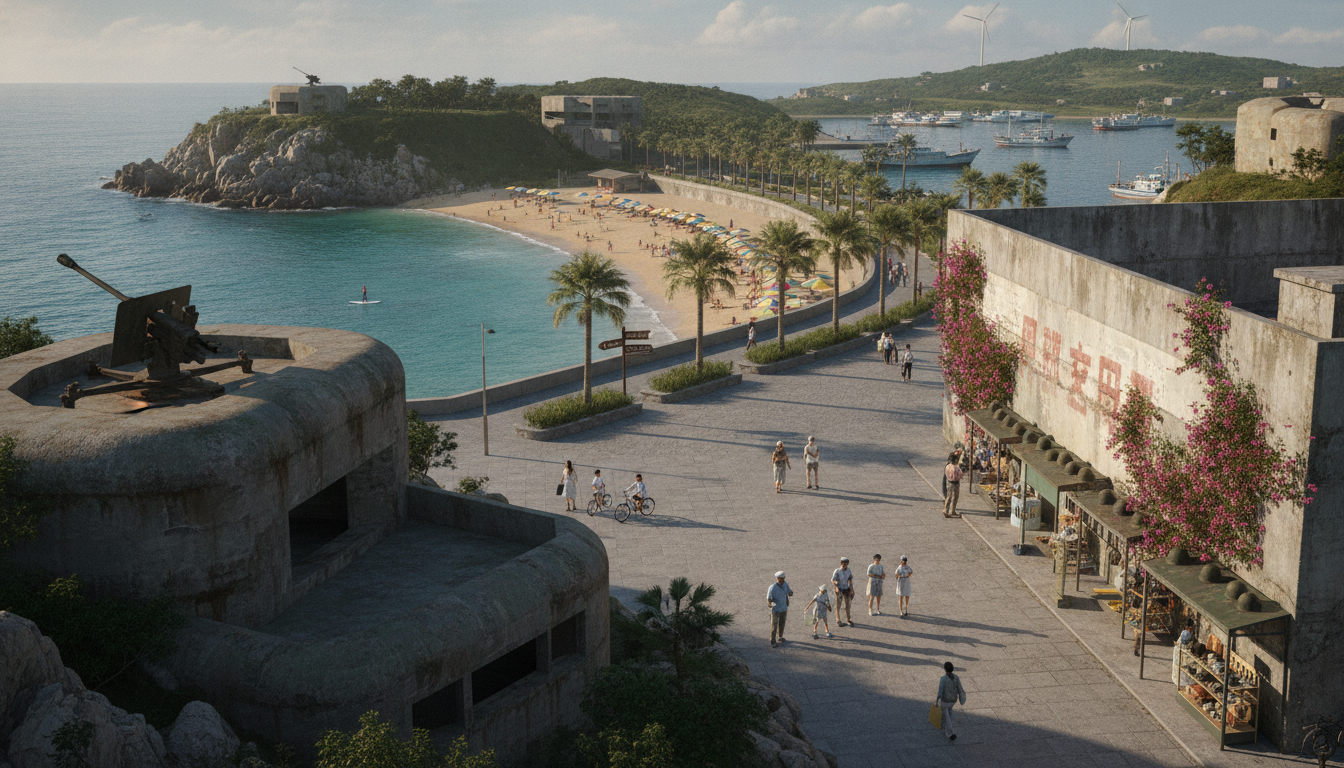
Xiju Island’s Cold War forts reshape into tourism hubs as residents balance history and daily life
Xiju Island, in Taiwan’s Matsu archipelago, balances a Cold War military legacy with growing tourism and community life just 9 km from the Chinese mainland.
Cold War fortresses and military legacy
A ring of concrete bunkers and gun emplacements still dots Xiju Island’s coastline, relics of decades spent as a frontline outpost. Those structures were built to deter invasion and project presence across the narrow channel separating Taiwan-controlled territory and the Chinese mainland.
For older residents, the fortifications are more than stone and steel; they are markers of displacement, vigilance and sacrifice from a time when the islands were locked into a military standoff. Younger islanders, meanwhile, approach the same sites as potential cultural assets, not merely reminders of conflict.
Daily life nine kilometres from the mainland
Everyday routines on Xiju Island reflect the practicalities of insularity and proximity to a large neighbor. Fishermen still head out before dawn, small shops supply basics, and public services operate on a scale shaped by a modest, ageing population.
Transport links are limited but regular, with ferries and occasional supply runs tying the island to larger hubs in the Matsu group and mainland Taiwan. The short distance to China—about 9 kilometres at the closest point—remains a constant backdrop to commerce and conversation without defining every aspect of life.
Tourism and economic transition
Local leaders and entrepreneurs are actively repositioning former military sites as tourist attractions to diversify the island’s economy. Guided tours inside restored bunkers, coastal trails highlighting fortifications, and small guesthouses run by families aim to draw visitors interested in history and rugged island scenery.
Tourism brings fresh income but also logistical strains, from limited accommodation to fragile ecosystems that must be protected. Community meetings now regularly debate how to manage visitor flows while preserving both daily life and historical authenticity.
Cross-strait proximity and local security posture
Xiju Island’s nearness to the Chinese mainland shapes security thinking but does not dominate residents’ day-to-day choices. National and regional authorities maintain a presence and periodic drills, yet locals describe a pragmatic coexistence with the physical realities of proximity.
At the same time, residents express a desire for stability and predictability, citing the benefits of measured government investment in transport, health and emergency preparedness. These practical priorities reflect an emphasis on safeguarding livelihoods rather than stoking geopolitical alarm.
Preserving memory and community identity
The island’s museums, memorials and oral-history projects aim to record veterans’ testimonies and civilian experiences before those memories fade. School programs and local festivals increasingly incorporate the islands’ wartime history into broader narratives of resilience and cultural continuity.
This effort to institutionalize memory sits alongside generational change, as younger families reinterpret the past for visitors and digital audiences. The result is a layered identity in which military heritage coexists with fishing traditions, religious observances and contemporary island crafts.
Infrastructure upgrades and conservation efforts
Officials and community groups have prioritized modest infrastructure upgrades to support both residents and visitors, from seawall repairs to improved waste management systems. Grant programs and small-scale public works target the most pressing needs while attempting to limit landscape damage near historic sites.
Conservation initiatives also aim to protect coastal habitats and fragile marine life that tourism and development could threaten. Planners say the island’s long-term viability depends on balancing environmental stewardship with economic diversification.
As Xiju Island charts its next chapter, residents speak of continuity rather than rupture: fortifications remain visible, but their meaning is being reshaped by peacetime activities and local choices. The island’s trajectory will depend on careful stewardship, sustainable tourism development and continued investment in the services that keep everyday life viable for those who call Xiju home.

