
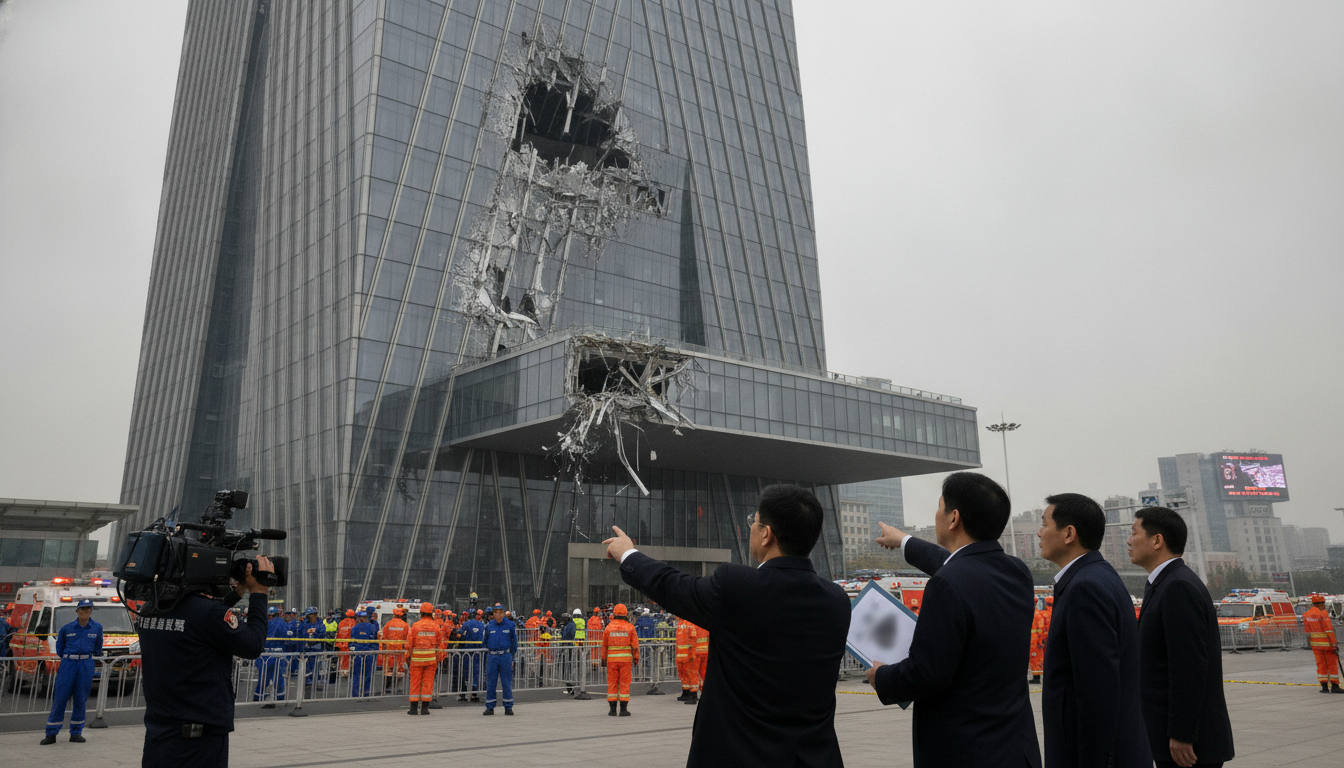
Pilot identified in CITIC Tower crash; authorities cite insomnia and flight deviation
Chinese authorities identified the pilot in the June 26 CITIC Tower crash in Beijing, citing insomnia and anxiety as officials probe a flight deviation.
Chinese authorities on July 2, 2026, said they had identified the pilot who flew a small aircraft into Beijing’s tallest office building on June 26, 2026, in what investigators say may have been an intentional act. Officials cited a history of insomnia and anxiety and said the aircraft deviated from its planned route before the impact. The announcement comes as investigators continue to piece together the pilot’s medical background and the sequence of events that led to damage on an upper floor of the CITIC Tower.
Official identification and suggested motive
Chinese investigators released limited details on July 2, saying the pilot had been identified and that preliminary findings raise the possibility of self-harm. Authorities did not provide the pilot’s name in their initial statement but emphasized that medical and behavioral history were central to their inquiry. Officials told reporters that evidence from flight records and interviews informed their assessment that the crash was not the result of an accidental navigation error alone.
Flight path deviation and air traffic data
Authorities reported that the aircraft deviated from its planned route prior to reaching central Beijing, a divergence now under close scrutiny by aviation investigators. Radar and communications logs are being analyzed to establish when and how the aircraft left its intended flight corridor. Aviation regulators have said they will examine both the pilot’s actions and air traffic control procedures to determine whether systemic gaps contributed to the deviation.
Damage at CITIC Tower and emergency response
The small plane struck an upper floor of CITIC Tower on June 26, leaving visible damage to the facade and interior spaces and prompting immediate emergency dispatches. Firefighters and building emergency teams worked to extinguish localized fires and to secure the structure in the hours after the collision. Authorities reported no collapse of the tower and described the building as structurally intact, while damage assessments and repairs are ongoing.
Medical history cited by investigators
In public comments, officials said the pilot had a documented history of insomnia and anxiety, and they suggested those conditions could have factored into his decision-making. Investigators are reviewing medical records and speaking with acquaintances and family to build a fuller picture of the pilot’s mental health before the flight. Authorities cautioned that medical history alone does not constitute proof of intent, and they indicated further forensic and behavioral analysis will be necessary.
Broader investigation and regulatory review
The Civil Aviation Administration and other regulatory bodies have opened a joint inquiry to determine causal factors and to assess whether regulatory changes are warranted. Investigators plan to examine maintenance logs, pre-flight checks, and any possible lapses in the assessment of pilot fitness to fly. Aviation safety experts have noted that the probe could prompt revisions to rules on medical monitoring and reporting for commercial and private pilots if systemic weaknesses are identified.
Public safety concerns and international attention
The incident at Beijing’s CITIC Tower has reignited public debate over aviation safety and the monitoring of pilot health, drawing attention both domestically and abroad. Local residents and businesses near the tower have expressed concern about building safety and emergency preparedness for high-rise incidents. International aviation authorities and foreign airlines that operate in Chinese airspace are likely to follow the investigation closely for implications on cross-border safety standards.
The probe remains active, and authorities have indicated they will release additional findings as forensic, technical, and medical examinations progress.

