
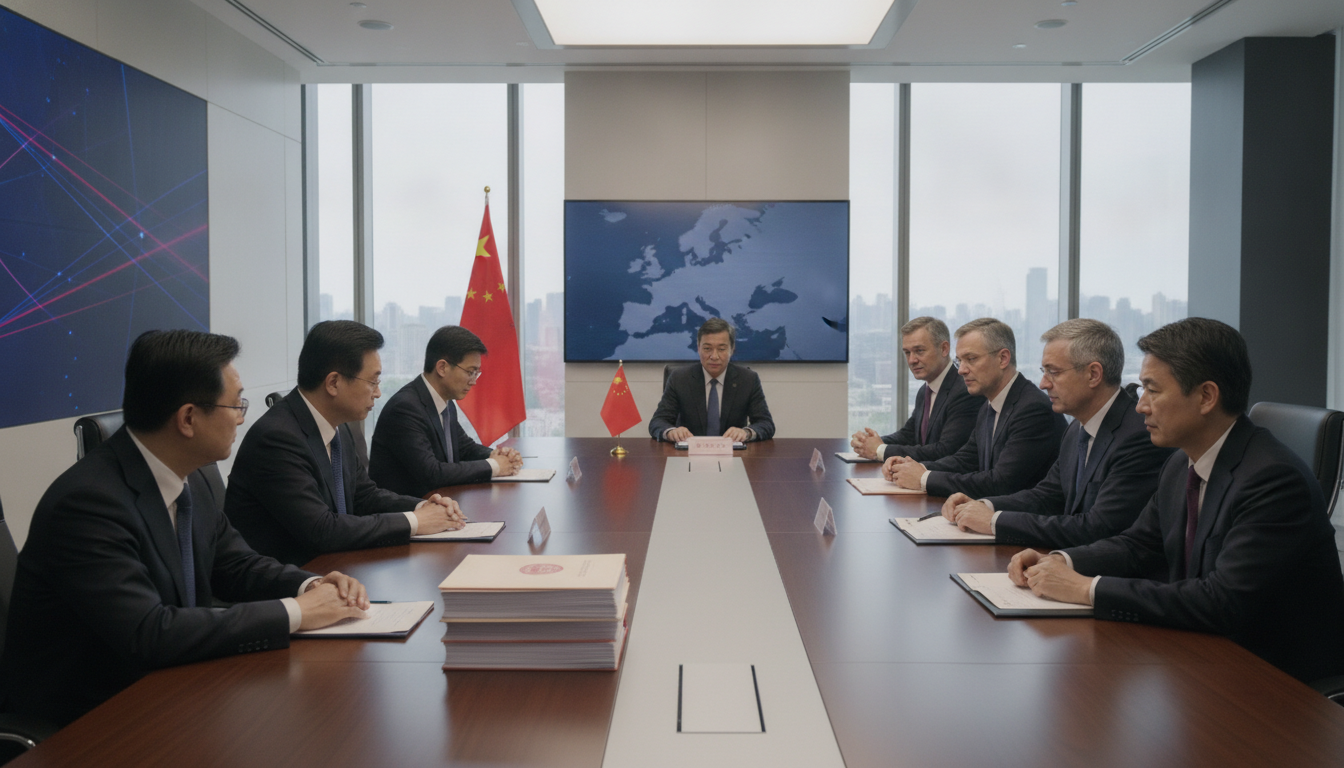
China Imposes Export Curbs on European Industrial Firms After EU Sanctions
China imposes export curbs on over a dozen European industrial firms in response to EU sanctions, deepening trade tensions and unsettling global supply chains.
Beijing Announces Export Restrictions
China on Friday announced export restrictions targeting more than a dozen European industrial companies, saying the measures are a direct response to recent European Union sanctions. The move, described by officials as a necessary countermeasure, focuses on limiting outbound shipments of certain goods and technologies. Chinese authorities framed the action as retaliation for EU penalties imposed on Chinese firms accused of aiding Russia’s military operations.
The announcement marked a rapid escalation in trade tensions between Beijing and Brussels, coming only days after the EU disclosed its latest sanctions package. Officials in Beijing said the list of affected companies will be subject to licensing requirements and export reviews, a step that can effectively slow or halt deliveries to foreign customers.
Companies Named and Sectors Affected
Chinese state statements indicated the restrictions apply to a range of industrial manufacturers, though they stopped short of releasing a comprehensive roster of named firms. Industry sources familiar with the matter said the affected sectors include heavy machinery, advanced components and materials that are integrated into wider European supply chains. The measures are expected to be implemented through administrative controls on export licenses and customs clearances.
European companies operating in those sectors are likely to face delays and higher compliance costs as shipments are reviewed under the new regime. Business groups and chambers of commerce said they are seeking clarification from Chinese regulators about the specific products covered and the duration of the restrictions.
EU Sanctions Prompt Retaliation
The export curbs were explicitly tied by Chinese officials to the EU’s decision to sanction certain Chinese entities over allegations they supported Russia’s war effort. The EU move had cited concerns about dual-use technologies and components possibly diverted to military programs. Beijing rejected those accusations and characterized the EU measures as politically motivated.
Diplomats in Brussels described the Chinese response as an attempt to signal that economic pressure will be met with targeted countermeasures. The tit-for-tat dynamic underscores a broader deterioration in relations between the EU and China, where trade disputes are increasingly entwined with geopolitical disagreements.
Market and Supply-Chain Consequences
Markets reacted to the announcement with heightened volatility in sectors reliant on cross-border industrial trade. Analysts cautioned that even limited export controls can ripple through global supply chains, raising costs for manufacturers and delaying production schedules. Several European producers that depend on just-in-time deliveries for parts and materials may need to seek alternative suppliers, a shift that could be costly and time-consuming.
Freight and logistics companies are also expected to face an uptick in demand for rerouting and compliance services, while insurers and trade financiers may reassess exposure to shipments between the EU and China. Smaller suppliers, in particular, could experience greater disruption if they lack the bargaining power or inventory buffers of larger multinational corporations.
Diplomatic and Trade Ramifications
The export curbs add a new front to already strained diplomatic ties between Beijing and European capitals. Officials in several EU member states signaled concern and called for urgent consultations to assess the impact on companies and workers. The European Commission is understood to be coordinating responses and legal options, including potential recourse through international trade mechanisms.
Beyond immediate trade effects, the measures could influence longer-term strategic calculations by companies and governments. Some European firms may accelerate plans to diversify supply chains or relocate sensitive production, while policymakers weigh the costs of further sanctions against the risk of provoking additional retaliatory steps.
Possible Next Steps and Responses
European authorities have a range of tools at their disposal, from targeted economic measures to diplomatic protests and appeals to international bodies. Business associations urged both sides to open channels for dialogue to prevent a broader economic fallout. Trade lawyers noted that any formal dispute could take months to resolve, during which companies would need to manage disruption proactively.
Market participants said contingency planning is under way, including stockpiling critical components and identifying alternative suppliers outside the affected corridors. Governments in Europe may also consider temporary financial support for industries most exposed to the curbs to mitigate immediate job and output losses.
The developments highlight how geopolitical tensions are increasingly shaping commercial policy and corporate risk management in globalized industries. As Beijing and Brussels navigate a cycle of sanctions and countermeasures, companies from both regions face the immediate task of adapting to a more fragmented trading environment while policymakers seek ways to limit damage and restore stability.

