
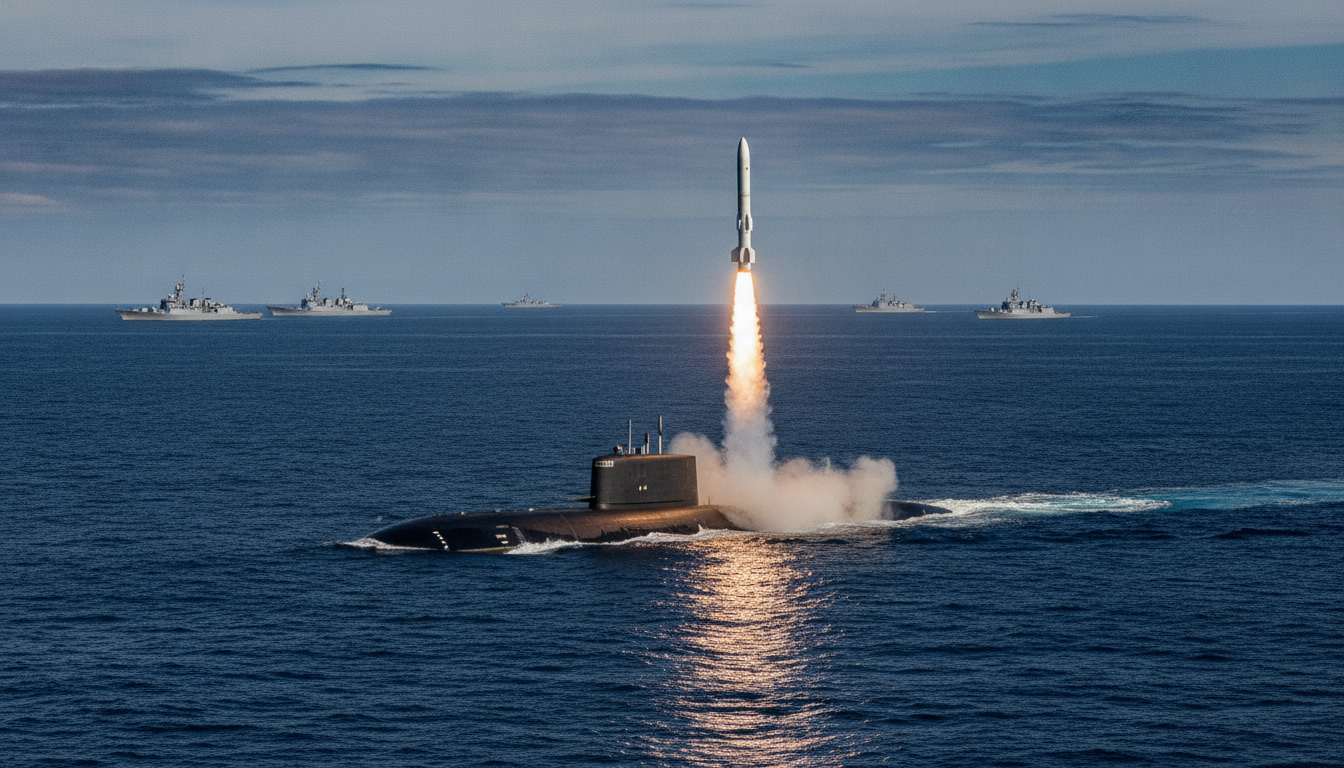
Chinese submarine missile launch draws regional concern as Japan, Australia and New Zealand seek answers
Chinese submarine missile launch into the Pacific prompts protests from Japan, Australia and New Zealand, heightening regional security concerns. See reactions.
TOKYO — A Chinese nuclear-powered submarine launched a missile into the Pacific Ocean on Monday, prompting public concern and diplomatic unease among nearby states. The Chinese submarine missile launch was confirmed by multiple regional officials as an event that drew objections from Tokyo, Canberra and Wellington. Governments in the region described the action as troubling given broader tensions over maritime security and strategic operations in the western Pacific. Neighbouring capitals are now pressing for explanations and greater transparency about the exercise.
Details of the launch and timing
Japanese officials reported that the missile was fired from a submarine in the early hours of Monday, entering waters of the broader Pacific rather than disputed coastal seas. The precise class and configuration of the missile were not officially disclosed, though imagery associated with the incident showed a Jin-class (Type 094A) nuclear-powered ballistic missile submarine that Beijing operates. Tokyo said the launch took place during a period of heightened regional vigilance and that authorities were collecting data to assess trajectory and safety implications. International maritime safety protocols require notification in many types of live-fire exercises, a point underscored by neighbouring governments.
Tokyo, Canberra and Wellington express concern
Japan publicly voiced concern over the launch and called for clarification from Beijing on its purpose and safety measures. Australian and New Zealand officials issued similar statements, noting that the event raised questions about risk to commercial shipping and coastal communities. Each government emphasized the need for predictable behavior and adherence to accepted norms for military activities in international waters. While none of the countries alleged a breach of national waters, all pressed for greater information-sharing and confidence-building steps.
Security implications for the region
Analysts say the incident underscores the expanding operational reach of Chinese naval forces and the complications that brings to regional security dynamics. Submarine-launched missile tests, even when routine, can be interpreted as demonstrations of capability and resolve, especially amid diplomatic frictions. The presence of long-range strike platforms operating farther from home ports increases the complexity of surveillance and maritime coordination among U.S. allies and partners in the Indo-Pacific. Officials in affected capitals stressed that transparency and communication are essential to prevent miscalculation.
Beijing’s possible motivations and messaging
Observers suggest Beijing may be seeking to normalize long-range undersea operations as part of a broader naval modernization and deterrence posture. China has steadily expanded its fleet of nuclear-powered ballistic missile submarines and invested in undersea and surface weapons systems. Launching a missile from a submerged platform sends a signal about second-strike capabilities and naval reach, even without explicit political messaging. At the same time, Chinese authorities have historically described such tests as routine training, and officials in Beijing may present the event in that light when questioned.
Regional responses and next steps
Diplomatic channels between the concerned governments and Beijing are expected to remain active in the coming days as officials seek technical details and assurances. Tokyo is likely to cooperate with allied partners, including Australia and New Zealand, to coordinate responses and intelligence-sharing related to the launch. Multilateral forums and bilateral defense dialogues may feature calls for clearer notification protocols for missile tests conducted from submarines. Naval and civilian maritime agencies across the region will continue monitoring for any further activity and adjusting advisories to the shipping community as necessary.
The Chinese submarine missile launch has reinvigorated debates in the Indo-Pacific about the balance between military training and the risk of unintended incidents at sea. As capital-to-capital communications proceed, regional states will watch closely for Beijing’s explanation and any measures taken to increase transparency or restrict testing to clearly demarcated, well-notified areas. Broader strategic competition and the spread of advanced undersea capabilities make such episodes consequential for both security planning and international maritime governance.

