
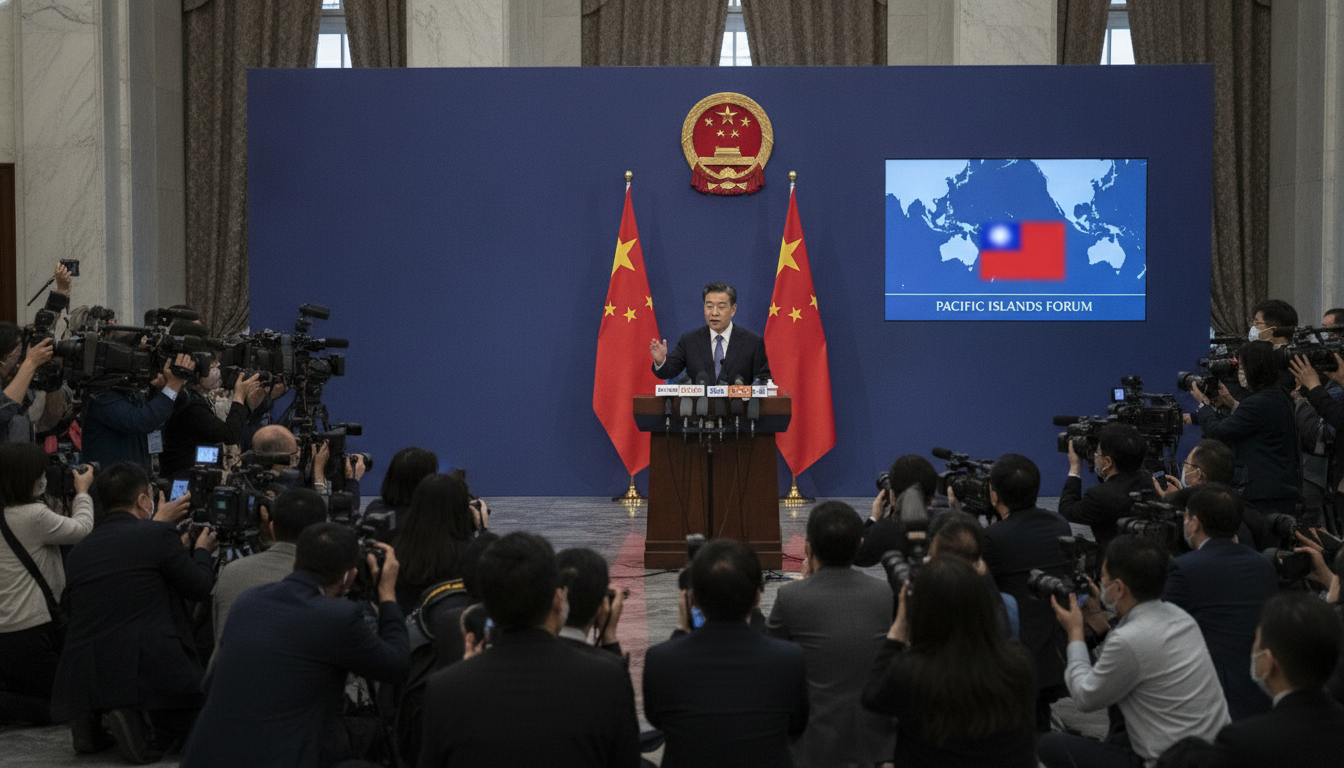
Taiwan at Pacific Islands Forum: Taipei Says Beijing ‘Ruined the Whole Atmosphere’ After Threats
Taiwan at Pacific Islands Forum: Taipei accuses Beijing of spoiling the Koror summit after China’s envoy warned of "consequences" if the island is included.
Taiwan’s foreign minister on Tuesday accused Beijing of undermining the Pacific Islands Forum Leaders Meeting after China issued warnings about Taiwan’s participation. The comments came on the sidelines of the annual meeting in Koror, Palau, where officials from Pacific nations and partner states gathered to discuss regional cooperation. Taiwan at Pacific Islands Forum was at the center of a diplomatic standoff that, according to Taipei, affected the summit’s tone and discussions.
Taiwan Minister Condemns Beijing’s Move
Taiwan’s foreign minister, speaking to reporters in Koror, described Beijing’s interventions as having “ruined the whole atmosphere of the party,” a remark that underscored Taipei’s frustration. The minister framed the episode as an unwelcome intrusion into what is normally a space for regional priorities such as climate, development and fisheries. Taipei emphasized that its participation in the forum was intended to be constructive and focused on practical cooperation rather than confrontation.
Taipei representatives said the warnings from Beijing created tension among delegates and distracted from scheduled agenda items. Diplomats from island states expressed concern over any pressure that might erode the inclusive character of regional engagements. The episode highlighted the sensitivity of Taiwan’s presence at multilateral gatherings in the Pacific.
Beijing Issues Warning Over Taiwan’s Inclusion
Officials in Koror reported that a Chinese envoy warned of unspecified “consequences” should Taiwan be included in the forum’s deliberations, signaling Beijing’s continued insistence on the One-China principle. The warning, delivered ahead of or during the leaders’ meeting, was interpreted by some delegates as an attempt to shape attendance and participation rules. Beijing’s posture in Koror reflects a broader diplomatic strategy to limit Taiwan’s international space.
Chinese officials have often linked Taiwan’s participation in multilateral venues to cross-strait political realities, and their interventions in Koror followed that familiar pattern. For many Pacific leaders, navigating between maintaining relations with Beijing and engaging with Taiwan poses a delicate balancing act. The episode illustrated how external geopolitical pressures can intersect with regional priorities and sovereign decision-making.
Tension Felt at Koror Leaders Meeting
Observers at the summit said the mood among leaders shifted after the exchange between Taipei and Beijing became public, with some sessions showing signs of caution and reticence. Agenda items that typically receive open debate, including infrastructure, disaster resilience and fisheries management, appeared at times to yield to quieter, bilateral consultations. Organizers moved to emphasize the meeting’s collective goals, but several delegates acknowledged the difficulty of separating geopolitics from practical cooperation.
Despite the strain, smaller working groups and side meetings continued, and island officials reiterated their commitment to addressing urgent local challenges. Many Pacific leaders stressed that cooperation on climate change and economic development was central to the forum’s purpose. Still, the intrusion of cross-strait tensions into the forum’s proceedings served as a reminder of the region’s strategic importance.
Implications for Pacific Diplomacy
The incident in Koror could prompt Pacific governments to re-examine participation rules and the mechanisms that determine guest status at regional forums. Some officials may seek clearer procedures to prevent last-minute diplomatic pressures from shaping attendance lists. Any move toward formalizing participation criteria would aim to protect the forum’s ability to convene diverse voices on shared priorities.
At the same time, the episode may accelerate bilateral diplomacy as island states weigh economic and strategic interests tied to both Taipei and Beijing. Aid, investment and security partnerships are frequently part of that calculus, and the Koror meeting highlighted how those considerations can influence public and private decision-making. For Taipei, preserving and expanding avenues for engagement in the Pacific remains a priority amid mounting pressure from Beijing.
What to Watch Next
Delegations are expected to issue formal statements and communiqués following the close of the meeting, which may clarify whether the dispute over Taiwan’s role altered any outcomes or language in joint documents. Observers will also be watching follow-up diplomatic activity, including potential visits, aid announcements or bilateral meetings triggered by the Koror exchanges. How island nations choose to reference Taiwan and China in official texts could signal longer-term diplomatic trends.
Regional partners beyond the Pacific may also respond with statements or adjustments to engagement strategies, particularly if the incident affects implementation of cooperative initiatives. The interplay between practical development goals and great-power competition will likely remain a recurring theme in future forum meetings.
The Koror encounter underscored the persistent challenge of managing Taiwan’s international presence amid intensifying geopolitical competition. Pacific leaders face the task of safeguarding forum processes while advancing urgent regional priorities, and how they navigate that challenge may shape the region’s diplomatic landscape in the months ahead.

