
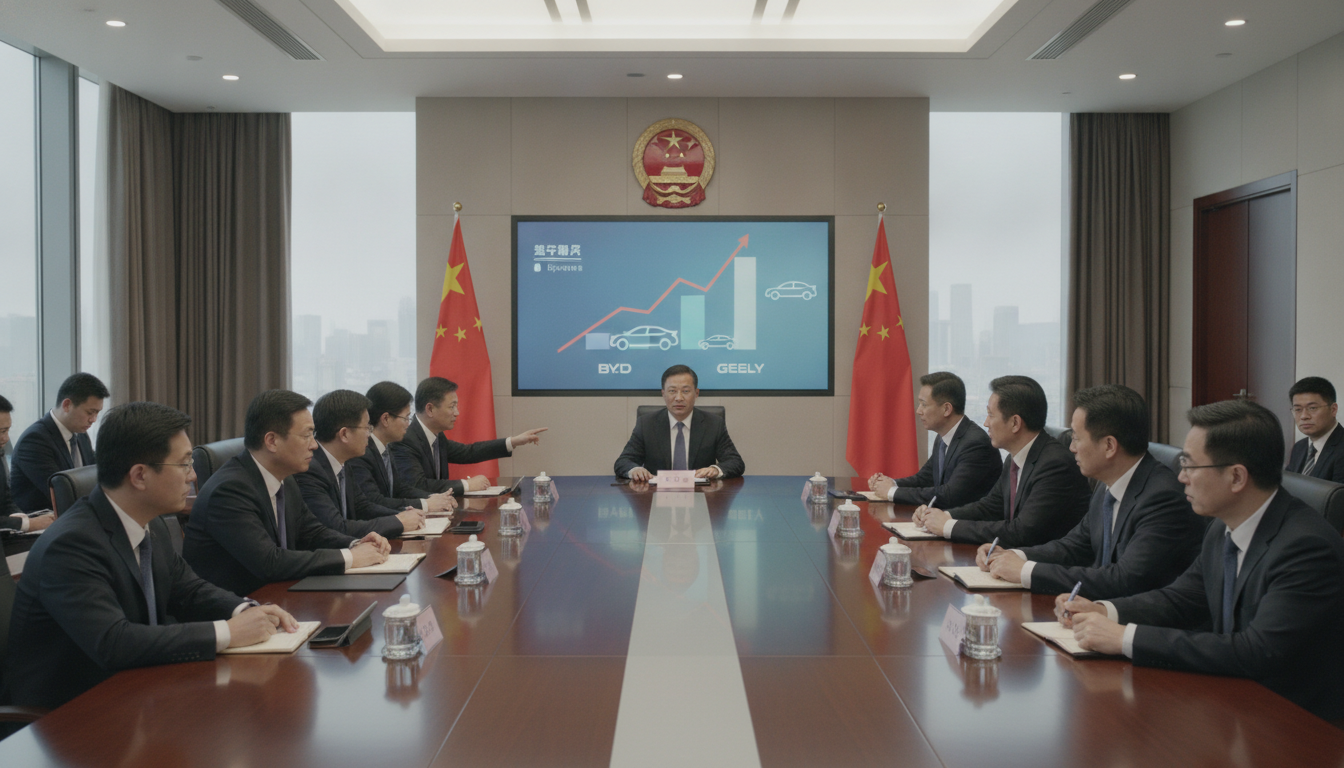
Beijing Warns as Chinese Car Exports Surge; BYD, Geely Told to Avoid Price Wars
Beijing warns Chinese carmakers against aggressive overseas price cuts as BYD and Geely report strong export growth, aiming to curb spillover from domestic competition.
China’s central government on Tuesday issued warnings to automakers to refrain from slashing prices abroad, saying the trend of rising Chinese car exports risks exporting cutthroat competition to global markets. The guidance arrives as major manufacturers such as BYD and Geely have reported sharp increases in overseas shipments, raising political and commercial concerns in import markets. Officials framed the move as an effort to stabilise both international trade relations and the domestic automotive sector amid rapid expansion.
Beijing issues guidance on overseas pricing
Beijing’s statement urged manufacturers to adopt “responsible” pricing strategies when selling vehicles abroad and to avoid practices that could be construed as dumping. Regulators highlighted the need for compliance with local laws in destination markets and signalled closer monitoring of export sales strategies.
The guidance did not specify immediate penalties but said state agencies would increase coordination with customs and trade bodies to gather data on export prices and volumes. Industry analysts said the language suggests a soft-touch approach initially, aimed at signalling intent rather than imposing abrupt restrictions.
BYD and Geely report export surges
Leading exporters BYD and Geely have both disclosed significant year-on-year growth in shipments to overseas markets, driven largely by electric vehicle demand. BYD’s network expansion in Southeast Asia, Latin America and parts of Europe, alongside Geely’s partnerships and local assembly deals, has underpinned the rise in volumes.
Executives attribute growth to competitive product lines and expanded after-sales networks, but government concern centres on the means of market entry. Rapid gains have prompted scrutiny from some importers worried about price-driven displacement of legacy brands in price-sensitive markets.
Concerns over domestic spillover and global competition
Chinese automakers’ domestic market has seen intense rivalry for share, especially in the electric vehicle segment, which analysts say has encouraged aggressive discounts and incentives. Beijing’s warning reflects a desire to prevent that domestic price pressure from being exported, where it could provoke trade disputes or protectionist responses.
Trade officials are also mindful of geopolitical sensitivities as Chinese-made vehicles gain footholds in regions where local manufacturers or allied foreign brands face disruption. The central government appears intent on balancing industrial expansion with the diplomatic management of economic friction.
Impact across emerging and developed markets
In Latin America and parts of Africa, competitive pricing and value-for-money features have quickly won customers for Chinese brands, prompting those markets to become important growth drivers. Local importers have welcomed increased choice, while some regional manufacturers and dealers have raised concerns about sustainability if price wars intensify.
In Europe, Chinese entrants have made measured inroads by targeting niche segments and leveraging partnerships for distribution and service. European regulators and trade groups, however, have been vigilant about pricing practices and component sourcing, particularly for electric-vehicle batteries and critical semiconductors.
Industry response and corporate adjustments
Automakers and trade associations responded cautiously, emphasizing compliance with international trade norms and a commitment to long-term market-building rather than short-term price disruption. Several firms highlighted investments in local assembly, warranty networks and training to demonstrate durable market intent.
Dealers and logistics partners say sales strategies are shifting toward bundle offerings, financing plans and service guarantees rather than headline price cuts alone. That approach aims to sustain competitiveness without triggering regulatory backlash in importing countries.
Regulatory aims and monitoring mechanisms
Chinese authorities indicated they will enhance collaboration between trade, customs and industry regulators to track pricing, discounts and promotional campaigns tied to exports. The move is meant to improve transparency and provide an early warning of practices that could draw complaints under anti-dumping or fair-trade rules abroad.
Observers expect a mix of administrative guidance, data collection and targeted interventions rather than broad export controls. Policymakers appear to prefer measures that encourage responsible commercial behaviour while preserving the growth trajectory of a strategically important industrial sector.
Chinese car exports are likely to remain a central feature of the global auto market as manufacturers scale production and refine supply chains. How companies balance rapid expansion with regulatory and diplomatic constraints will shape the next phase of their overseas strategies. The government’s latest guidance sets clear expectations that growth must be pursued without exporting domestic price pressures or creating avoidable trade frictions.

