
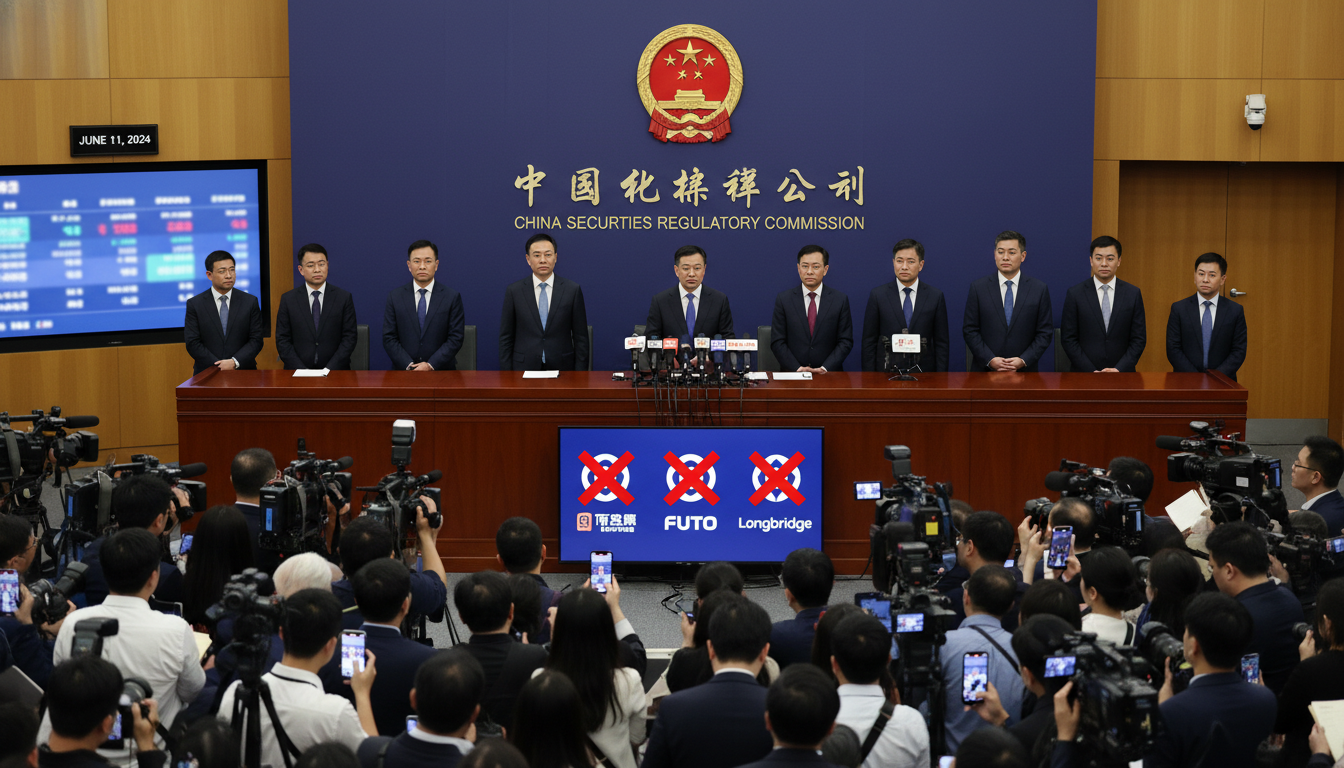
China vows to eradicate unapproved overseas brokerages within two years
China’s securities regulator pledged on May 22, 2026, to eliminate unapproved overseas brokerages, saying the crackdown will be completed within two years and naming penalties for Tiger Brokers, Futu and Longbridge.
China’s securities regulator on May 22, 2026, vowed a two-year campaign to root out unapproved overseas brokerage operations, saying it will close illicit channels that facilitate cross-border investments. The regulator also announced penalties against Tiger Brokers, Futu and Longbridge as part of a wider enforcement push. The move signals intensified oversight of foreign and Hong Kong-based brokerages serving mainland clients.
Regulator sets a two-year deadline
The China Securities Regulatory Commission announced the timetable in a statement issued in Hong Kong, setting a firm deadline of May 22, 2028 for the removal of unapproved cross-border brokerage activity. Regulators said the objective is to “eradicate unapproved overseas brokerage operations” within that period to strengthen compliance and investor protection.
Officials framed the drive as a response to rising risks from channels that enable mainland residents to trade through overseas platforms without proper approvals. The regulator indicated it will coordinate with other financial authorities to identify and dismantle such operations.
Penalties against Tiger Brokers, Futu and Longbridge
As part of the initial enforcement actions, the securities watchdog announced penalties against Tiger Brokers, Futu and Longbridge, saying their activities violated rules governing cross-border securities business. The regulator did not disclose detailed sanction amounts in its initial release, but described the measures as part of a broader scheme to correct non‑compliant practices.
Industry sources and market participants said the named firms are well-known providers of online trading services and have significant retail client bases that include mainland investors. The regulator’s decision to single out specific brokerages underscores a shift from warnings to tangible disciplinary action.
Enforcement tools and oversight to be used
Regulators signaled a range of tools will be deployed, from fines and operational restrictions to potential suspensions of services that bypass China’s approval processes. Authorities also said they would step up monitoring of digital platforms, payment channels and third‑party intermediaries that facilitate cross‑border trades.
The campaign will likely involve closer cooperation between mainland regulators, customs, and financial watchdogs in Hong Kong and other jurisdictions. Authorities emphasized strengthened reporting requirements and a push for clearer compliance frameworks to prevent circumvention through technology and offshore entities.
Impact on mainland investors and Hong Kong brokers
Mainland retail investors who use Hong Kong or overseas brokerages to access foreign markets could face disruptions as firms review their operations to comply with new enforcement standards. Market participants warned that some services may be curtailed or restructured while brokerages seek licensing solutions or alter client onboarding processes.
Hong Kong’s role as a conduit for international securities trading may be affected if mainland authorities press harder on channels that link mainland capital to overseas platforms. Observers noted potential short‑term volatility in cross‑border trading volumes as firms and clients adapt to the regulatory changes.
Reactions from the brokerage industry
Executives at affected brokerages have said they will engage with regulators and work to resolve compliance issues, though public statements emphasized business continuity and client protection. Legal advisers and compliance specialists expect a surge in regulatory remediation work as firms reassess product offerings and customer segmentation.
Industry groups cautioned that enforcement should be proportionate and transparent to avoid undue market disruption. They also called for clearer guidance on permitted cross‑border arrangements and the timelines for remediation so that brokerages can align operations without abrupt interruptions.
Wider policy context and international implications
Analysts view the crackdown as part of a broader tightening of China’s financial regulatory regime aimed at reducing systemic risk and asserting control over outbound capital flows. The move follows earlier regulatory actions that targeted fintech, online finance and cross‑border payments, reflecting an ongoing priority to bring digital financial intermediation under more direct supervision.
Internationally, the campaign could spur closer regulatory dialogue between China and financial centres where affected brokerages operate, particularly around data sharing, client protection and enforcement cooperation. Global investors and international firms will likely watch how Beijing balances market access with tighter controls.
The regulator’s two‑year timeline sets a clear target for firms and investors: unapproved overseas brokerage operations must be shut down by May 22, 2028, or face escalating sanctions. Firms now face a race to demonstrate compliance while markets monitor the practical effects of Beijing’s intensified oversight.

