
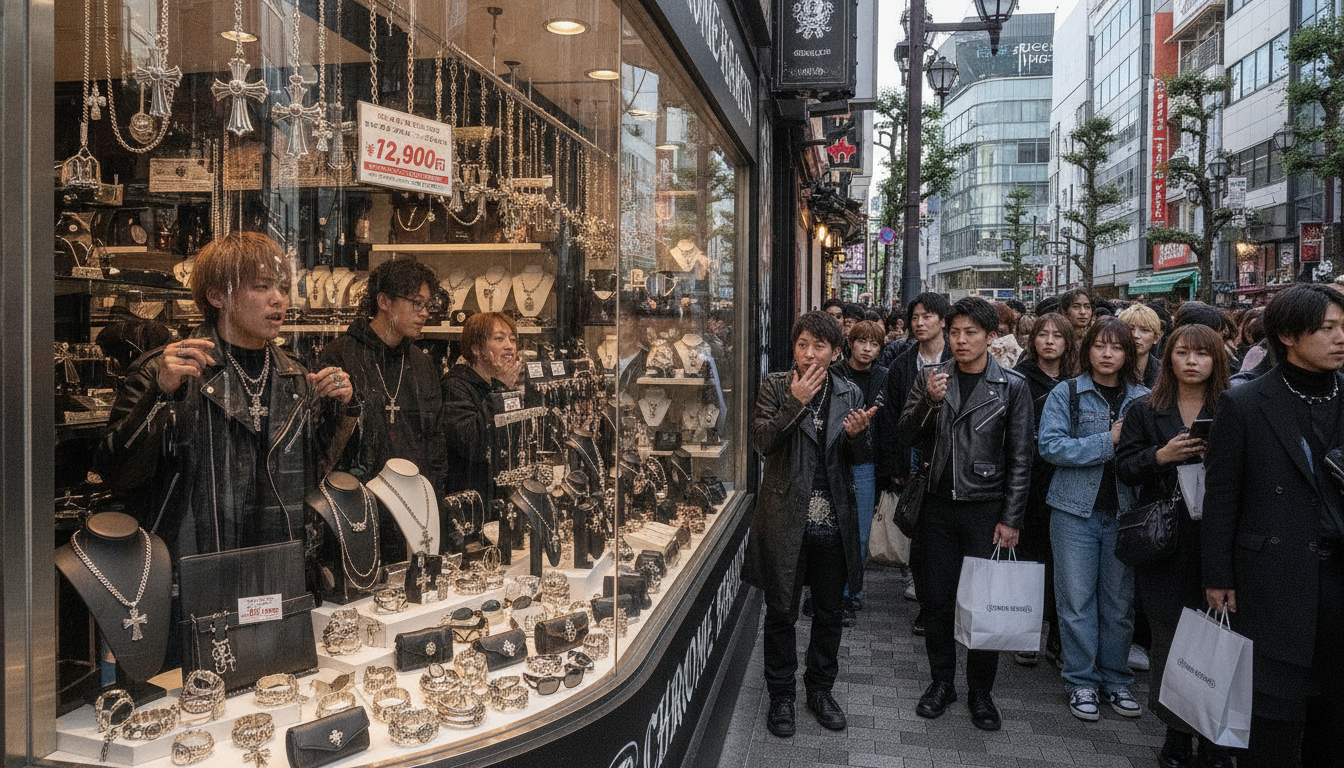
Chrome Hearts surges in Japan as youth demand and K-pop ambassadors drive resale prices threefold
Chrome Hearts’ popularity in Japan has surged, with K-pop ambassadors and younger shoppers pushing resale prices up threefold over three years and reshaping the market.
Chrome Hearts, the American brand known for its rebellious rock‑and‑roll aesthetic, is attracting a new generation of buyers in Japan. Once associated primarily with bikers and men over 40, the label is now winning fans among younger men and women across Tokyo and other urban centers. The shift has coincided with endorsements from South Korean K‑pop idols and a sharp rise in secondhand values, which have tripled over the past three years.
Young shoppers drive Chrome Hearts surge in Japan
A growing cohort of Gen Z and millennial consumers is seeking Chrome Hearts pieces for their distinctive design and perceived rarity. Boutique displays and social media postings in Tokyo reflect a visible uptick in younger shoppers trying on leather jackets, silver jewelry, and logo‑accented accessories. Retailers and resellers attribute the trend to changing tastes and the streetwear crossover that has made luxury items more visible to younger audiences.
Secondhand prices triple in three years
The resale market has responded quickly to heightened interest, with secondhand Chrome Hearts prices rising roughly threefold compared with three years ago. Preowned listings for signature items now command premiums that once applied only to vintage or limited‑edition pieces. This escalation has encouraged more buying and selling on both specialty consignment stores and general resale platforms, tightening supply for sought‑after items.
K‑pop ambassadors broaden the brand’s appeal
Endorsements and public appearances by South Korean K‑pop idols have accelerated Chrome Hearts’ exposure beyond its traditional fanbase. When high‑profile performers are photographed in the label’s pieces, images circulate rapidly across social media channels, amplifying desirability among young fans. Industry observers say these celebrity moments act as powerful catalysts that turn niche fashion signals into mainstream trends almost overnight.
Shift away from biker image toward fashion mainstream
Historically favored by older male customers and biker subcultures, Chrome Hearts has undergone a visible image transformation in Japan. The brand’s ornate silverwork, bold motifs, and artisanal leathercraft are being reframed as fashion statements rather than subcultural uniforms. As a result, retail displays and editorial features increasingly position Chrome Hearts alongside contemporary streetwear and luxury labels, inviting cross‑gender interest.
Retail scarcity intensifies secondary market activity
Limited availability of new stock in Japan has intensified activity in the secondary market. With flagship stores and select retailers maintaining conservative allocations, buyers unable to secure items at retail are turning to resale channels. The resulting competition has pushed resale prices higher and shortened the window in which items remain available, creating a feedback loop that further boosts perceived exclusivity.
Resale boom prompts authenticity and sustainability questions
The rapid rise in demand and prices has brought practical challenges. Resellers and buyers alike are more vigilant about authentication as the market attracts counterfeiters seeking to capitalize on higher margins. At the same time, some sellers point to the resale market as an unexpected sustainability benefit, extending the lifecycle of luxury goods through reuse. Industry participants say balancing authenticity controls with sustainable resale practices will be critical as the market matures.
The evolving Chrome Hearts phenomenon in Japan illustrates how celebrity influence, shifting youth tastes, and constrained retail supply can converge to reshape a brand’s market position. As younger consumers continue to embrace the label and resale values remain elevated, retailers and secondary‑market operators are adapting rapidly to meet demand while monitoring risks tied to counterfeits and market volatility.

