
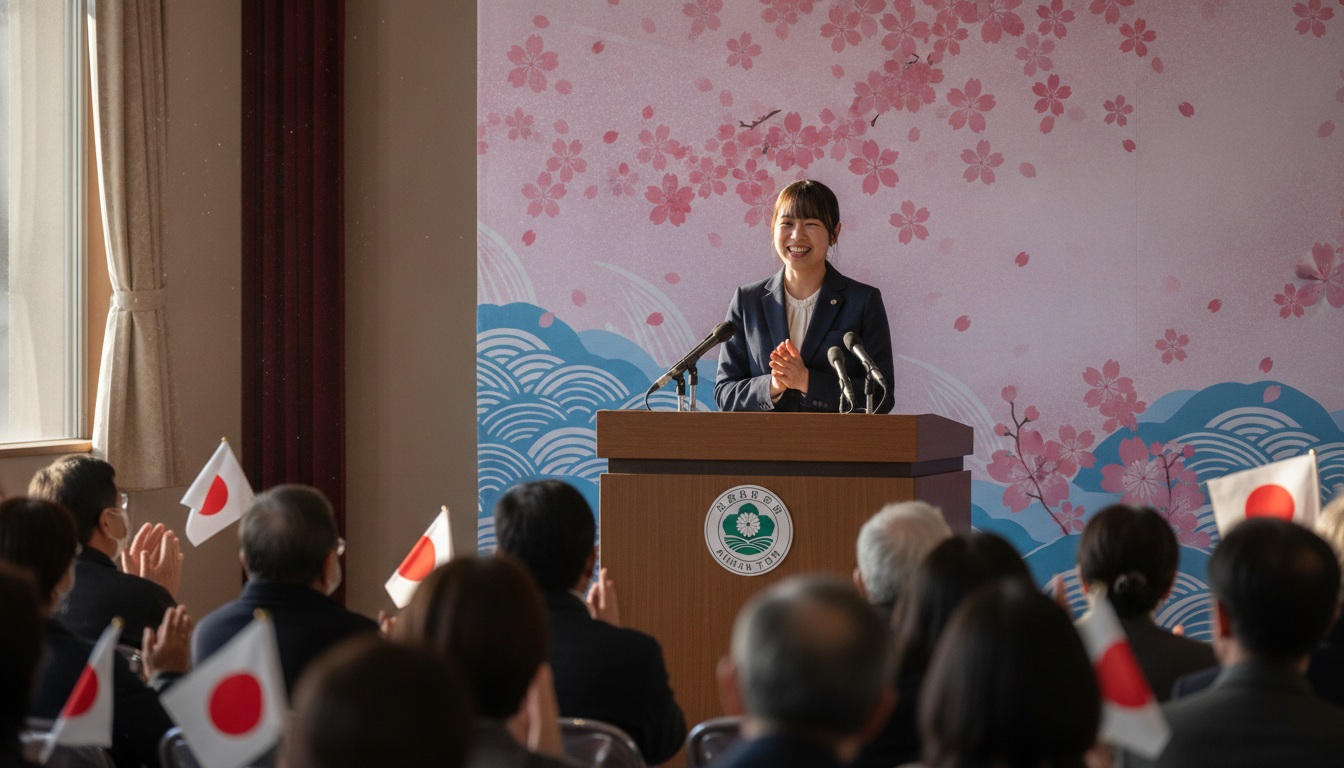
Hiromu Kaya Elected Aikawa Town Mayor at 31, Set to Become Kanagawa’s Youngest Chief Executive
Hiromu Kaya, 31, won the Aikawa town mayoral election on June 14, 2026, pledging to expand corporate furusato donations; voter turnout was 35.81%. Lawyer.
Hiromu Kaya, a 31-year-old former town assembly member and lawyer, won the Aikawa town mayoral election held on June 14, 2026.
Kaya defeated three other first-time candidates and will become the youngest mayor in Kanagawa Prefecture upon taking office.
Turnout fell to 35.81 percent from 39.11 percent in the previous contest, with 30,785 registered voters on the rolls.
Vote totals and turnout
Kaya prevailed in a four-way race that attracted local attention for its generational contrast and policy promises.
Officials reported a voter turnout of 35.81 percent, down from 39.11 percent in the prior mayoral election, a decline that mirrored turnout trends in many small municipalities.
Election authorities said the field consisted of three other newcomers, and Kaya’s margin reflected concentrated support among voters who prioritized economic and community revitalization.
Victory remarks and immediate reaction
When his win was declared late on June 14, Kaya celebrated with supporters and vowed to translate the mandate into action.
He told backers that he felt “deeply humbled” by the trust shown by residents and pledged to pursue a “town that gives hope” through practical measures.
Local leaders and residents offered cautious congratulations, noting both the symbolism of a young mayor and the need for steady governance amid demographic shifts.
Kaya’s personal and professional background
Born and raised in Aikawa, Kaya completed his elementary and junior high education locally before attending a prefectural high school in neighboring Atsugi.
He graduated from Chuo University and qualified as a lawyer, subsequently opening a legal practice in Aikawa that served local individuals and businesses.
Kaya first entered electoral politics in the autumn 2023 town assembly election, topping the poll, and resigned his assembly seat in March 2026 to run for mayor.
Policy platform: corporate furusato donations and business outreach
A cornerstone of Kaya’s campaign was an initiative to expand the corporate version of the furusato nozei, or “hometown tax,” by proactively courting businesses.
He described the approach as “top-level sales” aimed at persuading corporations to channel donations to Aikawa’s development projects and local services.
Kaya framed the plan as a way to generate funds for infrastructure and community programs without increasing the tax burden on residents.
Political support and campaign dynamics
At his June 9 campaign launch, Kaya drew endorsements and appearances from a range of local and national politicians.
Several town councillors, prefectural assembly members and Diet members from both the ruling and opposition parties attended the event, signaling broad, cross-party interest in Aikawa’s next phase.
Campaign observers said the unusual mix of supporters reflected pragmatic local concerns rather than strict party alignment in a small municipality.
Aikawa’s economic profile and demographic challenges
Aikawa sits east of the Tanzawa mountains in northwestern Kanagawa and saw population growth through industrial development from the 1970s to the 1990s.
The town’s population peaked at about 43,000 in 1995 and now stands near 39,000, with factory zones that employ a high number of foreign-born workers; roughly one in ten residents holds foreign nationality.
That demographic mix has become an important consideration for municipal services, community integration efforts and workforce planning as local leaders balance industry needs with social cohesion.
Kaya has said he will address those issues by promoting economic ties while ensuring social services meet a diverse population’s needs.
With the election decided, the new mayor-elect must formalize a transition plan and present a detailed agenda to the town assembly.
He will also need to translate campaign pledges on corporate donations and business outreach into concrete agreements with companies and legal frameworks that comply with national regulations.
Longer-term, Kaya’s administration will be measured on its ability to sustain employment in industrial zones, manage integration of foreign residents, and attract younger families to stabilize population decline.

