
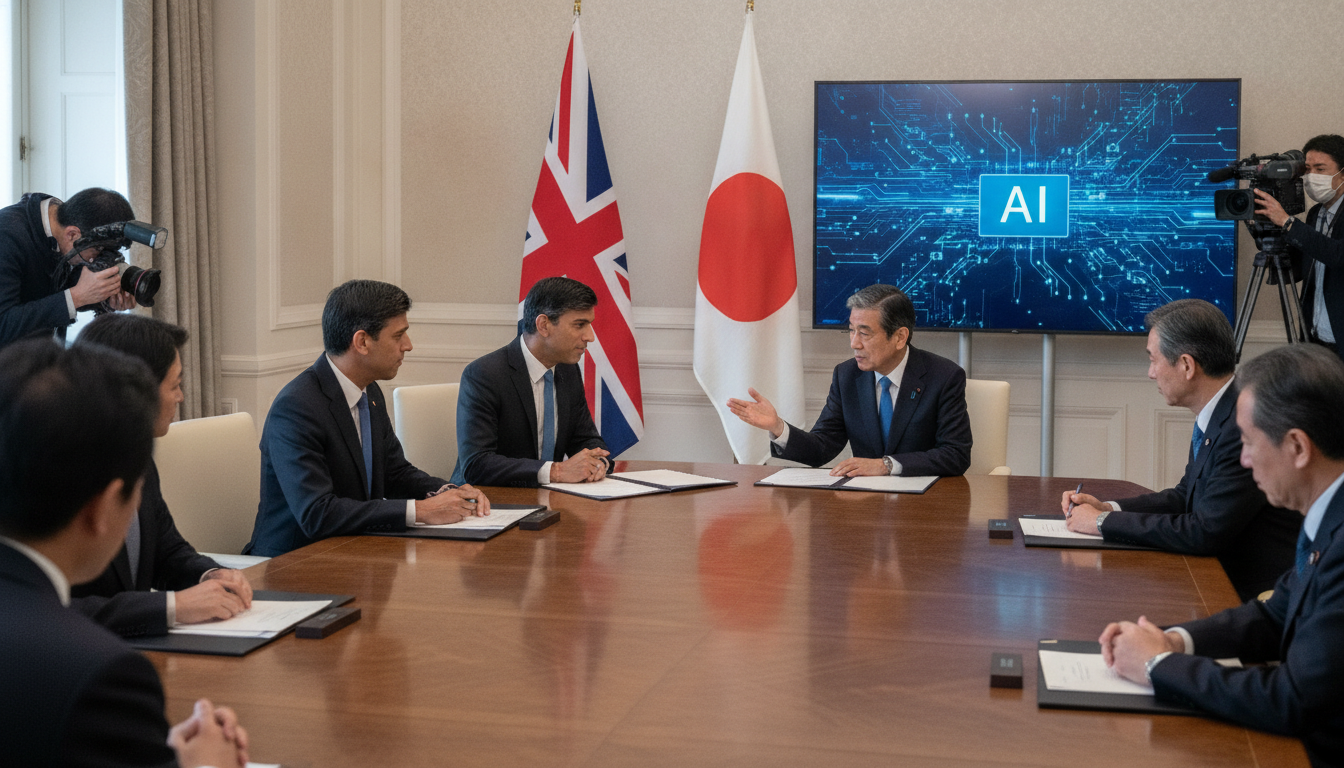
Japan-UK Dual-Use Technology Fund to Back Startups in AI, Quantum, Drones and Space
Japan and the UK will launch a Japan-UK dual-use technology fund to back startups in AI, quantum, drones and space, strengthening defence-linked innovation.
The Japanese and British governments plan to establish a Japan-UK dual-use technology fund to support startups developing artificial intelligence, quantum technologies, unmanned systems and space capabilities. The initiative is designed to accelerate commercialization of technologies that have both civilian and defence applications while deepening industrial ties between Tokyo and London. Officials describe the measure as a strategic effort to bolster allied technological resilience amid rising geopolitical competition.
Fund targets AI, quantum, drones and space
Japan and the UK intend for the fund to prioritise artificial intelligence, quantum computing and sensing, advanced drones and commercial space systems. These fields were singled out because of their rapid commercial growth and clear implications for national security and economic competitiveness. By steering capital toward early-stage firms working in these areas, both governments hope to shorten the gap between laboratory research and fielded capability.
The emphasis on “dual-use” reflects a shift in policy away from strictly civilian or military categorization toward supporting technologies that can serve both markets. Backers argue this approach will expand the pool of investment-ready companies while maintaining controls to prevent sensitive exports. Startups with hybrid commercial and defence customers are likely to be particular beneficiaries of the new financing.
Bilateral strategic rationale for the fund
Officials frame the fund as part of a broader Japan-UK security and industrial partnership aimed at sustaining critical supply chains and interoperability. Both countries have increasingly sought partners to diversify technology sources and reduce dependency on single suppliers for key components. The fund is intended to create a pipeline of trusted vendors capable of supplying advanced systems to allied defence and civil markets.
The move also reflects Tokyo’s push to internationalize its technology base and London’s interest in deeper engagement in the Indo-Pacific. Policy-makers see co-investment as a way to share risk, encourage joint research and foster standards that will make it easier for firms on both sides to collaborate and scale globally.
Planned structure and governance of investments
Details of the fund’s size, governance and investor mix are reportedly still being finalised, with options under discussion to combine public seed capital and private co-investment. Officials are weighing a model in which government financing reduces early-stage risk and attracts venture capital and corporate investors. Such a blended structure would aim to preserve market discipline while meeting strategic policy objectives.
Governance discussions are expected to cover due diligence criteria, export-control compliance and mechanisms to vet sensitive technologies. Organisers are also exploring advisory panels of technical and industry experts to assess projects and ensure investments align with both innovation and security goals. Transparency around investment rules will be key to reassuring private partners and international partners alike.
Response from startups and investors
Startups in Japan and the UK have welcomed the prospect of new capital directed at dual-use technologies, noting funding gaps in seed and series-A rounds for hardware-intensive and long-horizon research. Venture capital firms said a government-backed fund could de-risk investments in complex technologies that often require larger sums and longer timelines than typical software ventures. Founders also emphasised the potential for business development through official partnerships and procurement pipelines.
Industry trade groups cautioned that effective execution will depend on speed and flexibility, warning that over-prescriptive conditions could discourage market-driven scaling. Private investors signalled interest in co-investment opportunities but stressed the need for clear exit pathways, intellectual property safeguards and consistent regulatory frameworks across both jurisdictions.
Security, export controls and ethical safeguards
Because the fund targets dual-use areas, both governments face the challenge of balancing open innovation with national-security safeguards. Discussions reportedly include mechanisms to prevent the transfer of sensitive capabilities to actors of concern and to ensure compliance with existing export-control regimes. Observers expect tight vetting for projects that involve advanced sensors, certain AI models, or quantum-enabled cryptography.
Ethical and operational safeguards for technologies such as autonomous drones and dual-use AI are also on the agenda, with potential requirements for human oversight, red-team testing and transparency around data usage. Officials have indicated that investments will be accompanied by guidelines to manage risk while enabling commercial deployment.
Regional and industrial implications
The establishment of a Japan-UK dual-use technology fund could reshape regional innovation dynamics by directing more capital toward defence-adjacent startups in the Indo-Pacific and Europe. It may encourage other allies to pursue similar co-investment mechanisms, creating a network of aligned funding vehicles that support interoperable systems and shared standards. For companies, the fund offers an avenue to access pooled technical expertise and potential government procurement.
For Japan and the UK, the initiative represents a pragmatic fusion of economic policy and security strategy, aiming to deepen industrial cooperation without resorting to protectionism. If implemented effectively, the fund could help both countries build a more resilient, innovation-led base for future defence and civilian technologies.
The timing and final contours of the fund remain subject to negotiation, but officials expect a formal announcement once terms are agreed and governance arrangements are settled. Stakeholders on both sides say they will watch closely for details on capital commitments, investment criteria and the mechanisms that will link public objectives with private-sector incentives.

