
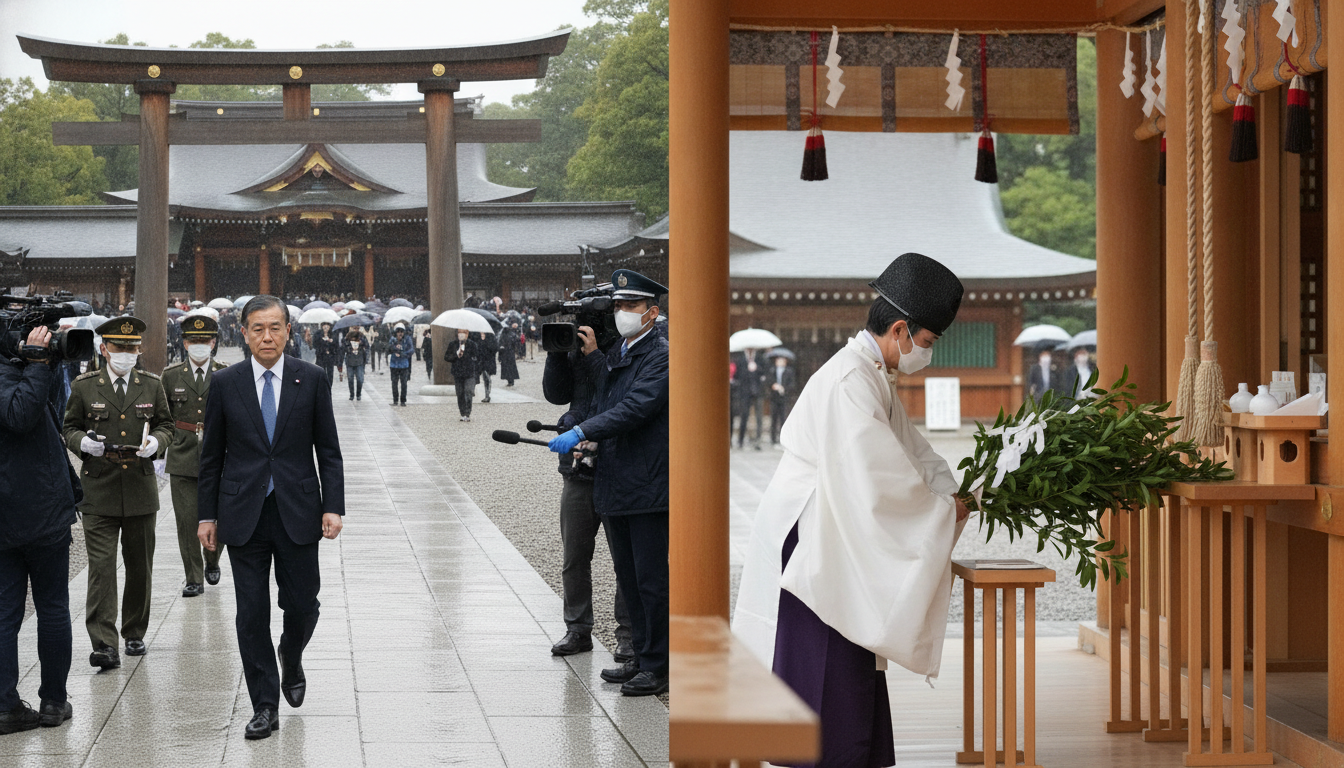
Defense Minister Koizumi Visits Yasukuni Shrine on August 15; Prime Minister Takaichi Sends Offering via LDP Secretary‑General
Koizumi visits Yasukuni Shrine on Aug. 15, 2026; Prime Minister Sanae Takaichi sent a tamagushi offering through LDP Secretary‑General Toshinichi Suzuki.
Opening summary of the visit
On August 15, 2026, Defense Minister Shinjiro Koizumi paid a visit to Yasukuni Shrine in Tokyo on the 81st anniversary of Japan’s wartime surrender. The visit was accompanied by senior Liberal Democratic Party figures, including Secretary‑General Toshinichi Suzuki, who later told reporters he had deposited a tamagushi offering on behalf of Prime Minister Sanae Takaichi. Koizumi boarded a vehicle without answering reporters’ questions after the visit, according to observers at the shrine.
Details of Koizumi’s shrine visit
Koizumi’s appearance at Yasukuni followed a pattern of annual visits he has made in various ministerial posts, including his previous roles in agriculture and the environment. At his October 2025 press conference upon becoming defense minister, he said that expressing reverence for those who sacrificed their lives and renewing a vow for peace were natural acts—comments that did not rule out visiting the shrine. On August 15 he followed the customary rites, but did not provide on‑the‑spot comments to waiting reporters.
Prime Minister Takaichi’s offering handled by Suzuki
Secretary‑General Suzuki told the press after the visit that he had accepted and submitted the prime minister’s tamagushiryō as a proxy. Suzuki said the payment was made from Takaichi’s personal funds in her capacity as LDP president. Prime Minister Takaichi has in the past visited Yasukuni while serving in other ministerial roles and previously indicated that she intended to continue paying respects, but she has not personally visited the shrine since assuming the premiership in October 2025, including during this year’s spring observances.
Who attended and the timing of the delegation
Alongside Koizumi and Suzuki, several other LDP executives gathered at the shrine for the August 15 observance, reflecting the party’s presence at the annual commemoration. The delegation arrived in the morning and proceeded through the customary rites, with party officials coordinating the prime minister’s contribution through Suzuki rather than a direct appearance. Koizumi’s short departure from the shrine without media comment underlined the tightly managed nature of public statements on sensitive ceremonies.
Historical context of Yasukuni visits and diplomatic reactions
Visits to Yasukuni Shrine, which honors Japan’s war dead, have long carried diplomatic weight and drawn criticism from neighboring countries, particularly China and the Republic of Korea, over wartime memory and interpretation. Japanese political leaders’ decisions to visit or to send offerings routinely prompt responses from those governments and are closely watched by diplomatic channels. Domestically, such acts also stir debate over commemoration, historical responsibility, and how to balance remembrance with regional relations.
Political implications within Japan
Within the LDP, attendance at Yasukuni or the sending of offerings is viewed by some as a reaffirmation of respect for the war dead and an appeal to conservative supporters who prioritize traditional rites. For other political actors and parts of the public, these gestures can be contentious and risk inflaming debates about Japan’s wartime past. The decision to route the prime minister’s offering through the party’s secretary‑general reflects an attempt to balance symbolic participation with political and diplomatic sensitivities.
Prime Minister Takaichi’s office has not issued an extended public statement elaborating on the reasons for delegating the offering, beyond Suzuki’s account that the tamagushiryō was paid personally. As government officials and opposition parties react in the coming days, diplomatic interests and domestic political calculations are likely to shape follow‑up statements from the cabinet and the foreign ministry.

