
Earthling Mushroom Farm Brings Lab-Style Gourmet Fungi Production to Bangkok Warehouse
Earthling Mushroom Farm turns a Bangkok warehouse into a lab-style mushroom farm, supplying top chefs and offering public tours that mix gastronomy and science.
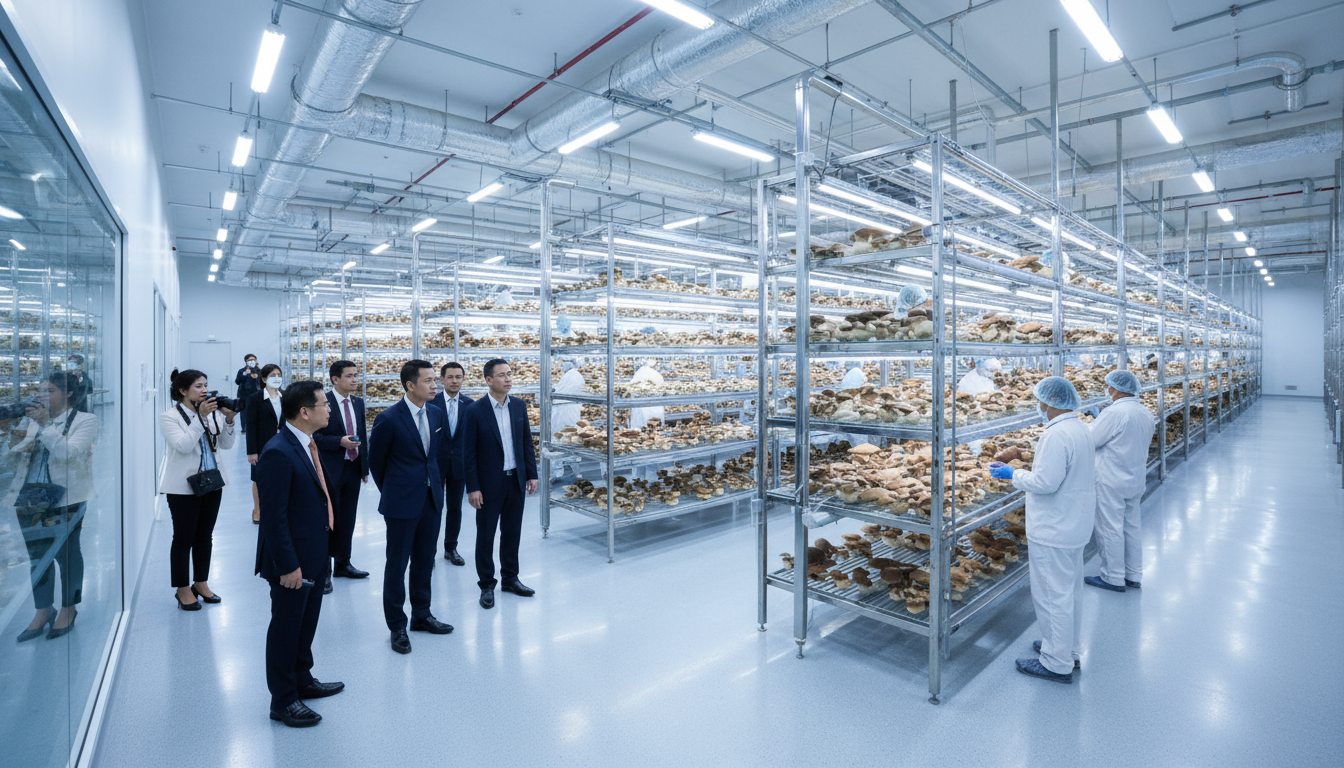
Earthling Mushroom Farm has converted a compact warehouse in Bangkok’s On Nut district into a controlled, lab-like environment for cultivating gourmet mushrooms. The operation, founded by American brothers Alex and Sam Turner, grows a range of premium fungi for restaurants and sells directly to food lovers while opening parts of the facility to visitors. The project aims to bridge culinary demand and urban agriculture by producing delicate, high-value mushrooms close to the city’s kitchens.
Lab-style growing operation in On Nut warehouse
The On Nut facility operates more like a small-scale laboratory than a traditional farm, with climate-controlled rooms, sealed shelving and strict hygiene protocols. Workers monitor humidity, temperature and light on a daily basis to match the specific needs of each mushroom variety and to maintain consistent yields.
The compact footprint allows rapid access to Bangkok’s restaurant scene and reduces the time between harvest and plate, a key advantage for fungi with short shelf lives. The setup also minimizes transport emissions compared with rural supply chains and lets chefs order specialty runs on short notice.
Controlled cultivation methods and fungal varieties
Earthling Mushroom Farm uses sterilized substrates, inoculation chambers and modular fruiting rooms to grow multiple strains at once. Techniques include sawdust-block cultivation and tray-based grows tailored to different species, from delicate enoki and oyster types to meatier gourmet varieties.
The brothers emphasized the scientific side of their work, noting that precise environmental control improves flavor consistency and reduces crop losses. Regular testing and record-keeping guide adjustments to schedules and allow the farm to scale production without sacrificing quality.
Partnerships with Bangkok chefs and markets
The farm’s produce has found its way onto menus at several high-profile Bangkok restaurants, where chefs prize unusual textures and fresh aromatic notes. Earthling Mushroom Farm positions itself as a supplier of small-batch, chef-grade mushrooms that are difficult to source in large quantities from conventional distributors.
Beyond restaurants, the farm sells through specialty markets and online channels, offering subscription boxes and single-batch releases. This direct-to-consumer approach adds a margin for the growers while giving diners access to varieties rarely seen in local supermarkets.
Public tours and educational outreach
Unusually for an urban grower, the facility opens its doors to small groups for guided tours that combine a look at the growing rooms with tastings and cooking demonstrations. The tour program is designed to demystify mushroom cultivation and to show how controlled-environment agriculture can work inside dense urban areas.
Educational sessions cover life cycles, substrate preparation and the food-safety measures necessary when producing fungi for consumption. Organizers say the tours build brand recognition and community interest while generating an additional revenue stream.
Business model and plans for expansion
The company’s business model blends wholesale contracts, retail sales and experiential offerings such as workshops and tours. That diversification helps buffer the enterprise against the seasonal variability common in specialty agriculture.
Founders have discussed replicating the model in other Asian cities where demand for fresh, distinctive ingredients is growing. Expansion plans emphasize modular, relocatable infrastructure that can be adapted to different building footprints and regulatory environments.
The Earthling Mushroom Farm project highlights how urban agriculture can serve niche culinary markets while operating within a compact city footprint. By combining controlled-environment techniques, chef partnerships and public engagement, the operation demonstrates a practical path for small-scale producers to supply high-end restaurants and curious consumers.

