
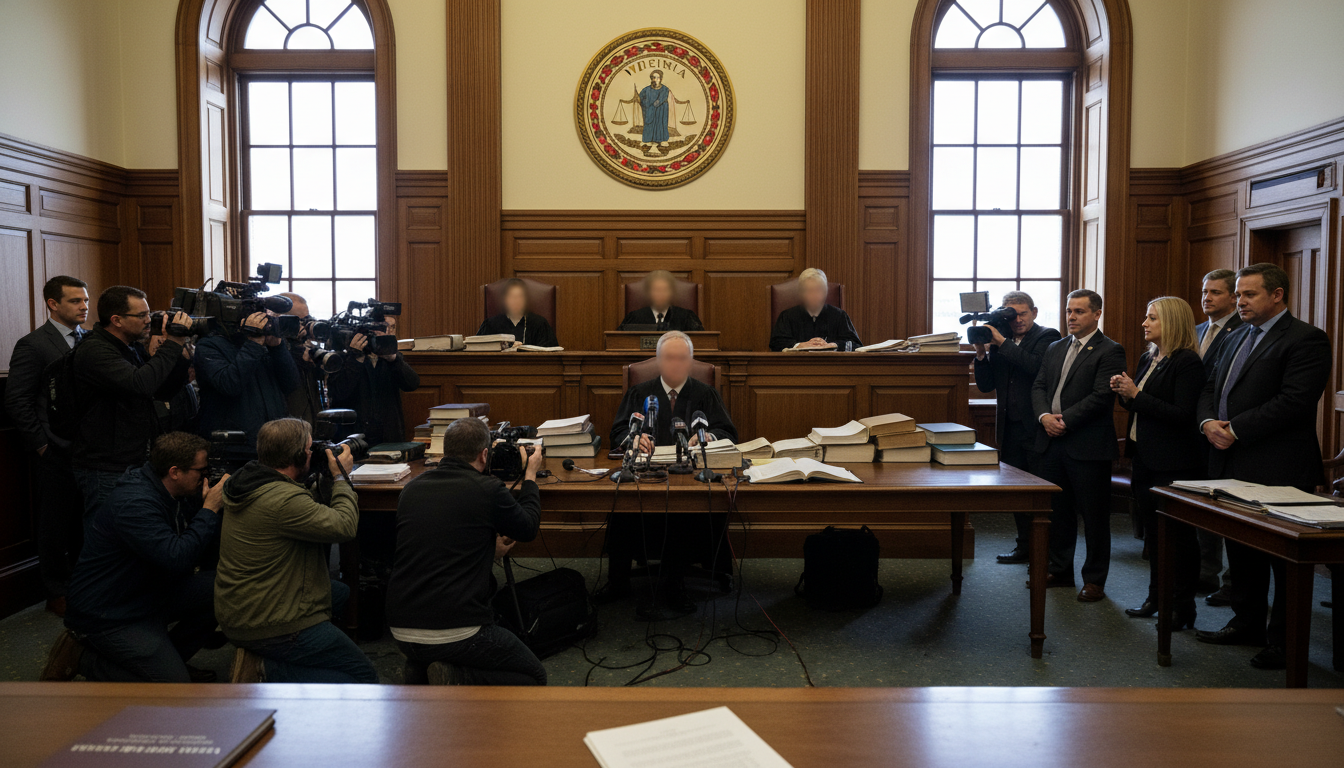
Virginia redistricting voided by state Supreme Court, boosting GOP ahead of midterms
Virginia redistricting: state Supreme Court ruled May 8, 2026 that the Democratic-led redrawing of U.S. House districts was invalid, removing maps that had favored Democrats.
Court voids Democratic-drawn congressional map
The Virginia Supreme Court on May 8, 2026 issued a ruling that invalidated a congressional redistricting plan advanced by the state legislature under Democratic control. The decision found the process used to place a constitutional amendment before voters did not follow required procedures, undermining the legitimacy of the measure.
The ruling annuls the changes that had been expected to reshape the state’s 11 congressional districts and potentially alter party representation in the U.S. House of Representatives. Court officials said procedural failures were significant enough to render the referendum result legally defective.
Background: April referendum and proposed seat shifts
On April 21, 2026 Virginia voters narrowly approved a state constitutional amendment that paved the way for the contested redistricting. Supporters argued the change would produce fairer lines, while opponents contended the referendum and the map that followed were rushed and politically motivated.
Under the contested plan, analysts estimated Democratic representation could have risen sharply from a traditional 6–5 split to as many as 10 Democrats and one Republican among the 11 districts. That projection made the redistricting a rare, potentially large gain for Democrats ahead of the U.S. midterm elections.
Court’s finding on procedural irregularities
The state high court concluded the legislature did not adhere to established procedural requirements when it put the amendment before voters, describing the method as unprecedented. Justices said the failure to follow proper steps “irreparably” damaged the integrity of the referendum, a phrasing that underscored the gravity of the procedural flaws.
Legal experts noted the opinion focused on process rather than the merits of any particular district map, leaving open questions about how redistricting should proceed in future sessions. The decision centers on whether lawmakers followed legal and constitutional rules required for citizen-facing ballot measures.
Immediate political consequences and midterm context
The court’s ruling removes a key Democratic avenue to increase House seats in Virginia, a state that had been targeted as a top pickup opportunity for the party. With the midterm elections less than six months away, the loss of the newly drawn map strengthens prospects for Republican candidates in multiple districts.
Political strategists said the ruling will force both parties to recalibrate campaign plans and resource allocation in Virginia. For Republicans, the decision is widely seen as a boost that could help preserve or expand their hold in closely contested districts.
Reactions from political leaders and President Trump
Democratic officials expressed disappointment and warned that the ruling could disenfranchise voters who supported the April referendum. They signaled plans to evaluate legislative and legal options while stressing their commitment to contesting the outcome through available channels.
Republican leaders praised the court’s finding as a vindication of concerns about process and fairness. Former President Donald Trump posted on social media characterizing the decision as favorable to his party, framing it as a positive development ahead of the national midterms.
Potential legal and legislative next steps
Legal analysts expect the state legislature and interested parties to consider several pathways following the ruling, including expedited legislative action to correct procedural defects or new court challenges. Any new redistricting initiative would likely invite renewed scrutiny and potential litigation given the high stakes.
Observers also noted the possibility that federal courts could become involved if claims about partisan gerrymandering or violations of federal law are raised. For now, the Virginia Supreme Court’s procedural finding sets the immediate legal posture and reshapes the calendar for mapmakers.
Implications for voters and election administration
Election officials must now adjust administrative preparations for the upcoming midterms, including ballot design and candidate filings in districts affected by the ruling. Voters in Virginia face uncertainty over which maps will govern their contests, complicating outreach and civic engagement efforts ahead of candidate forums and early voting.
Civic groups urged calm and clear communication from state authorities to minimize confusion at polling places and to ensure that any changes comply with statutory timelines. The ruling also renewed debate over how best to insulate redistricting from partisan influence while preserving lawful procedures.
The Virginia redistricting decision on May 8, 2026 represents a significant legal and political turning point in a pivotal midterm battleground, and it is likely to reverberate in campaign strategy, legislative agendas, and courtroom arguments in the months leading to November.

