
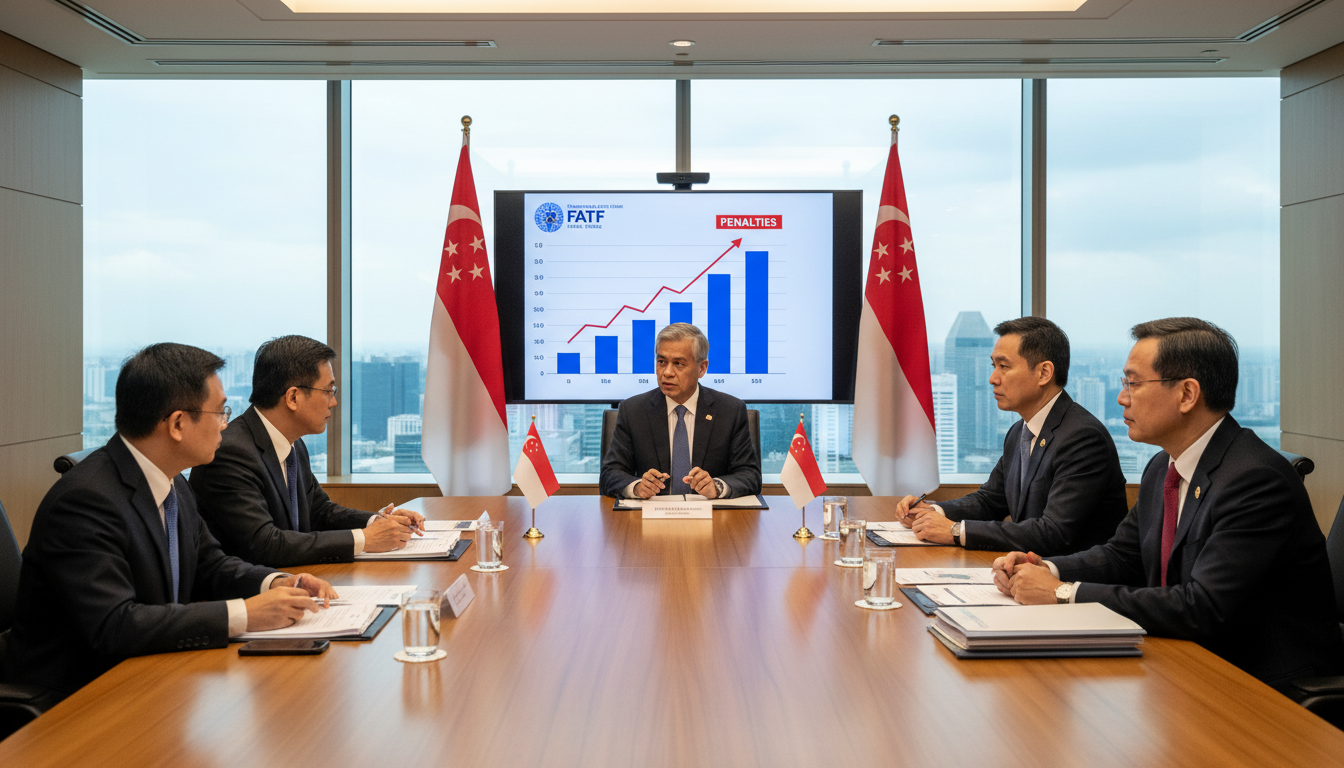
Singapore money laundering review: FATF calls for tougher penalties and stronger enforcement
FATF warns Singapore to tighten anti-money laundering measures and increase penalties, citing gaps that could undermine the city-state’s role as a global financial hub.
SINGAPORE — The Paris‑based Financial Action Task Force (FATF) said on Wednesday it found "room for improvement" in money laundering controls in Singapore and urged authorities to impose stiffer penalties on offenders. The watchdog’s assessment highlights concerns about the effectiveness of some measures aimed at detecting and disrupting illicit financial flows, and calls for legal and supervisory reforms to close gaps.
FATF assessment highlights shortfalls
The FATF, an intergovernmental body that sets global standards to combat money laundering and terrorist financing, identified shortcomings in certain areas of Singapore’s anti‑money laundering framework. While acknowledging many strengths, the review pointed to weaknesses that could be exploited by criminals seeking to launder proceeds through the city‑state’s financial system.
The watchdog’s findings focus on enforcement outcomes, risk‑based supervision and the adequacy of sanctions, suggesting that legislative or regulatory changes may be required to bring Singapore fully in line with international benchmarks. The statement underscores the expectation that major financial centres must show both robust rules and consistent application.
Recommendation for harsher penalties
A central recommendation from the FATF was that Singapore raise the level of penalties available for money laundering offenses and for entities that fail to meet compliance obligations. The watchdog argued that stronger punitive measures are necessary to deter sophisticated criminal networks and to ensure penalties are proportionate to harm.
The call for higher penalties is tied to FATF’s broader emphasis on effective, dissuasive sanctions that change behaviour among high‑risk actors and institutional actors alike. Observers say updating sanction regimes can also signal to international partners that the jurisdiction is serious about closing avenues used to disguise illicit funds.
Implications for Singapore’s financial centre
Singapore’s status as a global financial hub means that weaknesses in anti‑money laundering controls have outsized implications for cross‑border capital flows and international confidence. The FATF review could prompt banks, asset managers and non‑bank financial institutions operating in the city‑state to re‑examine their compliance programs and risk appetites.
Market participants are likely to watch whether regulatory action follows the FATF recommendations, as enforcement changes may affect transaction screening, due diligence costs and correspondent banking relationships. Strengthened measures could preserve Singapore’s competitiveness by reducing the reputational and operational risks that arise when a financial centre is perceived as vulnerable to illicit finance.
Regulatory and law enforcement gaps identified
The FATF report pointed to specific enforcement and supervisory practices that require reinforcement, including the detection, investigation and prosecution pathways for complex money laundering schemes. The review also noted the importance of timely sharing of information between agencies and across borders to trace and recover illicit assets.
Improvements called for by the watchdog typically involve tighter oversight of high‑risk sectors, clearer expectations for reporting suspicious transactions, and enhanced powers for regulators to impose meaningful sanctions. For non‑financial businesses and professions, the FATF highlighted the need for consistent application of beneficial ownership and client due‑diligence requirements.
International oversight and next steps
Following a FATF assessment, jurisdictions generally prepare action plans and set timelines to address the group’s concerns, with follow‑up visits or progress reports to monitor implementation. Singapore will face scrutiny from global partners and could be required to demonstrate measurable steps to close identified gaps within a defined period.
The international community uses these peer reviews as part of a system of mutual evaluation; failure to make sufficient progress can lead to reputational costs and, in some cases, increased scrutiny from correspondent banks and foreign regulators. Effective remediation typically combines legislative change, tougher enforcement and improved supervisory practice.
Singapore will need to balance the speed and scope of reforms with industry engagement to ensure new rules are workable and targeted. Close coordination among the Monetary Authority of Singapore, law enforcement, the legal sector and affected businesses will be crucial to translate FATF recommendations into operational change.
The FATF’s call for tougher penalties and stronger enforcement reflects rising global pressure on major financial centres to keep pace with evolving modalities of illicit finance. As Singapore considers next steps, authorities will face choices about legal amendments, supervisory intensity and resource allocation to demonstrate they can deter and punish money laundering effectively.

