
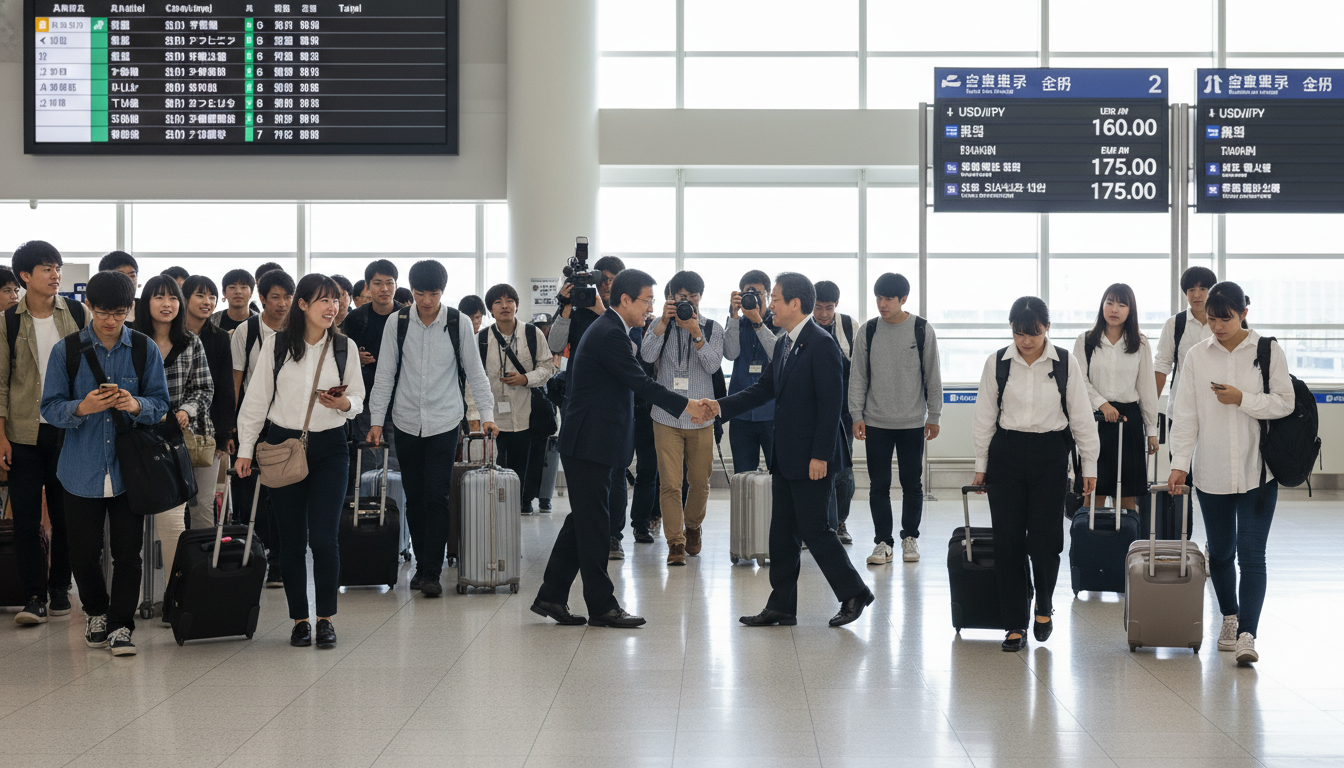
Weak yen deters Japanese students from study abroad as foreign enrollments in Japan hit record
Record inflow of foreign students into Japan contrasts with a 20% fall in Japanese students studying abroad, with weak yen and higher costs blamed by experts.
Japan is experiencing a sharp divergence in student mobility: a record number of foreign students are enrolling in Japanese institutions while the number of Japanese pursuing study abroad has fallen by roughly 20% from its recent peak. The decline in outbound Japanese students is being linked to a weaker yen and rising overseas costs, a dynamic that is reshaping higher education choices and workforce development in Japan. This shift is prompting universities, employers and policymakers to reassess how the country cultivates internationally experienced talent.
Foreign enrollments climb to new highs
A surge in foreign students choosing Japan has been recorded in the most recent survey released on Friday, driven in part by lower relative costs for overseas residents caused by the weaker yen. Many institutions report growing demand for degree programs taught in English and expanded recruitment efforts in Asia. Campus services, from housing to career support, are expanding to meet the influx, and local economies around university towns are beginning to feel the impact.
The increase in international students is concentrated in graduate and professional programs but is also visible at the undergraduate level. Universities say the longer-term benefits include strengthened research collaboration and a broader cultural mix on campus. However, officials stress that integration and academic support must keep pace to realize those gains.
Outbound Japanese students decline by about 20%
The number of Japanese students enrolled at overseas institutions has fallen by roughly one-fifth compared with the high point recorded several years ago. Cost is widely cited as a primary deterrent, with tuition, living expenses and travel priced higher in many popular destinations. Families and students report that the weaker yen makes multi-year programs abroad financially burdensome, narrowing the pool of those who can afford extended study overseas.
Declining outbound mobility raises concerns about the development of language skills and international networks among younger Japanese professionals. Employers in export-oriented and global sectors warn that fewer overseas experiences among graduates could limit competitiveness and innovation.
Currency pressures and cost calculations
The weak yen has emerged as a pivotal economic factor reshaping study choices. For Japanese students, tuition and living costs denominated in stronger foreign currencies translate into significantly higher outlays when converted into yen. At the same time, the currency shift makes study in Japan comparatively affordable for foreign applicants, boosting inbound mobility.
Families and prospective students say financial planning has become more complex, with many weighing shorter exchange programs or domestic alternatives. Some students are delaying or forgoing full-degree studies abroad in favor of summer programs, remote courses, or shorter internships that carry lower price tags.
Universities adapt recruitment and offerings
Japanese universities are diversifying their academic and financial strategies to address both rising foreign demand and shrinking outbound mobility among domestic students. Several institutions have expanded English-taught programs and formed partnerships with overseas universities to offer joint degrees or exchange semesters that reduce cost and logistical barriers. Scholarship funds and targeted financial aid for mobile students are also being reexamined.
Career services are shifting emphasis toward international internships and virtual placements to give students global exposure without the expense of long-term relocation. University administrators say these measures aim to preserve avenues for international learning while responding to immediate fiscal pressures on students and families.
Policy reactions and stakeholder concerns
Policy makers and education stakeholders are taking note of the mobility imbalance and its economic implications. Voices in government and industry are calling for clearer support mechanisms to sustain outbound mobility, including scholarships, loan products tied to study abroad, and incentives for short-term international experiences. At the same time, authorities are discussing how to better integrate the rapidly growing foreign student population into local communities and labor markets.
Business groups warn that without corrective action the pipeline of professionals with hands-on international experience could shrink, affecting sectors that rely on global connectivity. Education advocates argue that a multi-pronged response is needed, combining financial aid, curricular reform and public-private partnerships.
Workforce implications and talent development
Educators and employers alike warn that the twin trends of rising foreign enrollment and declining Japanese study abroad participation could have mixed effects on Japan’s talent ecosystem. The inflow of international students can enrich campuses and supply highly skilled labor in fields facing shortages. But fewer Japanese graduates gaining extended overseas exposure may reduce cross-cultural competencies and foreign language fluency in the workforce.
Companies report increasing demand for recruits who can navigate international settings, negotiate cross-border partnerships and bring global perspectives to innovation. Without deliberate measures to foster outward mobility, firms and universities may need to create more domestic pathways to international experience, such as multinational internships or collaborative research programs.
Long-term outcomes will depend on how quickly institutions and policymakers move to balance the benefits of growing inbound flows with the need to maintain outward mobility among Japanese students. The next steps taken by universities, government agencies and industry will be critical in determining whether the current divergence strengthens Japan’s global engagement or narrows the international outlook of a generation of professionals.

