
Where to See Geisha in Tokyo: Bookable Shows, Annual Odori and Practical Tips
Where to see geisha in Tokyo — practical guide to bookable performances, annual odori shows, free Asakusa events, hanamachi districts, etiquette and estimated costs.
Seeing a geisha in Tokyo remains possible for visitors and residents alike, offering a range of options from ticketed theatre shows to private dinners and community festivals. This guide explains where to see geisha in Tokyo, outlines typical prices and schedules, and gives practical advice on etiquette and booking. Whether you want a short staged performance, a full kaiseki evening with entertainment, or a free public recital, Tokyo’s geisha scene provides multiple entry points for those prepared to plan.
Bookable Geisha Performances and Prices
Bookable experiences are the most reliable way to guarantee you’ll see geisha in Tokyo, and they span a wide range of formality and cost. Basic staged shows, usually combined with tea and light snacks, offer a compact introduction to dance and shamisen music and typically cost in the low tens of thousands of yen per person. These one-hour formats are suitable for travellers with limited time who still want a canonical geisha performance.
For visitors seeking a more immersive evening, several operators combine geisha performances with multi-course dining or a fine-dining experience. These packages often include audience participation through traditional games and brief one-on-one conversation with the performers, and prices move into the mid-tens of thousands of yen per person. Age restrictions commonly apply to these events, so check whether children are permitted before booking.
At the highest end are private dinners in members-only ryōtei or full kaiseki evenings that recreate the formality of an ozashiki banquet. These bespoke experiences can cost substantially more but provide extended interaction with geisha in an intimate, reserved setting. Private tea ceremonies with a geisha, often held in tatami rooms and paired with matcha and sweets, offer another premium but culturally concentrated option for small groups.
Many bookable options allow online reservation and provide English explanation or an interpreter, but refund and cancellation policies vary. Some tours advertise free cancellation up to 24 hours before, while others require weeks of advance notice for a refund. Always read terms carefully when you reserve, because penalties for late cancellations can be steep.
Annual Public Geisha Showcases and Timetables
Tokyo’s hanamachi maintain annual public showcases — odori or stage recitals — that bring geisha and musicians to theatre stages so the wider public can attend. These events are scheduled by district and are the best opportunity to see multiple performers in a formal program without the private-club atmosphere of an ozashiki. Tickets for major shows typically start from a few thousand yen and rise depending on seat class.
Shimbashi’s official showcase, commonly staged at the Shimbashi Enbujo Theatre, features a program of nihon buyō (classical Japanese dance), live shamisen accompaniment and vocal pieces. The program highlights seasonal motifs in kimono and traditional props such as fans and umbrellas, and ticket prices reflect a range of seating categories. Kagurazaka and Akasaka also stage regular odori events that present theatre-style performances and, in some years, supplementary street stages or local festivals with more relaxed formats.
Smaller districts such as Mukojima and Hachiōji stage more intimate programs that emphasize regional repertoire and community connections. These shows can be an appealing alternative to central-Tokyo events and often attract audiences who want to see geisha who do not frequently appear on large metropolitan stages. Dates and ticketing vary by year, so consult official notices from the hanamachi or venue box offices when planning attendance.
For many audiences, attending one of these public showcases is the best balance of authenticity and accessibility: you see traditional dance in a controlled setting, pay a modest admission fee, and avoid the referral-only policies of private ozashiki. Expect a programme that runs for 60–90 minutes, often split into several short pieces showcasing different performers and musical forms.
Asakusa Culture Center: Free Performances and How to Attend
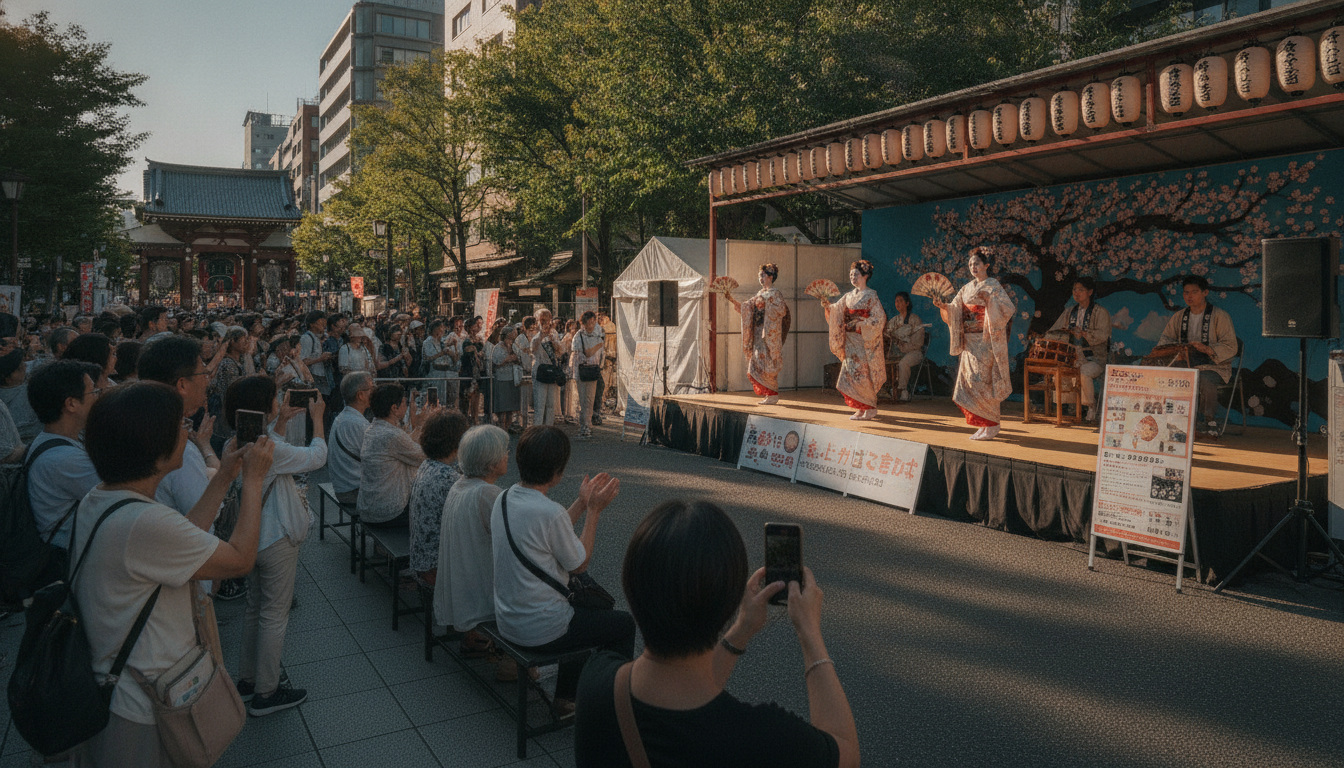
The Asakusa Culture Center runs a seasonal schedule of free geisha performances that provide one of the rare public, no-cost chances to see traditional skills in Tokyo. These events are staged twice daily on selected Saturdays, typically at early-afternoon slots, and last roughly half an hour. The format is stage-based rather than intimate, but volunteers can sometimes join in simple ozashiki games and photographs are allowed after the show for those willing to queue.
Capacity at the Asakusa sessions is limited and demand can exceed supply, so tickets are distributed on the venue’s first floor from mid-morning on show days. Seating is allocated roughly for 85 people with standing room for additional visitors, so arriving early is advisable to secure a place. Because dates can change year to year, confirm the schedule with the organizers before making travel plans.
Programmes at the Culture Center typically feature a variety of geisha arts, from shamisen and singing to dance and taiko drumming. The short format is ideal for visitors who want an overview without committing to a long evening, and it can also serve as an affordable introduction before booking a longer private experience in another hanamachi.
Tokyo’s Hanamachi Districts and Street Sightings
Tokyo’s geisha districts — hanamachi — contain restaurants, teahouses, and training houses that preserve the cultural infrastructure of geisha practice. Districts that regularly appear in guide listings and public programming include Shimbashi, Kagurazaka, Akasaka, Mukojima and Hachiōji, among others. Each hanamachi has its own calendar and flavor, and local showcases allow residents and visitors to observe different repertoires and styles.
Chance sightings of geisha walking between appointments still occur, though they are less common than in Kyoto. If you do encounter geisha on the street, exercise respect: do not approach, follow, block their way, or photograph without permission. Many communities view casual street photography as intrusive; the accepted practice is to observe discreetly and to avoid disrupting their movement.
If you want contextual understanding rather than random sightings, consider a guided walking tour of a hanamachi such as Kagurazaka. Local guides can explain the history and architecture of the district, point out relevant teahouses and training houses, and outline when public appearances and festivals take place. Tours make it easier to appreciate the cultural setting without compromising the performers’ privacy.
Booking, Timing and Etiquette for Ozashiki and Shows
Planning and punctuality matter when arranging geisha experiences. Many private ryōtei and members-only venues enforce strict arrival policies and will cancel bookings if guests arrive late. As a rule of thumb, plan to arrive at least 15 minutes before your scheduled start time, and factor in potential delays caused by Tokyo’s transit networks or evening traffic.
Age restrictions, dress expectations and behavioral norms differ by venue. Some dinners and performances prohibit minors or set a minimum age for participation in drinking or interactive games. Traditional venues also expect modest attire and decorum; noisy or boisterous behavior is inappropriate during performances. When in doubt, follow the lead of venue staff and the performers, and ask questions quietly when permitted.
Cancellation terms vary widely. Some commercial operators offer relatively flexible refunds if you cancel within a stated window, while private ryōtei and bespoke bookings may require multiple weeks’ notice for any partial refund. Always review the operator’s cancellation policy before you reserve, and consider travel insurance for higher-cost experiences.
Language can be a barrier in one-on-one interactions, but many commercial packages include English explanation or interpreter assistance. If linguistic exchange is important to you, look for listings that advertise bilingual staff or interpreter support to ensure a smoother conversation during any interactive segments of the evening.
Choosing the Right Geisha Experience for Your Visit
Deciding where to see geisha in Tokyo depends on your priorities: cost, authenticity, intimacy, and schedule. For budget-conscious travellers, free stage performances and low-cost public shows deliver an accessible introduction to geisha arts without the expense of a private banquet. Mid-range packaged shows that include tea or small plates provide a compact yet structured experience for most visitors.
If authenticity and close interaction are your primary goals, a private kaiseki dinner or a members-only ryōtei booking will offer the deepest cultural immersion, though these experiences require a larger budget and more advance planning. A private tea ceremony with a geisha can sit between the two extremes, giving intimate cultural contact without the length or cost of a full banquet.
For visitors also planning to travel to Kyoto, consider balancing your options: Kyoto generally has a larger pool of geisha and maiko appearances and additional public performances across its hanamachi. If time allows, compare offerings in both cities and book the experience that best matches your itinerary and expectations.
Geisha-related workshops and complementary cultural activities can enrich a visit as well. Hands-on classes, such as kintsugi or traditional instrument lessons, pair well with a performance and provide tangible souvenirs and skills to remember the visit. Combining a staged performance with a separate cultural workshop can make a short stay feel more rounded.
Tokyo’s geisha scene is a living cultural practice with multiple entry points for visitors. From free stage recitals at community centres to carefully arranged private dinners in ryōtei, the city offers a tiered set of experiences that cater to different budgets and interests. Advance planning, respect for local norms and careful attention to booking terms will improve the chances of an authentic and memorable visit.
Geisha performances and festivals are scheduled and operated by local hanamachi and venues, and dates or ticketing details may change from year to year. Confirm event times, admission rules and reservation requirements with the venue or organiser before you travel, and allow sufficient lead time to secure the experience that best fits your plans.

