
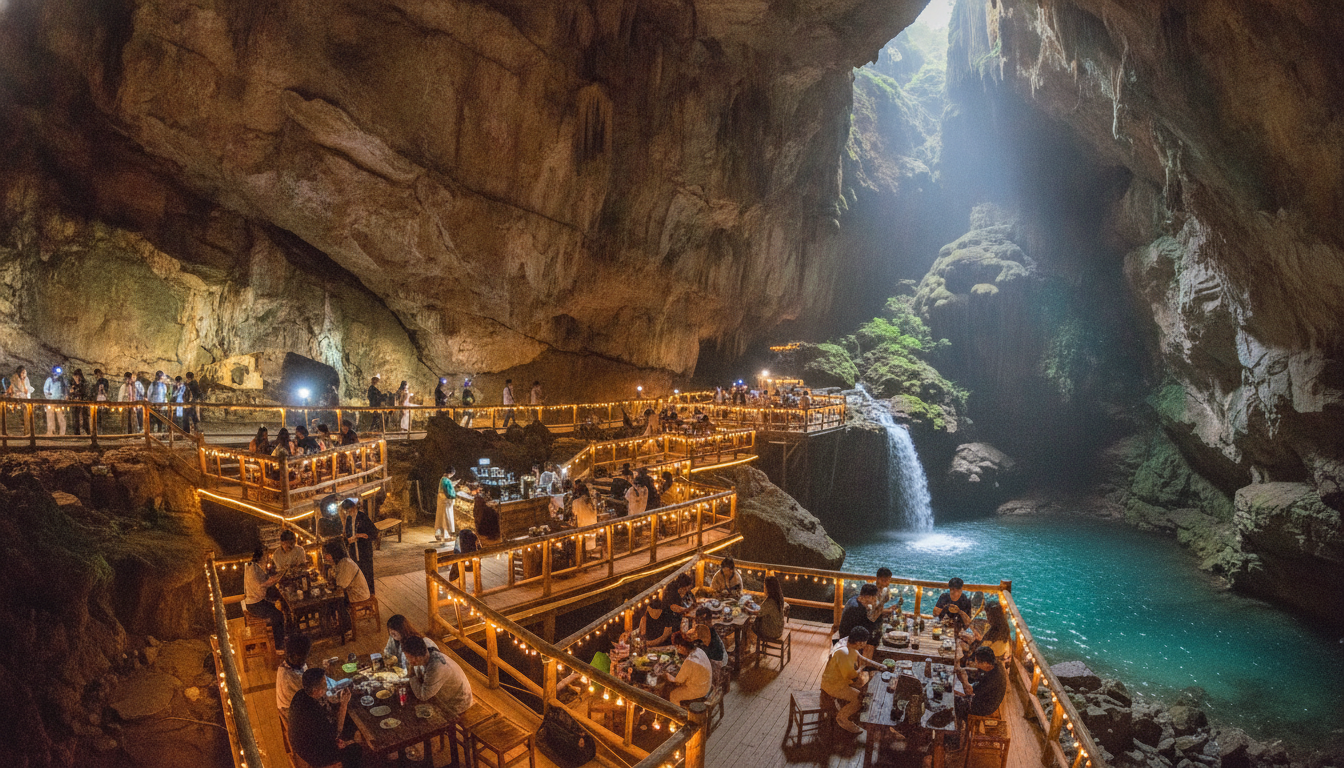
Guizhou cave tours lure visitors with underground cafés and adventurous spelunking
Guizhou cave tours lure social-media-savvy young people and families with subterranean cafes, guided spelunking and eco-focused attractions in southwest China.
Natural caves across Guizhou province are rapidly emerging as a new kind of tourist draw, combining cool subterranean spaces with cafes, guided tours and family-friendly attractions. Operators and local authorities say Guizhou cave tours are appealing to younger visitors who post photos and videos online, while offering an off-season boost to rural economies. The trend is reshaping how the province markets its karst landscape, turning once-remote caverns into managed visitor sites.
Visitor demand surges for Guizhou cave tours
Interest in Guizhou cave tours has grown sharply during recent summers as travelers seek cooler destinations and novel experiences. Tour operators report higher bookings for weekend slots and packages that mix cave visits with nearby ethnic-village sightseeing. Many visitors cite the novelty of subterranean cafés and the chance to explore large caverns as key reasons for choosing Guizhou over more familiar domestic destinations.
Underground cafés and social media appeal
Entrepreneurs have opened cafés and small refreshment stalls inside or at the entrances of several caverns, designed to be photogenic and shareable on social platforms. These cafés offer seating areas, local snacks and carefully lit backdrops that amplify the caves’ natural features for photos. Marketing specialists say the visual nature of cave interiors—staggered stalactites, reflective pools and cool mist—translates easily into viral content that drives further visitor interest.
Adventure tours and new visitor experiences
Beyond café stops, many Guizhou cave tours now include guided spelunking, rope-assisted descents and light-trekking routes that require minimal technical skill. Licensed guides lead groups along established trails and through boardwalks installed to protect fragile areas while allowing closer views of formations. Operators stress that tours are split by difficulty, with family-friendly circuits clearly marked and more challenging routes limited to small, supervised groups.
Local economy and employment gains
The expansion of cave tourism has generated jobs in transport, guiding, hospitality and craft sales across nearby counties. Small businesses—from guesthouses to souvenir vendors—report higher occupancy and foot traffic since the cave attractions opened to organized tours. Officials in several precincts have introduced training programs for local residents to qualify as guides or café staff, aiming to channel tourism revenues into rural development.
Conservation and capacity-management measures
Conservationists warn that increased footfall can harm delicate cave ecosystems unless strict management is enforced. In response, several sites have introduced visitor caps, timed-entry tickets and mandatory guided routes to prevent off-trail wanderings. Authorities are also investing in low-impact lighting and boardwalks to reduce physical wear on formations and minimize disturbances to bat and insect populations that inhabit some caverns.
Safety standards and regulatory oversight
As cave attractions diversify into more adventurous offerings, regulators have stepped up inspections and licensing requirements for tour operators and equipment. Safety briefings, helmet and harness provisions, and trained rescue personnel are becoming standard at higher-risk sites. Local tourism bureaus say they are coordinating with public-safety units to ensure rapid response capabilities and to maintain insurance coverage standards for commercial cave activities.
Infrastructure investment and transport links
To make remote caves accessible, provincial and county governments have accelerated road improvements and shuttle services from nearby rail hubs and airports. Signage, visitor centers and multilingual interpretation panels are being added at major sites to streamline visitor flow and explain geological and cultural significance. Planners are prioritizing sustainable access measures, such as electric shuttle buses and limited parking footprints, to reduce environmental pressure.
Guizhou cave tours are becoming a tested model of experience-driven regional tourism that balances visitor demand, local economic benefits and environmental stewardship. If managed carefully, the subterranean cafés and guided spelunking circuits could help diversify the province’s tourism portfolio while protecting the very landscapes that make these destinations distinctive.

