
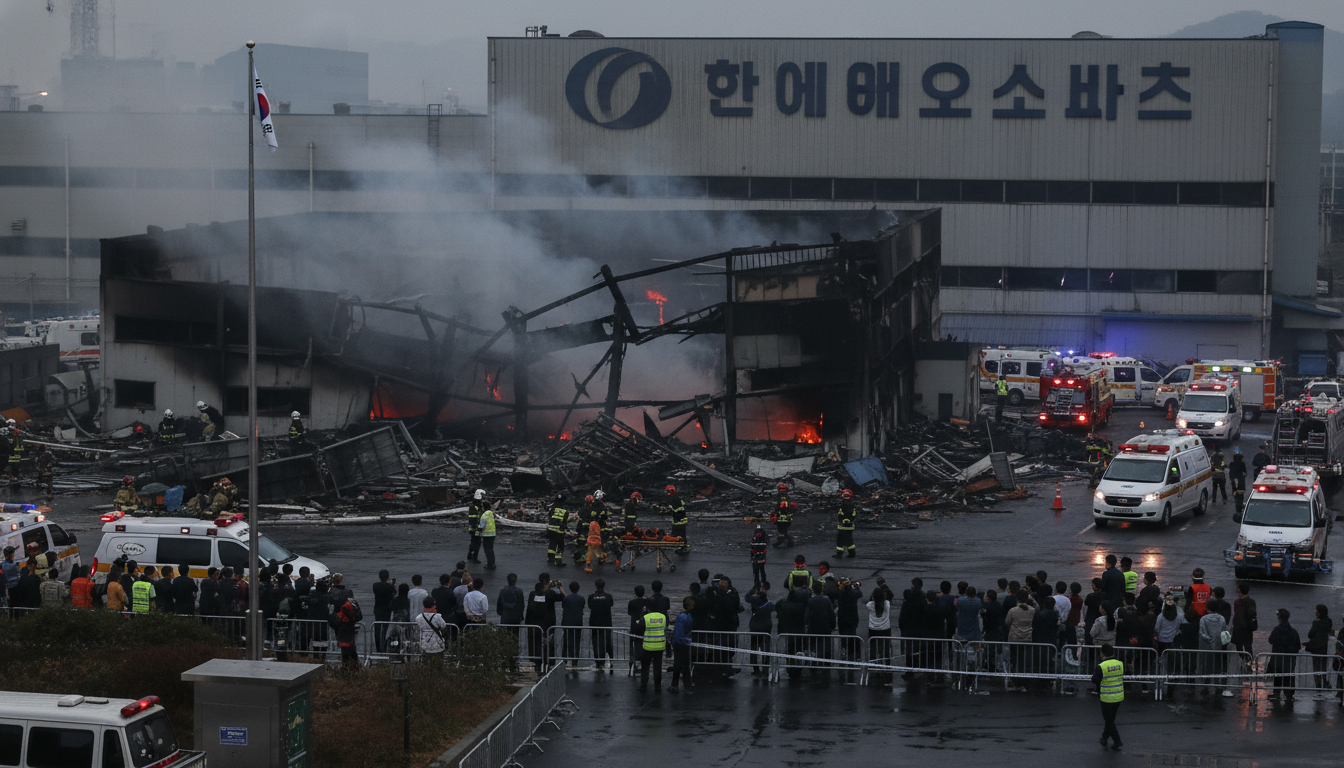
Hanwwa Aerospace factory explosion in Seoul kills five, authorities say
Five people died in an explosion at a Hanwha Aerospace factory in Seoul on June 1, 2026, as local authorities investigate the cause of the blast. The Hanwha Aerospace explosion is reported to have occurred during daytime operations at a site run by the South Korean defence manufacturer, according to officials cited by local media. Emergency responses and an on-site probe were announced by authorities as the company’s ties to defence and heavy industry raise questions about safety and supply impacts.
Fatal blast at Seoul facility
Five people were confirmed dead after an explosion at a factory operated by Hanwha Aerospace in Seoul on Monday, June 1, 2026, local authorities and media reported. The incident occurred at a facility belonging to the defence manufacturer, which operates in a sector where industrial hazards are a known concern. Authorities said they are investigating the circumstances surrounding the blast and were working to secure the site.
Authorities report and immediate response
Local officials provided the initial casualty figures and said investigators had been dispatched to the scene to determine the cause of the explosion. Details on whether any workers were injured or the identities of the victims were not released immediately, pending notification of next of kin. Officials also indicated that access to the factory was restricted while investigators conducted on-site examinations and evidence collection.
Hanwha Aerospace’s corporate profile
Hanwha Aerospace is a major South Korean industrial group with businesses spanning aerospace, defence, shipbuilding, and manufacturing activities. By assets, the broader Hanwha conglomerate ranks among South Korea’s largest companies and has a substantial role in supplying components and systems for military and commercial clients. The company’s operations and industrial footprint mean incidents at production sites can have wider implications for partner firms and contractors.
Investigation scope and likely procedures
Authorities said an inquiry into the explosion’s cause was underway, a process that typically involves police, fire investigators and occupational safety agencies. Investigators are expected to review on-site conditions, maintenance records and any safety protocols in place, though officials have not yet detailed the exact scope of the probe. Forensic examination of the plant and interviews with staff are standard components of such investigations and may take days or weeks to complete.
Safety record and regulatory context
South Korea maintains regulatory frameworks for industrial safety, particularly in sectors handling explosives, heavy machinery, and defence-related materials. Industrial accidents in manufacturing facilities often prompt scrutiny of compliance with safety standards and can lead to administrative or criminal inquiries if negligence is suspected. The Hanwha Aerospace explosion will likely renew attention on enforcement of safety regulations across similar manufacturing sites.
Potential operational and industry impact
The immediate operational consequences for Hanwha Aerospace depend on the extent of damage at the specific factory and the results of the official investigation. Supply chains tied to defence manufacturing can be sensitive to production interruptions, and companies often move quickly to assess alternate production arrangements. Market or contract implications will hinge on whether the damaged facility produced critical components and on the anticipated timeline for recovery and repair.
Authorities and company representatives had not released detailed statements about the cause or the names of the victims at the time of the initial reports. Hanwha Aerospace has been a visible player in South Korea’s industrial landscape, and the loss of life at one of its sites is expected to prompt internal reviews and public concern.
Investigators will aim to establish whether the explosion resulted from equipment failure, human error, chemical reactions, or other factors linked to industrial processes. Findings from the probe will determine any legal or regulatory follow-up and may shape future oversight of similar facilities. Families of the deceased and workplace safety advocates are likely to seek clear answers as the inquiry proceeds.
The Hanwha Aerospace explosion in Seoul underscores ongoing risks faced by workers in heavy manufacturing and defence sectors. As authorities continue the investigation, industry observers will watch for both immediate operational impacts and longer-term shifts in safety enforcement that may follow from the incident.

