
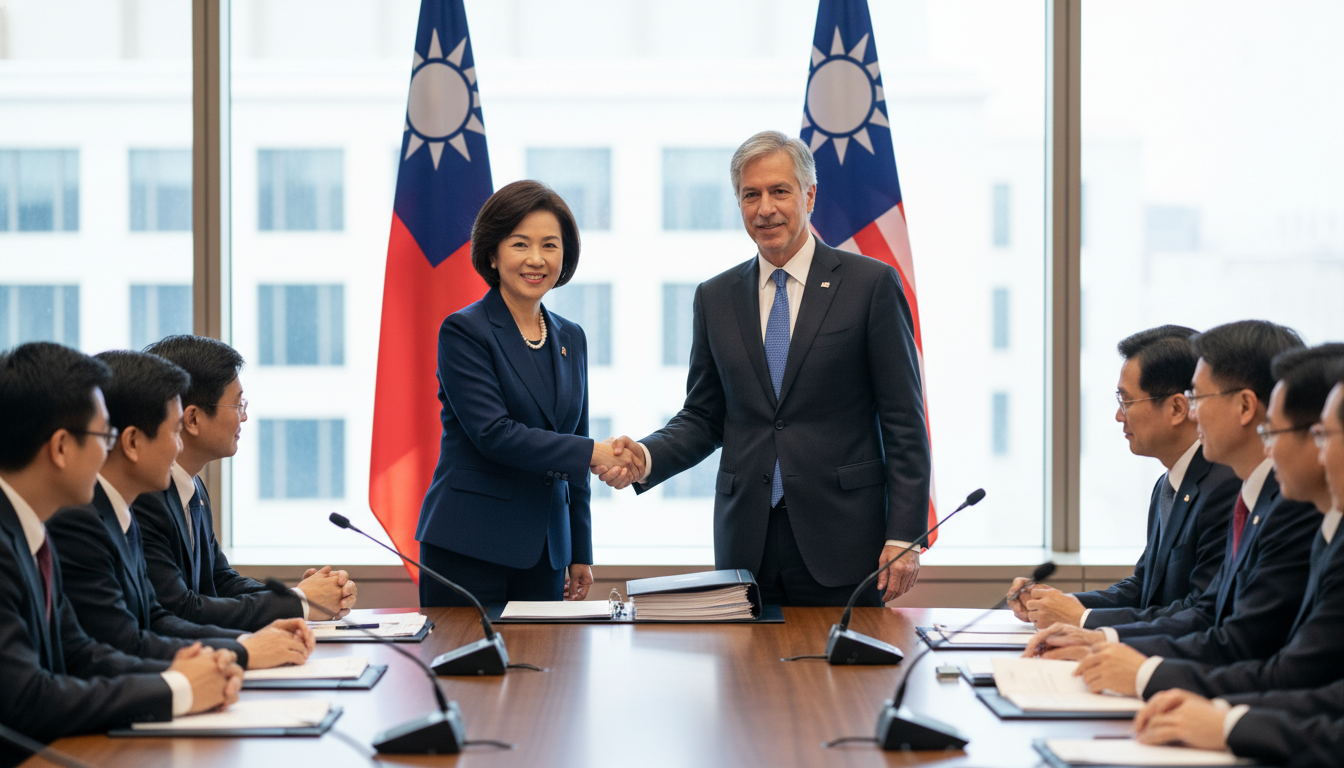
Cheng Li-wun Begins U.S. Visit to Bolster Defense and Foreign Policy Credentials Amid Beijing Ties
Kuomintang leader Cheng Li-wun begins a two-week U.S. visit on Monday, June 1, 2026, seeking to shore up her defense and foreign-policy credentials as Washington grows wary of the party’s tilt toward Beijing.
Cheng Li-wun Arrives in Washington for Two-Week Tour
Cheng Li-wun arrived in the United States on Monday, June 1, 2026, for a planned two-week visit aimed at strengthening her profile on security and diplomacy. The Kuomintang (KMT) chair is using the trip to engage with U.S. policymakers, think tanks and the Taiwanese-American community to demonstrate competence on defense issues. Her arrival comes amid concern in Washington about the KMT’s recent outreach to Beijing and how that posture could affect Taipei’s deterrence posture.
Cheng’s itinerary is intended to showcase a pragmatic approach to Taiwan’s external relations while countering narratives that the party would soften Taiwan’s defense commitments. The delegation’s public messaging emphasizes preparation and partnership rather than policy shifts, even as critics in both Taipei and Washington question whether words will match actions.
Washington Establishment Expresses Wariness of KMT Stance
U.S. officials and defence analysts have made clear that reassurance will be critical for Cheng Li-wun to win trust in Washington. The central worry is whether the KMT’s political orientation toward closer ties with Beijing could translate into reduced emphasis on Taiwan’s asymmetric defence planning and interoperability with U.S. support mechanisms. In private and public venues, American lawmakers have signalled they will press for clear commitments on sustaining deterrence and on cooperation should cross-strait tensions rise.
Those concerns are heightened by a broader U.S. strategic focus on Indo-Pacific stability and the continued effort to reassure allies. Cheng’s task is to persuade interlocutors that the KMT will uphold Taiwan’s security requirements and work constructively with Washington on contingency planning.
After Meeting Chinese Leadership, Cheng Faces Test of Credibility
Cheng Li-wun’s recent contacts with senior Chinese officials have become a focal point of scrutiny in Washington. Critics describe the outreach as part of a Beijing courting strategy that complicates Taipei’s diplomacy and raises questions about the KMT’s intentions. Proponents argue such contacts are aimed at reducing tensions, but U.S. policymakers are seeking practical evidence that engagements with Beijing will not undermine Taiwan’s defensive posture.
Analysts say the most compelling demonstration of good faith will be specific, verifiable steps on defence cooperation and transparent statements about responses to military pressure. Absent those signals, Cheng’s meetings in the United States risk being interpreted as window dressing rather than substantive policy alignment.
Engagements Expected with Policymakers, Think Tanks and Diaspora
During the tour, Cheng Li-wun is expected to meet a range of stakeholders including congressional aides, policy experts and members of the Taiwanese diaspora. These audiences will test her ability to address detailed questions about force posture, supply chains, and the KMT’s approach to sustaining Taiwan’s self-defence capabilities. Organizers say the schedule is designed to pair formal discussions with public appearances to communicate directly with Taiwanese-Americans who play an influential role in shaping U.S. views.
Public diplomacy will be a key element of the visit because managing perception in Washington matters for access to security partnerships. Cheng’s team will likely emphasise continuity with past commitments while highlighting any new policy proposals that could reassure U.S. counterparts.
Domestic Political Stakes for the Kuomintang in Taipei
Back in Taiwan, Cheng Li-wun’s U.S. tour carries heavy domestic political consequences for the Kuomintang. Party leaders face pressure from both conservative wings that advocate closer ties with Beijing and moderate factions concerned that perceived softness on defence could cost votes. For Cheng, performing credibly in Washington is a way to neutralize internal critics and present the KMT as a responsible governing alternative on national security.
The visit also plays into broader electoral calculations as the party positions itself for future contests at the national and local levels. Demonstrating competence on foreign policy and defence could bolster the KMT’s standing among swing voters who prize stability and security.
Potential Impact on Cross-Strait Dynamics and Regional Stability
How Cheng Li-wun frames relations with both Washington and Beijing will have implications beyond Taipei’s immediate political scene. If the U.S. interprets the tour as a sincere effort to align on defence priorities, the visit could ease some tensions and create channels for crisis management. Conversely, if doubts persist about the KMT’s posture toward Beijing, the trip may harden Washington’s approach to Taiwan and prompt closer scrutiny of military assistance and contingency planning.
Regional observers caution that mixed signals increase the risk of miscalculation, particularly at a time when military activities around Taiwan remain frequent. Clear, consistent messaging from Cheng that balances engagement with Beijing and commitment to Taiwan’s defence will be essential to avoiding escalation.
Cheng Li-wun’s two-week stay in the United States will test whether the Kuomintang can reconcile its China-oriented diplomatic outreach with the practical demands of sustaining U.S. security confidence, and the outcome will shape perceptions in Taipei, Washington and Beijing alike.

