
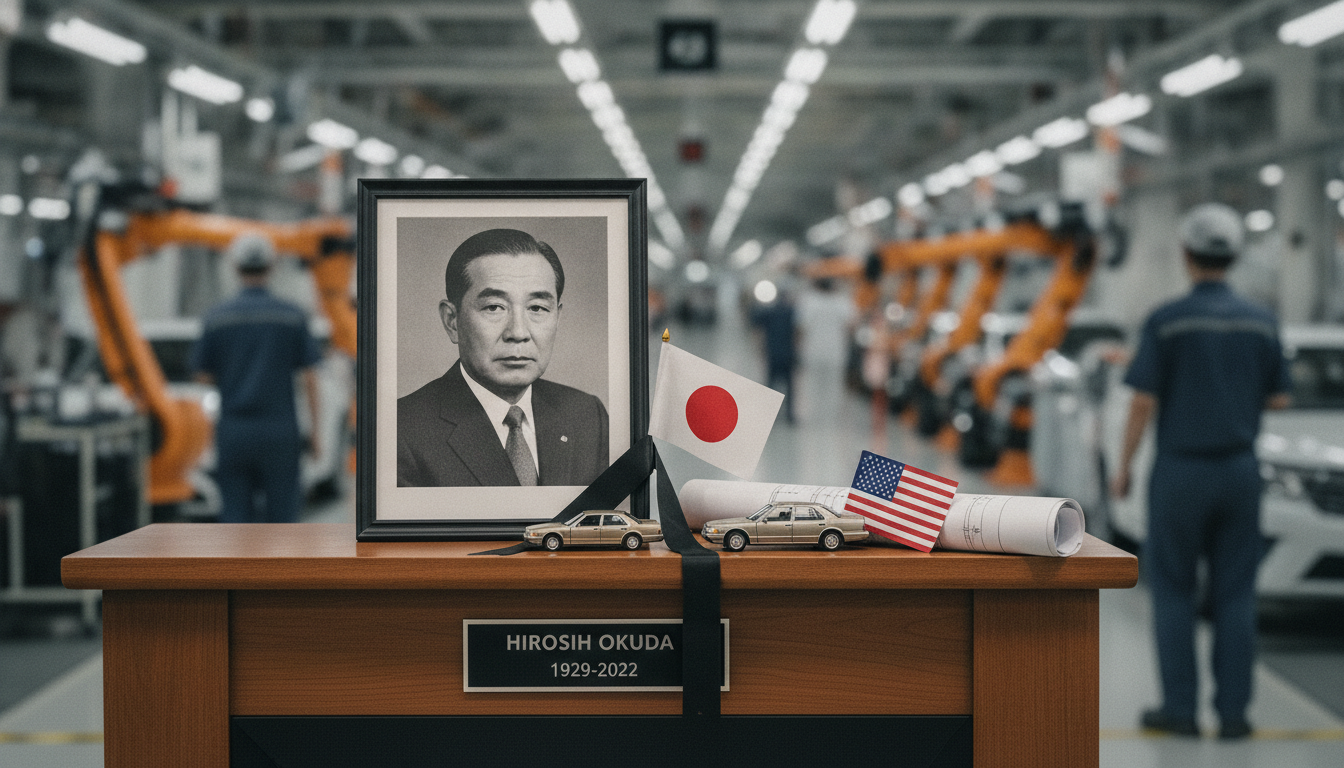
Hiroshi Okuda, Former Toyota President Who Built U.S. Production Networks, Dies at 93
Hiroshi Okuda, the former Toyota Motor president credited with helping establish U.S. production amid trade tensions, died on August 8, 2026, at age 93.
Death Confirmed in Tokyo and Nagoya
Hiroshi Okuda’s passing was reported in both Tokyo and Nagoya on August 12, 2026, with accounts indicating he died on Saturday, August 8.
He was 93 and had remained a prominent figure in Japan’s business circles since leaving executive office.
Tenure at Toyota and Corporate Influence
Okuda served as president of Toyota Motor at a time when the company was transitioning from a domestic leader to a global manufacturing powerhouse.
Business analysts and company observers say he helped lay crucial organizational and strategic foundations that supported Toyota’s international expansion in the late 20th century.
Driving U.S. Production Strategy
One of Okuda’s most consequential initiatives was advancing localized production in the United States to reduce exposure to trade frictions.
Under his influence, Toyota accelerated investment in U.S. plants and supplier networks, a move that helped the company sustain sales growth while addressing political pressure over imports.
Responding to Trade Tensions
Okuda’s push for on‑shore manufacturing was shaped by recurring trade disputes and tariff concerns between Japan and the United States.
By championing local production and deeper ties with American suppliers, he sought to balance commercial interests with the diplomatic realities of the era.
Role as Adviser to Government and Business
Beyond his Toyota responsibilities, Okuda advised the Japanese government on industrial matters and served as a representative voice for the nation’s business community.
He acted as a bridge between corporate Japan and policymakers, advocating for measures to bolster manufacturing competitiveness and international cooperation.
Impact on Corporate Governance and Industry Practice
Colleagues and industry watchers point to Okuda’s emphasis on long‑term planning and quality control as hallmarks of his leadership.
Those practices helped shape not only Toyota’s production systems but also broader standards in manufacturing and supply chain management across Japan.
Enduring Reputation and Institutional Legacy
Okuda leaves behind a reputation as a pragmatic executive who combined operational focus with strategic diplomacy.
His efforts to align production footprint with geopolitical realities are now viewed as a formative influence on how global automakers approach international manufacturing.
Hiroshi Okuda’s death marks the passing of a generation of Japanese executives who navigated rapid postwar industrial growth and the globalization of manufacturing.
As Toyota and the wider industry continue to adapt to new challenges, from electrification to shifting trade dynamics, Okuda’s emphasis on local engagement and long‑term industrial strategy will remain a reference point for business leaders and policymakers.

