
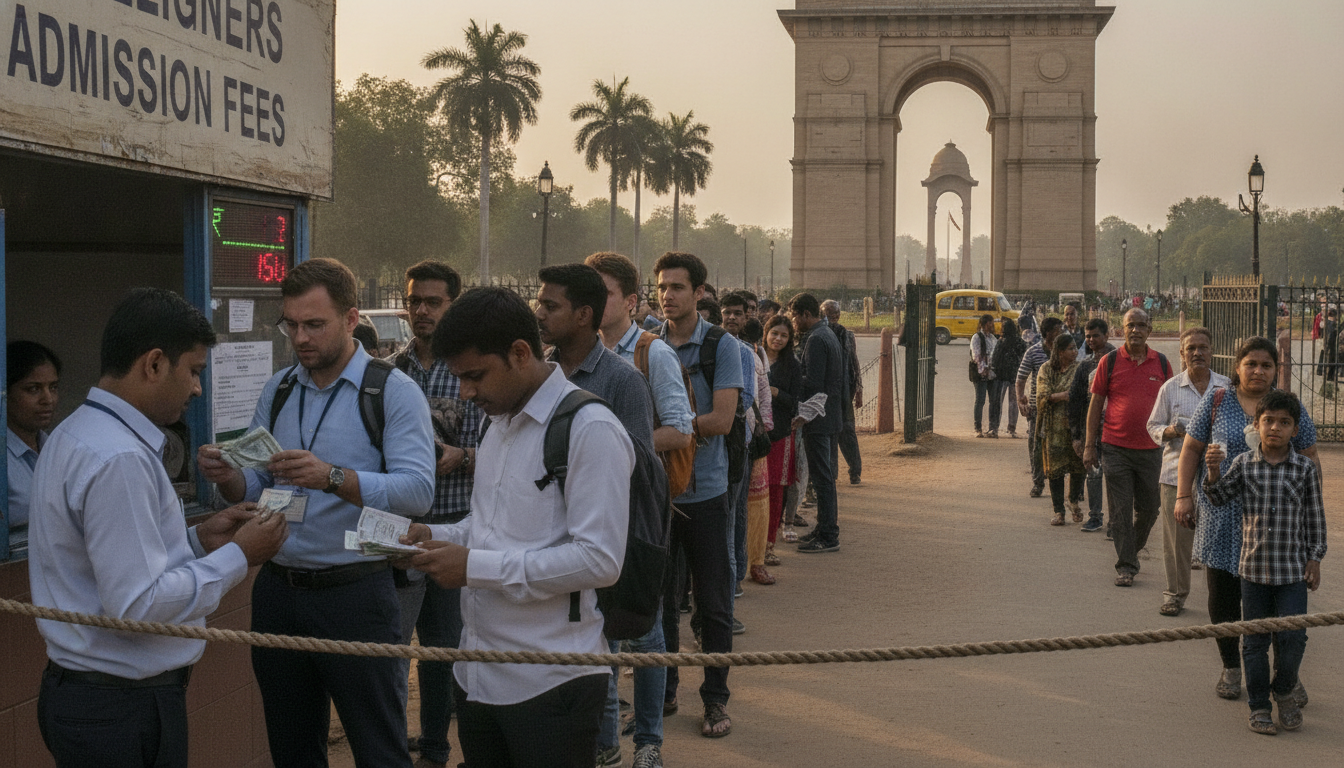
Two-tier pricing widens at Indian sites as foreign admission fees rise
Two-tier pricing at India’s tourist sites is widening, with inflation-linked hikes driving foreign admission fees far above local rates and reshaping travel choices as of August 12, 2026.
Opening summary
Two-tier pricing at major Indian attractions has sharpened in recent months, leaving foreign visitors facing substantially higher admission charges than domestic tourists. The trend, visible at iconic sites such as the Taj Mahal, reflects a series of fee increases tied to rising operating costs and inflation that authorities say are needed to maintain facilities. The growing gap is prompting debate among tourism operators, foreign travellers and policymakers about equity, revenue and visitor management. Observers warn the changes could alter travel patterns and perceptions of India as an accessible tourism destination.
Foreign visitors face steep surcharges
Many heritage sites in India continue to charge different rates for foreign and domestic visitors, a practice that has existed for decades and was recently reinforced by fee adjustments. Foreign guests now often pay multiples of the local tariff for entry, guided tours and some ancillary services, a divergence amplified by inflationary pressures on maintenance budgets. Tourism industry sources say these higher charges are intended to capture additional revenue from inbound tourists who typically spend more on average per visit. Critics argue the scale of surcharges is dissuading some visitors and risks reputational damage for cultural attractions.
Taj Mahal among the most visible examples
The Taj Mahal, one of the country’s highest-profile monuments, has become a focal point for scrutiny because of the pronounced price gap between foreigners and Indian nationals. International visitors routinely pay significantly more than domestic attendees for basic admission, while further differentials apply to services such as guided access and special viewing slots. Site managers and conservation authorities contend that elevated fees for non-residents help fund preservation measures and crowd-control initiatives at high-traffic monuments. Nonetheless, travel agents report an uptick in queries from visitors seeking lower-cost alternatives or off-peak visits.
Inflation and fee adjustments cited by authorities
Officials involved in heritage management and tourism administration point to rising costs as the primary driver of recent fee changes. Increased spending on staffing, security, conservation projects and utilities is cited as justification for raising admission prices, particularly for segments perceived to have greater ability to pay. Some authorities have introduced tiered ticketing structures—combining base rates, premium access and time-bound passes—in an effort to balance revenue generation with visitor experience. Economists and tourism analysts caution that without careful calibration, such measures risk shrinking visitor numbers at higher price points.
Impact on tourism flows and industry response
Travel operators and hotels report mixed signals from international markets as a result of the fee increases. While some high-spend travellers are unaffected, budget-conscious visitors and certain tour groups are adjusting itineraries to include fewer paid-entry monuments or preferring lesser-known sites with lower charges. Domestic tourism has remained resilient, buoyed by lower local rates and a strong domestic travel season, yet international arrivals are a vital revenue source for many regions. Industry bodies are calling for clearer communication from authorities and temporary relief measures targeted at promoting off-season travel to smooth demand.
Local reaction and equity debate
The widening price differentials have sparked debate within India about fairness and the social purpose of public heritage sites. Advocates for open access argue that national monuments hold cultural and educational value that should not be heavily segmented by nationality or income. Conversely, proponents of higher foreign fees emphasize the practical need to finance conservation work and manage heavy visitor loads without drawing on limited public budgets. Municipal leaders and community groups in towns near major attractions have also voiced concern about how fee policies affect local vendors and the distribution of tourism income.
Government and agency responses under consideration
Government ministries and heritage agencies have acknowledged the tensions arising from recent pricing decisions and say they are reviewing options to balance conservation funding with equitable access. Possible measures under discussion include introducing concessional passes, expanding digital ticketing to smooth visitor flows, and earmarking a portion of foreign-derived revenues for community development around sites. Officials stress the need for a sustainable funding model that preserves fragile monuments while supporting the livelihoods dependent on tourism.
The widening two-tier pricing at Indian tourist sites highlights a broader challenge for destinations balancing conservation needs with inclusive access. As authorities, industry and communities seek solutions, their choices will shape the visitor experience and the economic benefits tourism delivers in the months and years ahead.

