
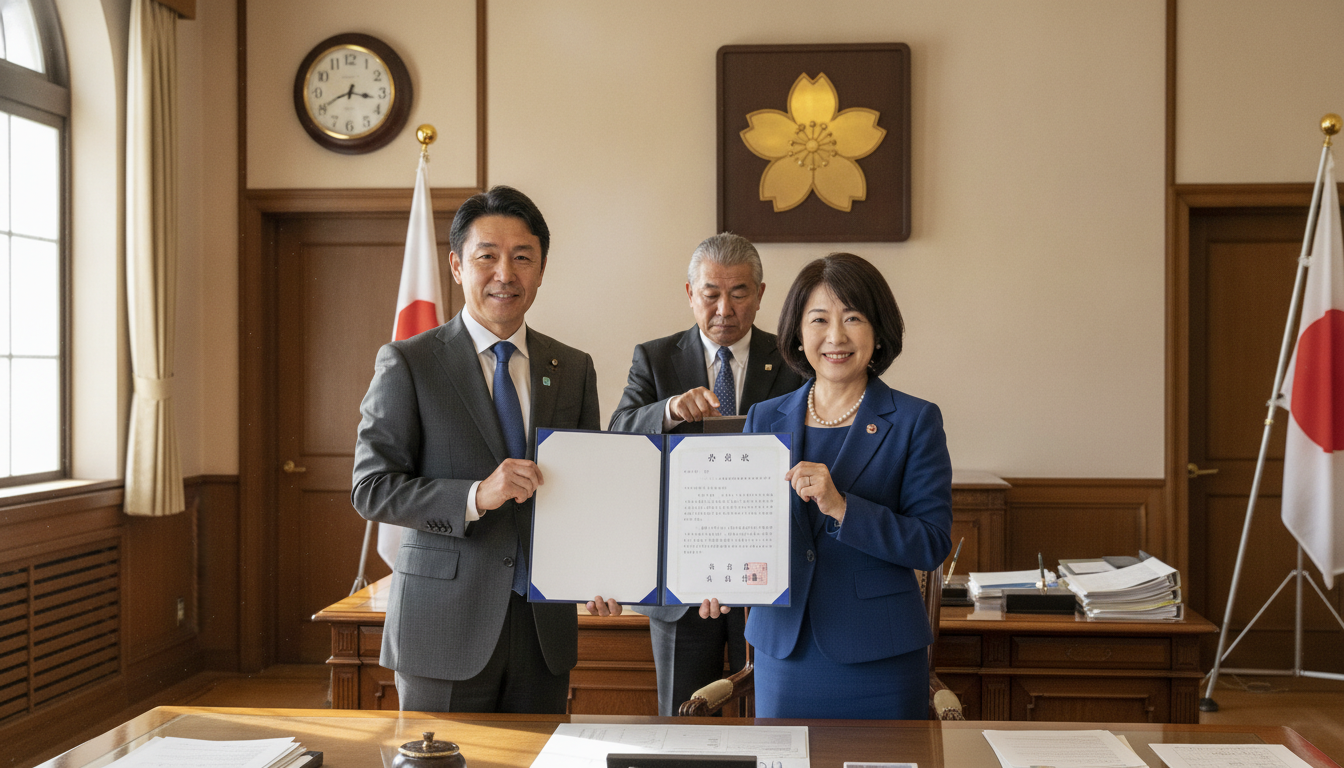
Hiroyuki Nishimura and Fusaho Izumi Register New Regional Party to Field Candidates in 2027 Local Elections
Hiroyuki Nishimura leads a new regional party effort with Senator Fusaho Izumi aimed at fielding candidates for the spring 2027 unified local elections across Tokyo and other prefectures.
A political group led by Hiroyuki Nishimura, the founder of the anonymous bulletin board 2channel, and former Akashi Mayor turned upper house lawmaker Fusaho Izumi filed paperwork with the Tokyo Metropolitan Election Commission on July 27, 2026. The provisional name submitted to authorities is “Hiroyuki & Izumi New Party (provisional),” with the duo saying a final name and their full platform will be decided through public solicitation and unveiled in October 2026.
Registration and timeline of the new political group
The pair formally notified election authorities in Tokyo on July 27, 2026, according to Izumi’s office, marking the first administrative step toward creating a regionally focused political organization. The group will initially operate as a political association while soliciting a permanent name through public input, with a manifesto and official branding scheduled for release in October 2026.
Izumi and Nishimura have portrayed the submission as preparatory work ahead of the unified local elections planned for spring 2027. They say the organization intends to recruit and endorse candidates for multiple mayoral and gubernatorial contests in that cycle.
Planned candidate recruitment for the 2027 unified local elections
The party intends to solicit candidates for up to 11 mayoral races within Tokyo’s 23 special wards and other municipalities, according to Izumi. The campaign will prioritize fielding local chief executives rather than pursuing legislative seats initially, reflecting the founders’ view that executive offices enable swifter administrative reform.
Beyond Tokyo, the group is weighing candidate endorsements in gubernatorial contests across eight prefectures including Kanagawa and Osaka, and in mayoral races for six designated cities such as Shizuoka and Hamamatsu. Party officials say decisions on specific races will be finalized after candidate vetting and local consultations.
Core policies emphasized by the founders
The new party is centering its early policy messaging on three pillars: lowering residents’ financial burdens, child and education support, and the expansion of digital government services. Izumi has pointed to measures he implemented as Akashi mayor—such as subsidized junior high school lunches and free medical care for children—as models that can be replicated nationwide.
Nishimura and Izumi also plan to prioritize the use of information technology and artificial intelligence to streamline administrative processes and reduce costs. They argue that digital administration can make public services more efficient and accessible, particularly for families facing demographic and economic pressures.
Origins of the partnership and political rationale
Nishimura and Izumi have collaborated previously, publishing a joint book on Japan’s demographic challenges three years ago, an initiative that helped shape their shared policy outlook. According to Izumi, conversations about forming a political organization began roughly two years ago, driven by what both described as an urgent need to address declining birthrates and to experiment with new forms of governance.
Both founders have said they concluded that mayors and governors—who lead administrative bodies directly—are better positioned than legislators to implement practical changes. That calculus informed the group’s focus on recruiting chief executives for local government rather than prioritizing parliamentary seats at the outset.
Ambitions beyond local elections and potential political impact
While the immediate aim is the 2027 unified local elections, the party’s backers say they view regional officeholding as a first step toward broader national influence. Officials have not set a timetable for national-level candidacies but did not rule out future runs for Diet seats if the organization secures local executive positions and builds a policy track record.
Political analysts caution that establishing a new party and winning multiple executive races in a single election cycle will require substantial grassroots organization and funding. The founders’ high public profiles may draw attention and volunteers, but translating online recognition into local voter support will be a central challenge.
The party plans to name candidates, publish a full manifesto and launch coordinated recruitment drives in the autumn. Local chapters and endorsement processes will be set up in the coming months to prepare for the candidate filings required by the spring 2027 election calendar.
Hiroyuki Nishimura and Fusaho Izumi say their initiative aims to put into practice policy proposals they argue are already feasible at the municipal level, and to demonstrate scalable models for addressing Japan’s demographic and administrative challenges.

