
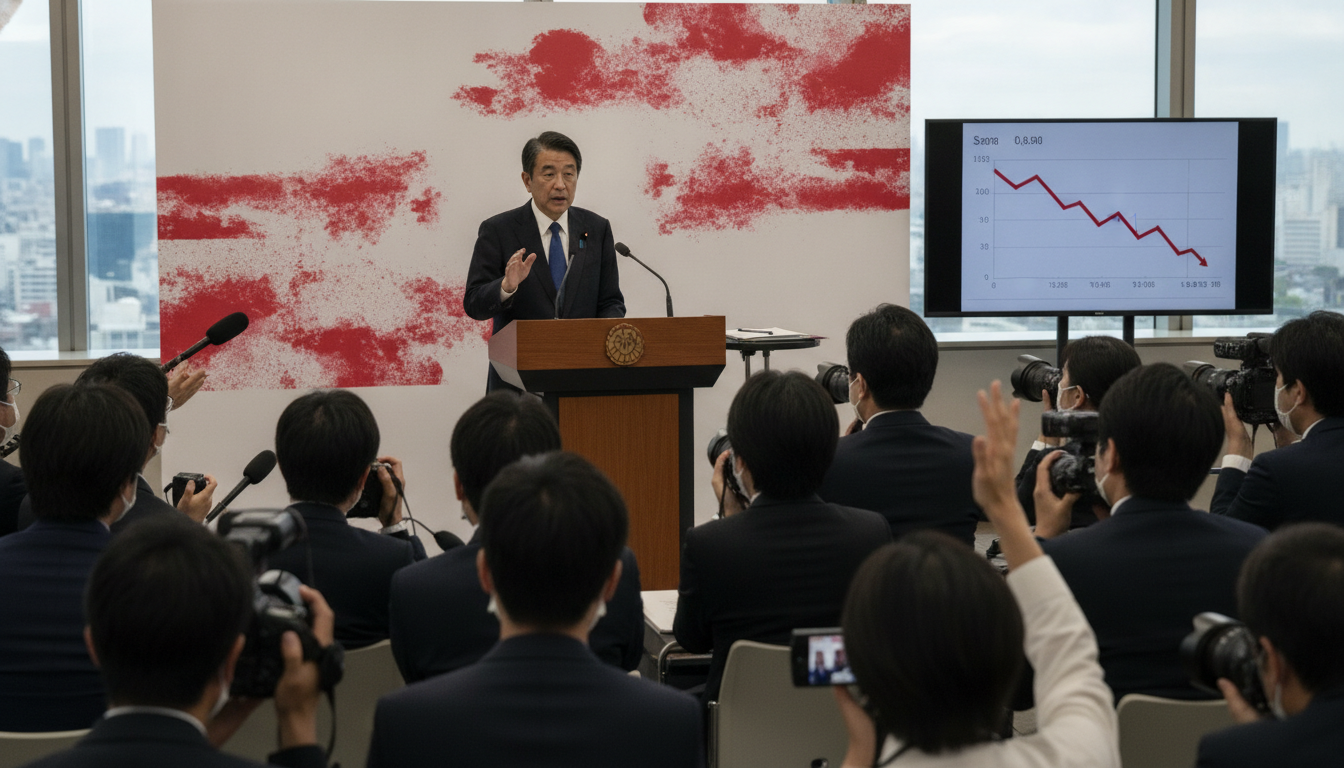
Japan moves forward with consumption tax cut on food to 1% despite funding concerns
Japan to cut consumption tax on food to a 1% levy in a $30bn package aimed at easing household price pressures while raising questions over public finances.
Government moves to cut consumption tax on food to 1%
Japan is preparing a consumption tax cut on food that would lower the levy to 1%, part of a package Prime Minister Sanae Takaichi is pressing ahead with. The measure, estimated to cost about $30 billion, is intended to cushion households from rising prices and reduce the immediate burden of living costs. Officials describe the step as an emergency relief aimed at stabilizing household spending ahead of broader economic plans.
The announcement marks the first time Tokyo has moved to shave the consumption tax specifically on food, signaling a rare direct intervention in tax policy to tackle price pressures. The government frames the cut as targeted and temporary, focusing on everyday groceries rather than broad-based tax relief. Critics and some economists warn that the approach risks complicating tax administration and creating questions about long-term fiscal sustainability.
Economic rationale and political calculus behind the cut
Prime Minister Takaichi has argued the consumption tax cut on food is necessary to restore public confidence and support consumer spending. Rising prices, particularly for staples, have become politically sensitive as households struggle with persistent inflation. The policy is being pitched by the administration as an immediate, tangible benefit voters will feel at the supermarket checkout.
The move is also widely seen as a political calculation ahead of key domestic timetables for the government, aiming to shore up support among swing voters and lower-income households. Government spokespeople emphasize the targeted nature of the measure and its potential to boost short-term consumption. Observers note, however, that political gains may be weighed against longer-term fiscal trade-offs.
Details of the fiscal package and $30 billion cost
Officials estimate the reduction to a 1% rate will cost roughly $30 billion over the period covered by the measure. That figure reflects projected revenue losses from sales taxes on food and associated administrative and compliance adjustments. The government says it will outline the exact time frame and legal mechanism in accompanying budget documents and legislative proposals.
Treasury and finance ministry officials are reported to be working on offset measures to limit the impact on the wider budget. Possible options under consideration include reprioritizing existing spending, limited borrowing, or one-off reserve draws. Analysts caution that one-off fixes can leave structural deficits unaddressed and may complicate future fiscal planning, especially given Japan’s already high public debt levels.
Concerns about funding and Japan’s strained public finances
Despite the government’s assurances, economists and opposition parties have raised alarms over how the cut will be funded. Japan’s public debt remains among the highest in the advanced world, and fiscal watchdogs have repeatedly urged caution on measures that erode revenue without clear offsets. Critics say a $30 billion gap cannot be filled without either cutting other programs or increasing borrowing.
Market reaction to the announcement underscored the sensitivity of investors to fiscal credibility, with commentators pointing out that ad hoc tax reductions can undermine long-term fiscal reform efforts. The administration insists the cut will be temporary and narrowly focused, but fiscal experts warn that temporary measures often become politically difficult to reverse. The debate highlights a central tension between short-term relief and the country’s long-running fiscal consolidation challenges.
How shoppers and retailers are expected to respond
Supermarket chains and food retailers have expressed cautious optimism that a lower consumption tax on food will encourage spending and alleviate consumer pain. Retailers say they will need clarification on which items qualify and how to adjust pricing and point-of-sale systems. Small grocers and convenience store operators face operational costs to reprogram registers and train staff to implement the new rate.
For consumers, the immediate effect would be a modest reduction at the checkout that could boost discretionary spending elsewhere in household budgets. Economists note, however, that the policy’s success in stimulating broader economic activity depends on confidence and the extent to which households perceive the cut as sustained. If the reduction is seen as short-lived, some households may simply save the difference rather than increase consumption.
Parliamentary timetable and likely opposition scrutiny
The government is expected to bring the measure to the Diet with accompanying budgetary language and implementing rules in the coming weeks. Opposition parties have already signaled they will press for transparent funding plans and demand assessments of distributional impacts. Lawmakers will also probe how the cut interacts with existing reduced rates and exemptions that have complicated Japan’s value-added tax system in the past.
Committee hearings and fiscal reviews are likely to focus on the mechanics of applying a 1% rate to specific food categories and on the prospective duration of the policy. Legal experts say careful drafting will be needed to prevent loopholes and avoid administrative confusion at points of sale. The legislative process could reveal whether the package will include compensating measures or whether it will rely on short-term budget maneuvers.
The consumption tax cut on food is set to be one of the defining fiscal policy debates of the coming months, juxtaposing immediate relief for households against longstanding concerns about Japan’s public finances.

