
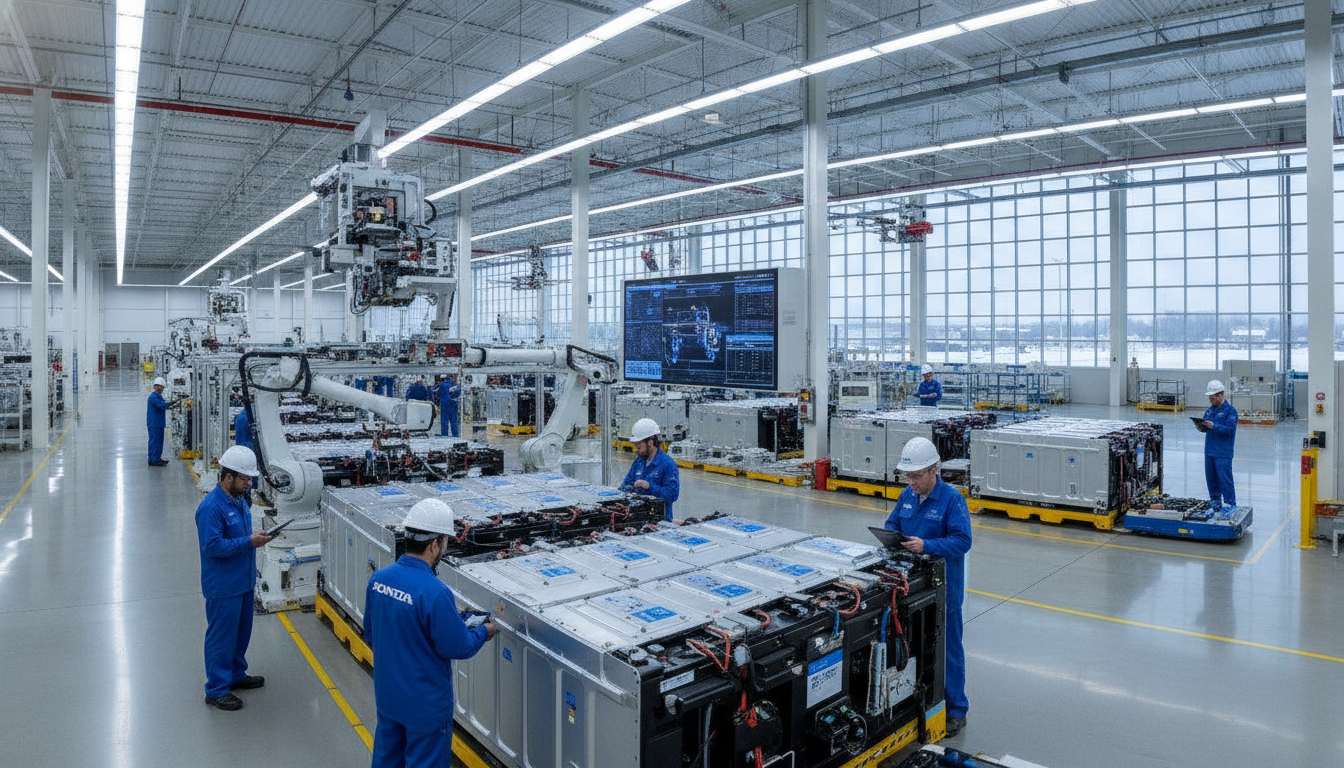
Honda begins production of AI data center batteries at Ohio plant as EV plans shift
Honda starts producing AI data center batteries at its Ohio plant, repurposing capacity originally built for EV battery manufacturing to manage weak EV demand.
Honda repurposes Ohio battery plant for AI data center batteries
Honda has begun producing batteries for artificial intelligence data centers at a recently completed plant in Ohio, a facility originally intended for electric vehicle battery manufacture. The shift to AI data center batteries is designed to buy time while the automaker reassesses its electrification strategy amid a downturn in EV demand.
The decision represents a notable pivot for Honda, which had planned to scale up EV battery production as part of a broader move toward electrified vehicles. By using the Ohio plant to supply data center operators, Honda aims to keep the factory active and preserve investment as market conditions for EVs soften.
Company strategy and immediate objectives
Honda’s move to produce AI data center batteries is intended as an interim measure rather than a permanent abandonment of EV ambitions. The company has signalled that the output for data centers will bridge the gap until electric-vehicle demand improves and longer-term production plans are adjusted.
Officials described the shift as a pragmatic response to current market signals, enabling the plant to generate revenue and maintain workforce continuity. Using advanced battery cells in stationary, non-vehicle applications allows Honda to leverage its production capabilities while avoiding large-scale idle capacity.
How the Ohio plant was developed
The Ohio battery plant was completed in partnership with battery maker LG Energy Solution and represents significant industrial capacity in the U.S. Midwest. The facility was built with the expectation of feeding a future generation of Honda electric vehicles, but the change in product focus reflects evolving demand patterns.
Earlier agreements and investments remain part of the factory’s history, and the infrastructure now accommodates both automotive-grade cells and variants tailored for stationary energy and data center use. Reconfiguring production lines for data center battery modules required technical and logistical adjustments but leveraged much of the plant’s original equipment.
Market pressures behind the pivot
Global EV sales have experienced a slowdown that has reshaped manufacturers’ near-term plans, leading several automakers to delay or scale back battery capacity expansions. Weak consumer demand, higher vehicle prices, and competition from alternative powertrains have contributed to softer-than-expected uptake of some electric models.
In this context, producing batteries for AI data centers offers a steadier revenue stream, as demand for large-scale data processing and cloud infrastructure continues to rise. Stationary battery applications generally face different performance and certification standards than automotive cells, allowing manufacturers to redirect production without entirely abandoning previous investments.
Implications for Honda’s electrification roadmap
The repurposing does not appear to be a total reversal of Honda’s electrification commitments, but it does signal a pause and reassessment. Company leaders have framed the step as a way to preserve optionality—keeping production capabilities and know-how while monitoring EV market recovery.
Analysts say the approach may reduce near-term financial strain and allow Honda to refine its vehicle and battery strategies before committing additional capital. Maintaining the plant in active operation also helps retain skilled workers and supply-chain relationships that would be costly to rebuild if mothballed.
Local economic and workforce effects
For the Ohio region, continuing production at the plant supports jobs and regional suppliers that would otherwise face layoffs or reduced orders. Repurposing the factory for AI data center batteries preserves much of the operational workforce and sustains activity among component and logistics partners.
Adjustments to production schedules and training have been required, but local sources indicate that many roles remain largely the same despite the change in end products. The move has broader implications for U.S. industrial policy conversations about securing battery manufacturing and diversifying use cases for domestic production.
Wider industry trends and next steps
Honda’s decision is part of a wider pattern of manufacturers exploring alternative markets for battery output amid uncertain EV demand. Stationary storage, grid services and industrial applications have all attracted attention as outlets for excess capacity and as markets with different demand dynamics.
Looking ahead, Honda will likely monitor EV sales closely and may reallocate the Ohio plant back toward vehicle battery production if and when market conditions warrant. For now, supplying AI data centers provides a pragmatic response to immediate market realities while preserving the option to pivot back to EVs.
The production shift underscores how automakers are balancing long-term electrification goals with short-term financial and operational realities, and it highlights the growing intersection between automotive battery technology and the needs of data infrastructure.

