
Hydrangea festivals near Tokyo: where to see the best June blooms from Yokohama to Akigawa
A practical guide to hydrangea festivals near Tokyo in June 2026 — dates, access, ticket prices and visitor tips for Yokohama, Akiruno, Kaisei, Narita, Machida, Fuchū and Satte.
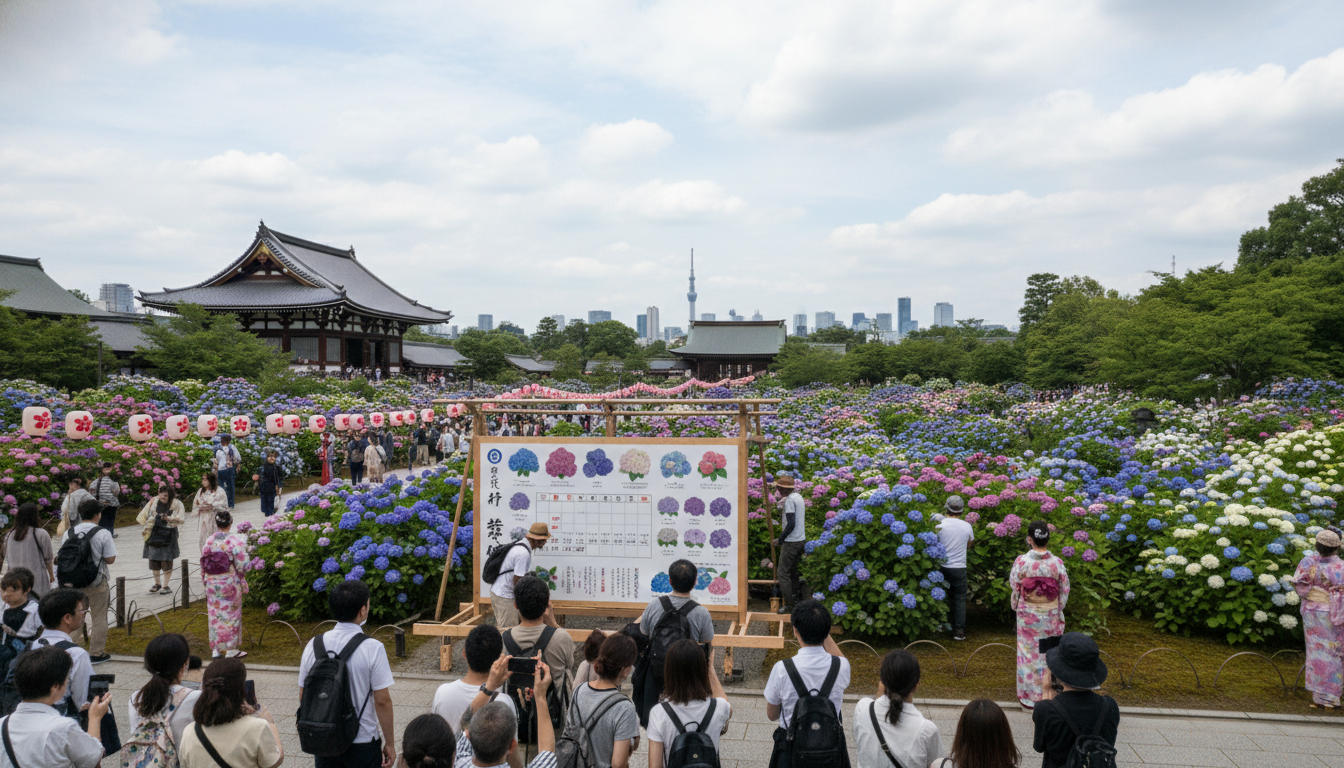
The hydrangea festivals near Tokyo are entering their peak season in June, offering tens of thousands of blooms across parks, temples and purpose-built gardens. This guide compiles confirmed 2026 festival dates, admission details and transport options so readers can plan day trips from central Tokyo to see the season’s best displays. Whether you are after a gallery of photographed umbrellas and azure clusters in Yokohama, the agricultural backdrops in Kaisei, or the large-scale plantings of Akigawa Valley, this round-up covers the major events and practicalities for visitors.
Yokohama English Garden stages late-May to June hydrangea display
Yokohama English Garden is known for an intimate, curated display of hydrangeas set against manicured beds and decorative umbrellas designed for photos. The garden’s 2025 display ran from May 26 to June 29, and organisers typically stage their hydrangea exhibition in late May through June; the exact 2026 dates were still to be confirmed at the time of publication. Admission in previous years has been set at around ¥1,000, with free shuttles from Yokohama Station and a ten-minute walk from Hiranumabashi Station making it an accessible short trip from central Yokohama and Tokyo.
The site is compact compared with larger regional festivals, which makes it well suited to visitors seeking a photogenic setting rather than a full-day outing. Expect well-maintained paths and floral arrangements staged for photography, but also be prepared for crowds on weekends when local visitors arrive to see the blooms. If your schedule is flexible, aim for weekday mornings to avoid the densest visitor peaks and to see flowers in cooler, softer light.
Kaisei Ajisai Festival highlights 5,000 plants beside rice paddies
The Kaisei Ajisai Festival runs from June 6 to June 14, 2026, at Kaisei Hydrangea Village and offers a distinctive rural setting of roughly 5,000 hydrangeas backed by rice paddies. Entry is free and the festival presents a quieter alternative to larger, more tourist-focused events, making it attractive for photographers and families seeking a pastoral scene. The village atmosphere and proximity to agricultural landscapes provide a different visual character to urban gardens, with paths that follow gentle slopes and field edges.
Access is straightforward by train: take the Odakyu Line to Kaisei Station, a journey of about 1 hour 20 minutes from Shinjuku if you can board the Romance Car. From Kaisei Station festival shuttle buses run approximately every 20 minutes during the event and the short shuttle fare — historically around ¥220 — makes the site convenient for a day trip. Festival organisers often stage local food stalls and small markets during the week, so visitors can combine flower viewing with a taste of regional produce.
Akigawa Valley opens two-site display with 30,000 hydrangeas
Akigawa Valley in Akiruno hosts one of the largest concentrated hydrangea displays near Tokyo, with around 30,000 plants split across two principal sites. The 2026 festival period is scheduled from June 6 to July 5 and encompasses Wonderful Nature Village Ajisai, near Tokyo Summerland, and Minamisawa Hydrangea Mountain. Visitors will find rare varieties alongside common cultivars across terraced slopes and purpose-planted flower beds, providing both volume and botanical variety for hydrangea enthusiasts.
Wonderful Nature Village is the more accessible of the two venues, with a free shuttle bus running from Tokyo Summerland during the festival period; travel time from central Tokyo is typically between 90 and 120 minutes depending on connections. An all-access ticket covering both sites has been offered in the past at approximately ¥1,000, with cheaper single-venue admission also available. Because of the festival’s scale, plan for a full-day itinerary and check shuttle timetables in advance to coordinate transport between the two locations.
Tōshō-ji Sōgo Reidō temple in Narita marks its 20th anniversary with 7,000 hydrangeas
The Sōgo Reidō Hydrangea Festival at Tōshō-ji Sōgo-Reidō in Narita is a long-running, locally focused event featuring an estimated 7,000 hydrangeas in a dedicated temple garden. The 2026 festival is scheduled from June 7 to June 28 and is free to attend, combining floral displays with cultural programming such as traditional music performances, tea ceremonies and farmers’ markets. The temple setting lends a contemplative atmosphere to the viewing experience and appeals to visitors who wish to pair nature appreciation with cultural observation.
Tōshō-ji Sōgo-Reidō is located roughly 20 minutes on foot from the west exit of Keisei Sogo-Sando Station, making it convenient for travellers arriving via the Keisei network or those connecting through Narita. Because festival events are often scheduled on weekends and public holidays, consult local listings for specific performance times and any special weekend activities. The combination of plantings and cultural events makes the Narita festival particularly suitable for visitors interested in a quieter, more reflective festival environment.
Yakushiike Park in Machida and other suburban displays offer relaxed outings
Yakushiike Park in Machida annually stages an Iris and Hydrangea Festival featuring approximately 6,000 hydrangeas and over 2,000 iris plants, a pairing that typically places irises in bloom just before the hydrangeas reach their peak. The park is typically open for the late-May to late-June period; the 2025 schedule ran from May 31 to June 29 while 2026 dates were to be confirmed. The park is a 15–20 minute bus ride from Machida Station and is notable for its quiet, largely local clientele and a scenic pond that complements the flower beds.
Other suburban displays, including Fuchū’s Kyōdo no Mori Historical Museum and Satte’s Gongendo Park, provide substantial hydrangea counts without the biggest crowds. Fuchū’s festival runs from May 30 to July 5, 2026, with around 10,000 hydrangeas on the museum grounds and weekend tea ceremonies available to visitors. Satte’s Gongendo Park stages its festival from May 30 to June 21, 2026, with more than 10,000 plants including roughly 3,000 white Annabelle hydrangeas that make for a striking visual contrast during the season.
Transport, tickets and on-site facilities for June hydrangea events
Transport options to the hydrangea festivals near Tokyo vary by venue, and many organisers operate shuttle buses from nearby stations during peak festival weeks. Major garden sites such as Yokohama English Garden and Akigawa’s Wonderful Nature Village provide shuttle services from main stations or nearby attractions; smaller venues like Kaisei and Satte also run festival shuttles on timed schedules. Where shuttles are available, fares have historically been modest — often a few hundred yen — but visitors should verify the latest timetables and fees before travelling.
Ticketing ranges from free entry at local festivals to modest admission fees at larger or curated gardens; examples from recent seasons include ¥1,000 for all-access admission at Akigawa Valley and approximately ¥300 for single-site entry at Fuchū’s museum. Many festivals offer free entry to children under specified ages or discount rates for groups, but policies differ by organiser. On-site facilities such as toilets, food stalls and rest areas are normally provided, although the scale and convenience can vary considerably between urban gardens and rural sites, so pack essentials if you plan to visit more remote venues.
Timing, weather and etiquette for hydrangea viewing
June is the classical peak month for hydrangeas, and most festivals operate between late May and the end of June to coincide with the rainy season and the plants’ optimal flowering period. Individual blooms typically last two to three weeks depending on weather conditions such as temperature, sunlight and rainfall, which means peak viewing windows can shift from year to year. To improve the chances of seeing full blooms, check the festival calendar and aim for mid-June for many Central-Kanto sites, or verify local updates if a particular garden provides live bloom status.
Respectful behaviour and plant etiquette help preserve the displays for all visitors: stay on designated paths, avoid stepping into planting beds, and refrain from picking or handling flowers. Photography is widely permitted at most venues, but be mindful of signs restricting tripods or commercial shoots without permission. Because many sites are popular with local residents and seniors, keep noise low and follow any guidance by volunteer staff or temple officials, particularly at cultural events where quiet is expected.
Hydrangea varieties, cultural context and interpretation of blooms
Hydrangeas in Japan are appreciated both for their visual diversity and the seasonal symbolism they carry entering the rainy season. Typical types encountered at festivals include round-headed hortensias (hon-ajisai), lacecap forms (gaku-ajisai), mountain hydrangeas (yama-ajisai) and large white cultivars such as Annabelle. Flower color can vary with soil acidity, and many festival displays showcase a range of hues from deep indigo to pale pink and white, often arranged to highlight contrasts and rare varieties.
Beyond aesthetics, hydrangeas are woven into seasonal Japanese customs and floral appreciation; they are linked with themes of transition and impermanence because of their shifting colors. Temple festivals in particular combine floral viewing with traditional cultural elements such as tea ceremony and music, offering visitors a chance to see how plant displays fit into local seasonal observances. For photographers and gardeners alike, festivals provide both inspiration and an opportunity to learn about cultivar differences and garden design suitable to the Kanto climate.
Practical tips for planning a hydrangea outing include checking transport schedules, arriving early on weekends to avoid crowds, carrying an umbrella during the rainy season, bringing insect repellent for rural sites, and confirming whether shuttle buses operate on the dates you intend to visit. Many festival organisers post updates on bloom status and event schedules in the weeks before opening, so consult official festival pages or local tourism offices if you need day-by-day confirmation. Finally, consider splitting visits between an urban garden and a rural festival to experience contrasting displays within a single season.
Hydrangea season near Tokyo offers a broad range of experiences, from curated floral gardens in Yokohama to expansive, village-style plantings in Akigawa and Kaisei, and quieter temple gardens in Narita and Fuchū. Visitors should verify 2026 event schedules where dates are listed as to be confirmed, check shuttle timetables and local advisories, and plan itineraries that allow time for travel between venues. With thoughtful planning and attention to local rules, festival-goers can enjoy memorable displays of some of Japan’s most emblematic early-summer blooms.

