
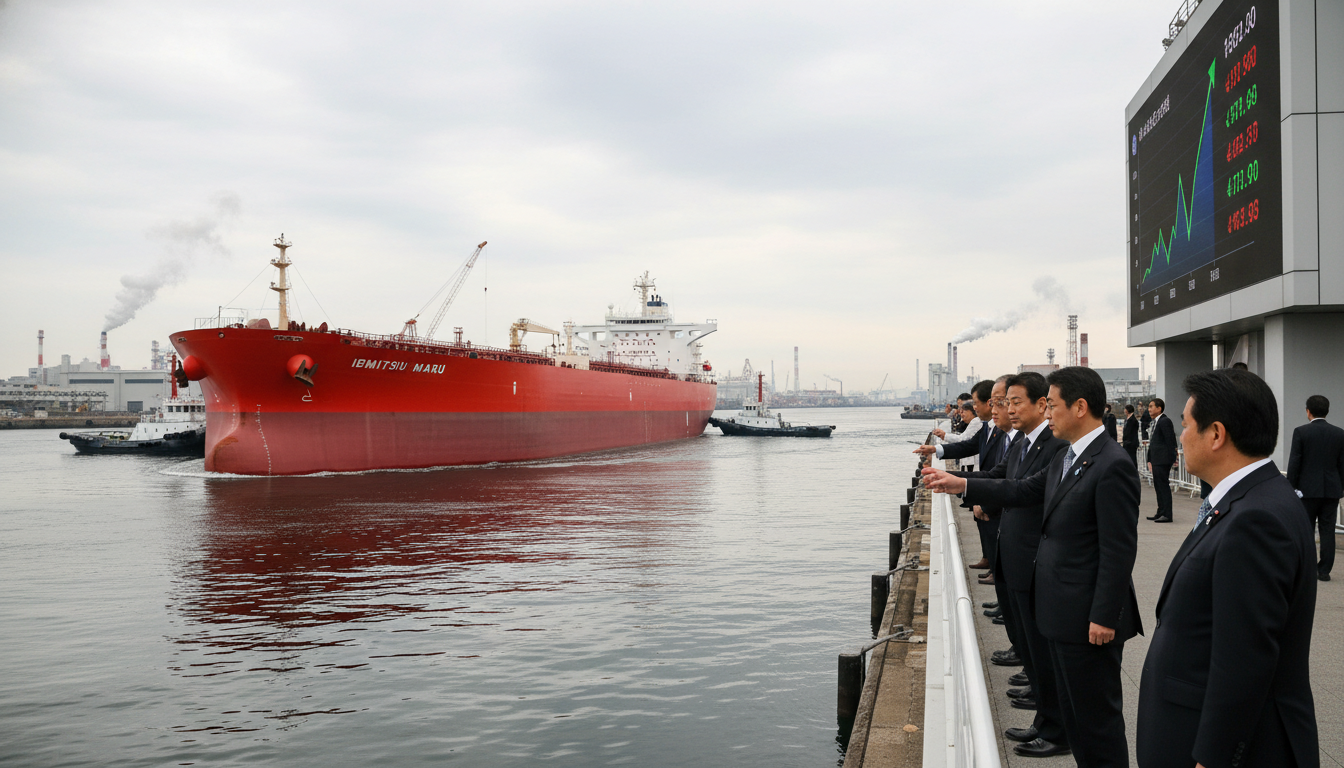
Idemitsu Maru Returns to Nagoya Port, Forcing Costly Shift in Japan’s Crude Sourcing
Idemitsu Maru docks at Nagoya Port on May 25, 2026 as Japan pivots crude sourcing. The move raises costs, insurance bills and risks amid oil-price volatility.
Idemitsu Maru Arrives at Nagoya Port
Idemitsu Maru, an Idemitsu Kosan crude-oil tanker, arrived off Nagoya Port and berthed near Ise Bay on May 25, 2026 after transiting the Strait of Hormuz. The vessel’s arrival marks a rare direct passage from the Persian Gulf and has been framed by company sources as a strategic step in securing supplies amid regional tensions.
Company statements and footage show the tanker alongside port facilities in Aichi Prefecture, with officials preparing for offloading and onward transfers to domestic refineries. Another tanker affiliated with ENEOS is reported to be en route from the Persian Gulf and is expected to arrive in Japanese waters in the coming days.
Shift Away from the Strait of Hormuz and New Shipping Routes
Industry sources say the Idemitsu Maru’s visit signals a broader effort by Japanese refiners to diversify procurement away from routes that pass close to the Strait of Hormuz. The strategy would involve sourcing from alternative suppliers, longer voyage patterns and different transshipment hubs to reduce exposure to potential chokepoint disruptions.
Changing routes, however, will extend voyage times and complicate scheduling for refineries that rely on steady, predictable cargo arrivals. Operators must rework charter contracts, adjust port slot planning and coordinate with storage facilities to absorb the new timing and volume profiles.
Rising Costs, Insurance Concerns and Contractual Strain
The move to alternative sourcing is expected to increase costs across several fronts, including higher freight rates, added bunkering needs and elevated marine insurance premiums for longer passages. Insurers typically raise premiums when geopolitical risk rises, and market participants warn this will push landed crude prices higher for Japanese refiners.
Long-term supply contracts may not cover sudden rerouting expenses or premium differentials, creating potential losses for trading arms and downstream operations. Refiners will face pressure to renegotiate terms or absorb costs, with implications for fuel margins and consumer prices if increases are passed on.
Market Reaction: Stocks Rally, Oil Prices and Investor Sentiment
Financial markets reacted swiftly to developments in Middle Eastern shipping and supply lines. On May 25, 2026 the Nikkei 225 recorded a sharp intraday rise, briefly surpassing the 65,000-yen mark as investors reassessed sectoral winners and losers. Analysts said part of the rally reflected speculation about supply-side adjustments and possible early diplomatic resolutions to regional tensions.
Global oil prices remained volatile as traders weighed the impact of altered shipping patterns and higher insurance costs on supplies. Energy traders and refining-sector investors are monitoring shipment schedules closely for signs of sustained disruption or normalization.
Security and Diplomatic Dimensions for Japan
The passage of Idemitsu Maru through the Strait of Hormuz and its subsequent berthing underline Japan’s delicate diplomatic and security balancing act. Tokyo relies heavily on Middle Eastern crude and must coordinate with partner navies, insurers and regional authorities to keep lanes open while avoiding escalation.
Officials emphasize that Japan’s energy security policy will require faster diplomatic engagement and contingency planning, including stockpile use and cooperation with ally nations on maritime safety. The incident has renewed debate in political circles over measures to insulate Japan from sudden supply shocks.
Operational Impact on Refiners and Domestic Fuel Supply
Japanese refiners now face practical challenges in refining logistics and crude quality matching. Different crude grades require adjustments in refining processes and blending strategies, which can strain refinery throughput and yield patterns for gasoline, diesel and petrochemical feedstocks.
Inventory management will be central to smoothing short-term disruptions; terminals and storage operators need to coordinate receipts and redrawals to avoid bottlenecks. If higher import costs persist, downstream distributors could face tighter margins or delayed pass-through, depending on regulatory and competitive pressures.
Looking ahead, the return of Idemitsu Maru crystallizes the trade-offs facing Japan’s energy sector: securing supply amid geopolitical uncertainty carries tangible cost and operational burdens, and the pace at which companies and policymakers respond will shape fuel prices, refinery economics and broader market sentiment in the weeks to come.

