
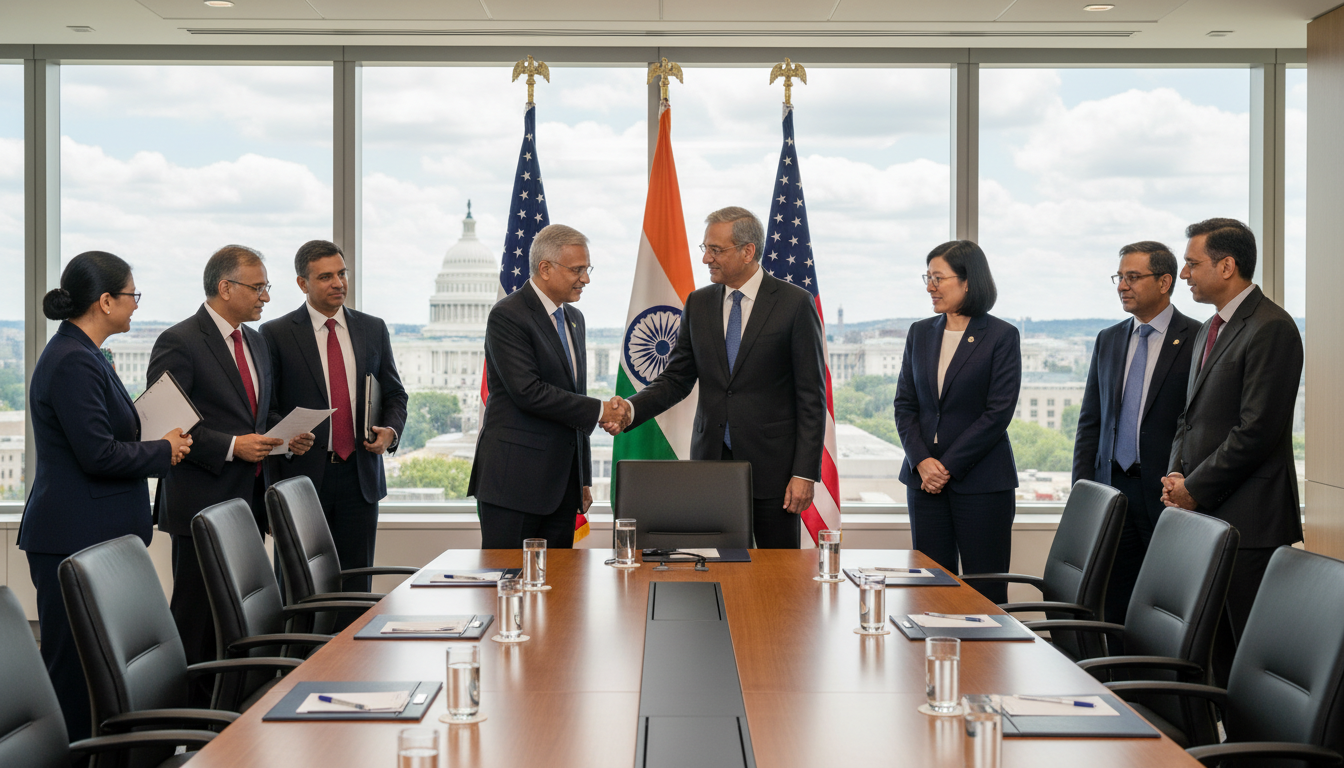
Indian Delegation to Resume Washington Talks After U.S. Supreme Court Ruling on Trump Tariffs
Indian trade delegation visits Washington to resume interim trade talks stalled after U.S. Supreme Court’s February ruling that invalidated Trump tariffs.
NEW DELHI — An Indian delegation will travel to Washington next week to restart face-to-face negotiations on an interim trade agreement, officials said, seeking to salvage a deal that was due to be signed in March but was derailed after the U.S. Supreme Court in February struck down the legal basis for President Donald Trump’s global tariff measures. The talks are aimed at securing a temporary framework that could restore market access and ease uncertainty for exporters affected by the disruptions of the Trump tariffs.
Indian delegation to hold talks in Washington
The senior team from New Delhi will meet U.S. trade officials and industry representatives in a series of scheduled sessions focused on tariff lines and market access. Delegation members will include trade ministry officials and industry advisers tasked with negotiating terms that can be implemented quickly. The visit is being framed as a technical, time-limited effort to reach an interim arrangement while longer-term negotiations continue.
Delay linked to U.S. Supreme Court decision on Trump tariffs
Plans for a March signing collapsed after the Supreme Court’s February ruling found that the sweeping tariff regime lacked sufficient legal grounding, prompting U.S. agencies to suspend parts of the policy. That judicial decision effectively reset the negotiating table, removing the prior framework on which aspects of the interim deal had been based. Indian negotiators now face the task of recalibrating proposals to reflect the changed U.S. legal and regulatory landscape.
Negotiation agenda emphasizes ‘comparative advantage’ for Indian exporters
A central objective of the New Delhi team is to secure recognition of areas where Indian producers hold a comparative advantage in the American market. Officials say the delegation will prioritize sectors such as pharmaceuticals, textiles, information technology services and certain agricultural products. Delegates are also expected to push for tariff-rate quotas, accelerated customs procedures and targeted safeguards that would allow Indian firms to compete more effectively in the short term.
U.S. legal and policy constraints complicate interim deal
U.S. negotiators face domestic legal and political constraints following the Supreme Court judgment, complicating the process of offering firm concessions or implementing temporary measures. Regulatory agencies may need authorization or rulemaking before reverting to any tariff structures or relief mechanisms, lengthening the timeline for an enforceable agreement. Policy advisers warn that even if negotiators reach a political understanding, translating that into binding action could require additional steps in Washington.
Business reaction and potential economic effects for exporters
Indian exporters and business associations have welcomed the restart of talks but urged caution, citing the damage caused by months of tariff uncertainty. Small and medium manufacturers in labor-intensive sectors said they need immediate clarity on duties and certification procedures to plan shipments and contracts. Economists caution that an interim deal would ease short-term disruptions but would not substitute for a comprehensive trade pact that addresses broader market access, intellectual property and services issues.
Next steps, timeline and possible outcomes
Officials describe the Washington round as exploratory but consequential, with negotiators aiming to produce a narrowly scoped interim agreement within weeks if technical obstacles can be overcome. Contingent measures under discussion include temporary tariff exemptions, mutual recognition of certain standards and time-bound quotas to prevent sudden market dislocations. Both sides will likely provisionally agree on language before routing it through their respective domestic processes for legal validation.
The resumption of talks underscores New Delhi’s priority of securing predictable access to the U.S. market while the legal fallout from the Trump tariffs is resolved. Delegates will leave Washington with a clearer sense of the U.S. capacity to implement interim measures and a list of outstanding legal questions that must be addressed before any formal signing can take place.

