
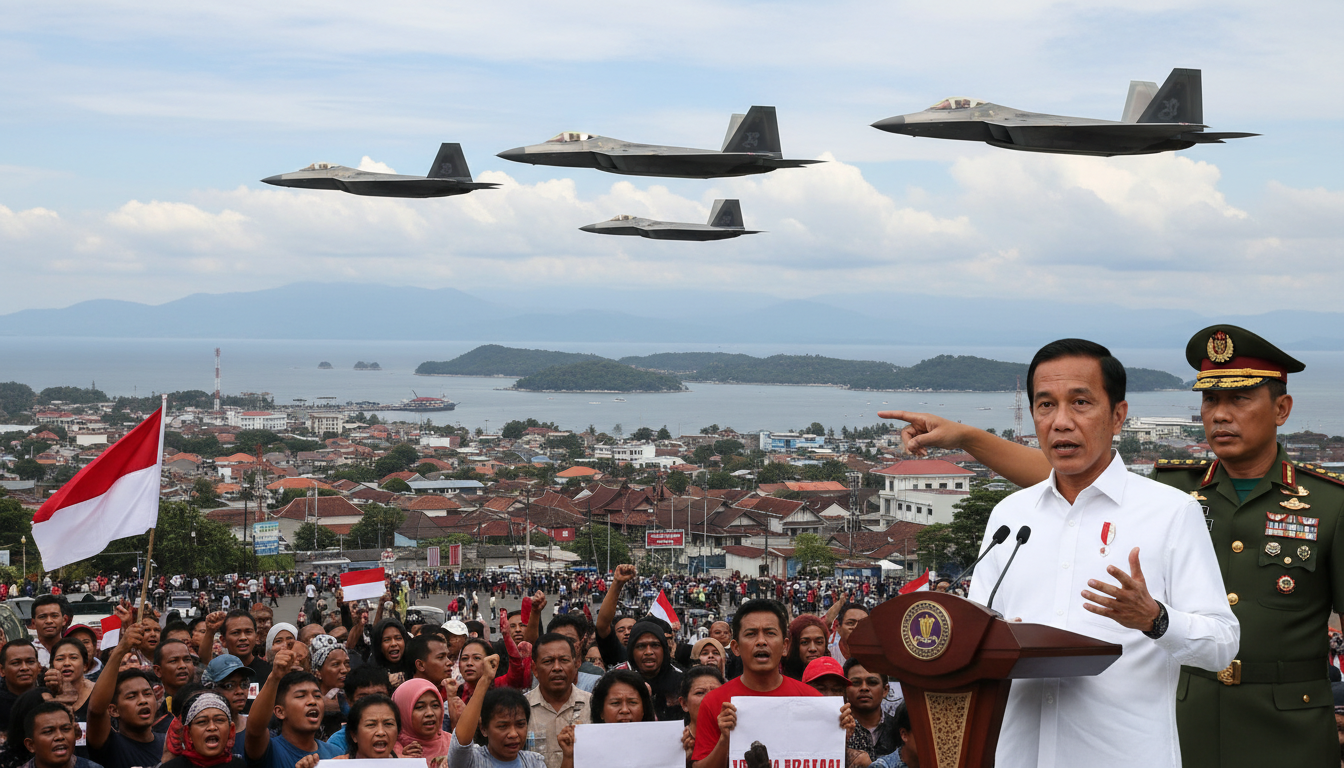
Jakarta Considers Allowing US Fighter Jets in Indonesian Airspace, Provoking Backlash
Jakarta weighs US fighter jets in Indonesian airspace as lawmakers, analysts and regional partners voice security and diplomatic concerns over the request and its wider implications.
Jakarta is considering a formal request from Washington to permit US fighter jets to transit Indonesian airspace, prompting an immediate domestic backlash and sparking debate over national sovereignty and foreign policy alignments. The proposal, raised during recent defence talks in Washington, has alarmed analysts who warn that such access could heighten risks of retaliation from Iran and strain ties with Russia and China. Indonesian authorities say the matter is under review as they seek to balance security cooperation with strategic autonomy.
Jakarta evaluates US overflight request
Officials in Jakarta confirm the US asked for permission for tactical aircraft to pass through Indonesian airspace on a case-by-case basis, though no blanket approval has been granted. The request followed defence discussions in Washington on April 13, 2026, where senior Indonesian and US officials met to discuss bilateral security cooperation. Indonesian ministries are consulting legal and operational experts to assess the implications for aviation safety, air traffic control and international law.
The government has framed the review as a routine technical and diplomatic process rather than a pivot in defence policy, emphasising that any decision would adhere to Indonesian sovereignty and law. Sources say options under consideration include narrowly defined transit corridors, time-limited approvals, or rejection if risks are judged too great.
Domestic backlash and political response
The overflight proposal has provoked swift criticism from opposition politicians, civil society groups and nationalist commentators who argue that allowing US fighter jets into Indonesian airspace would undermine national independence. Demonstrations and social media campaigns have highlighted fears of becoming entangled in external conflicts and of normalising a US military presence in the archipelago.
Parliamentary committees and independent analysts have raised procedural questions about consultation and oversight, urging Jakarta to provide clear legal justification and transparency before granting any permissions. The debate reflects broader domestic sensitivity to foreign military activity in Indonesian territory.
Security concerns and warnings of Iranian retaliation
Security experts caution that allowing US fighter jets in Indonesian airspace could expose the country to retaliatory measures from states or non-state actors aligned against US operations, with Iran frequently cited as a potential source of asymmetric responses. Analysts point to recent patterns in which geopolitical rivals have used cyber operations, maritime harassment, and proxy actors to signal opposition to US military movements.
Indonesian security planners are reportedly assessing threat scenarios that range from targeted cyberattacks on infrastructure to disruptions at maritime chokepoints used by Indonesian commerce. Officials stress such assessments are precautionary and intended to inform a risk-mitigation strategy.
Diplomatic friction with Russia and China
Observers say any decision to permit US fighter jets may complicate Jakarta’s relations with Moscow and Beijing, both of which watch regional military developments closely. Indonesia has been cultivating ties with Russia on energy and defence purchases, while China remains a major economic partner and a dominant regional power wary of expanded US military access.
Diplomats note that Russia could interpret a positive decision as a tilt away from cooperation, particularly as Jakarta negotiates energy deals with Moscow. Beijing, meanwhile, has historically objected to increased US military footprint in Asia and may view expanded overflight permissions through Indonesia as part of a broader strategic encirclement.
Energy diplomacy and proposed Russian oil purchases
Complicating the calculus for Jakarta are concurrent talks to purchase Russian oil, a move motivated by commercial and energy-security considerations amid volatile global markets. Officials involved in those negotiations argue that energy deals are driven by price and supply diversification rather than alignment in security affairs.
Still, analysts warn that a visible alignment with Washington on military matters could undermine Indonesia’s negotiating position with Russia and risk secondary diplomatic fallout. Indonesian policy-makers face the task of compartmentalising energy and defence agendas while preserving constructive ties with multiple major powers.
Defense engagement after the Pentagon visit
The overflight request emerged against the backdrop of high-level defence engagements, including a ceremony at the Pentagon on April 13, 2026, where US and Indonesian defence officials reaffirmed cooperation on training, logistics and interoperability. US officials have said enhanced military-to-military ties aim to bolster regional stability and support common maritime security goals.
Indonesian defence leaders have underscored their preference for practical cooperation that does not erode strategic autonomy, signalling willingness to collaborate on joint exercises and humanitarian missions while resisting permanent basing or unrestricted access. The current deliberations are being framed as part of that careful, transactional approach.
Indonesia has not set a public deadline for a decision, and government spokespeople have reiterated a commitment to consult with parliament and relevant agencies before acting. The outcome will test Jakarta’s capacity to manage competing security imperatives, energy interests and public opinion while maintaining its longstanding policy of non-alignment.

