
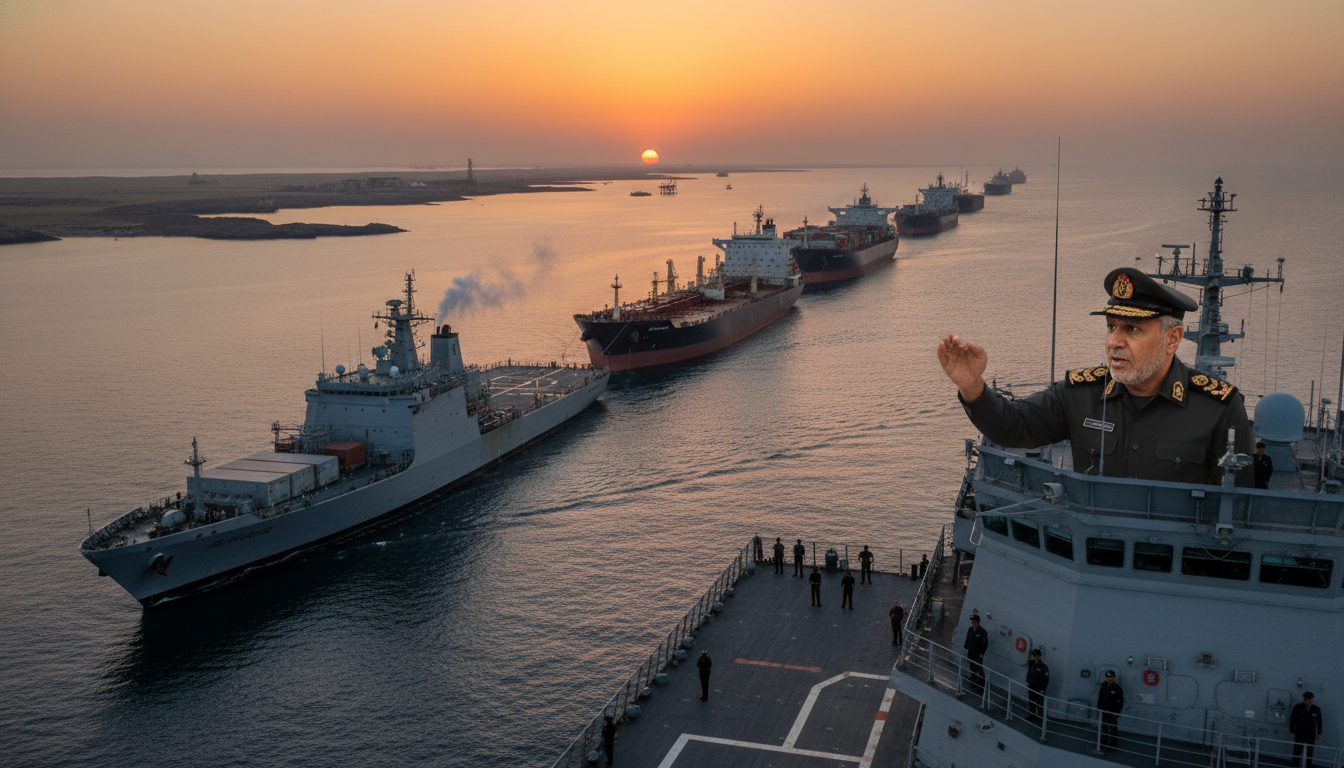
Iran Declares Strait of Hormuz Closed Again as Ships Turn Back and Markets React
Iran closes the Strait of Hormuz again, prompting shipping disruptions, a sharp market reaction and a stern warning from U.S. President Donald Trump. The Strait of Hormuz was cited by Iranian authorities as shuttered late Saturday after a brief reopening tied to a temporary ceasefire elsewhere in the region. The renewed closure and accompanying threats have left commercial vessels reluctant to transit and raised fresh concerns about global oil supplies. (apnews.com)
Iran Declares Strait of Hormuz Closed Again
Iran’s Islamic Revolutionary Guard Corps announced the Strait of Hormuz was “fully closed” late Saturday, saying any movement toward the narrow waterway would be treated as hostile and could be targeted. The announcement reversed an earlier declaration that the strait would be open during a ceasefire, and Iranian officials framed the measure as a response to the continuation of a U.S. naval blockade on Iranian ports. (apnews.com)
Ships Abandon Transit and Some Reported Being Fired Upon
Commercial shipping operators reported abandoning attempts to transit the strait after warnings and intermittent attacks were reported in the corridor linking the Persian Gulf and the Gulf of Oman. Iranian statements said vessels approaching the channel without Revolutionary Guard authorization risked being engaged, a posture that prompted sizable tankers and smaller commercial traffic to reroute or wait at anchor. The uncertainty has left many vessel operators avoiding the area for the time being. (apnews.com)
U.S. Response: Trump Vows Blockade Will Continue, Calls Out ‘Blackmail’
In Washington, President Donald Trump reiterated that a U.S. naval blockade on Iranian ports would remain in effect until a broader deal resolving the wider conflict was completed. Speaking to reporters, the president warned Tehran that it could not “blackmail” the United States by threatening maritime closure and said Washington would maintain pressure until conditions were met. The U.S. stance has been cited by Tehran as justification for its reciprocal measures at sea. (axios.com)
Oil Markets React Sharply to Reopening Then Closure
Global oil markets experienced pronounced volatility after Iran briefly declared the Strait of Hormuz open during a temporary ceasefire, then reversed course the following day. Prices plunged on the initial reopening as traders priced in restored flows, but the renewed closure has injected fresh risk premia into energy markets and reversed some earlier gains. Analysts warned that prolonged disruption to Hormuz traffic could squeeze supply chains and keep prices elevated amid persistent geopolitical tensions. (investing.com)
Ceasefire Context: Lebanon Truce and Fragile Diplomacy
The brief reopening of the strait had followed a negotiated pause in fighting between Israel and Hezbollah in Lebanon, a move that had been brokered as part of wider talks seeking to reduce regional escalation. Iranian officials tied the status of commercial passage through Hormuz to compliance with ceasefire terms and to U.S. actions, saying any resumption of hostilities or continuation of the naval blockade would nullify earlier assurances. Diplomats caution that the ceasefire remains fragile and that progress in Islamabad-mediated talks will be critical to any durable reopening. (theguardian.com)
Naval Posture and Risks to Commercial Shipping
U.S. and allied naval forces have maintained an elevated presence in the Gulf since the outbreak of the crisis, and Washington’s stated blockade policy has complicated navigation and insurance considerations for commercial carriers. Maritime analysts say that even when ports remain open on paper, the combination of naval interdiction, threat of attack and higher insurance premiums can sharply reduce actual transits through Hormuz. Shipping firms have increasingly rerouted vessels or limited cargoes to avoid exposure, prolonging supply-chain disruptions. (news.usni.org)
The renewed closure of the Strait of Hormuz underscores how quickly localized diplomatic breakthroughs can be undermined by broader strategic standoffs, with immediate consequences for global commerce and energy markets. International officials and commercial operators will be watching the next round of talks and military movements closely to assess whether the channel will reopen for sustained, safe passage or remain a flashpoint in a widening conflict.

